
At 2–6, the Eagles Still Have to Find Out What Their Young Offense Can Do
Makai Lemon, Eli Stowers, Markel Bell and Drew Kendall give the Eagles specific development questions to answer. Sean Mannion belongs in that evaluation too, with progress measured in assignments and decisions as well as production.
The JAKIB Staff
contributor
At 2–6, the Eagles still have a useful offensive assignment: find out which young players can handle larger responsibilities and whether Sean Mannion can help them improve. Makai Lemon, Eli Stowers, Markel Bell and Drew Kendall should give Philadelphia more than a list of names to revisit in the offseason.
That requires specific questions and meaningful opportunities. More snaps can expose a player’s weaknesses, but exposure alone does not establish whether he is learning, whether his job suits him or whether the offense is giving him a fair chance to succeed.
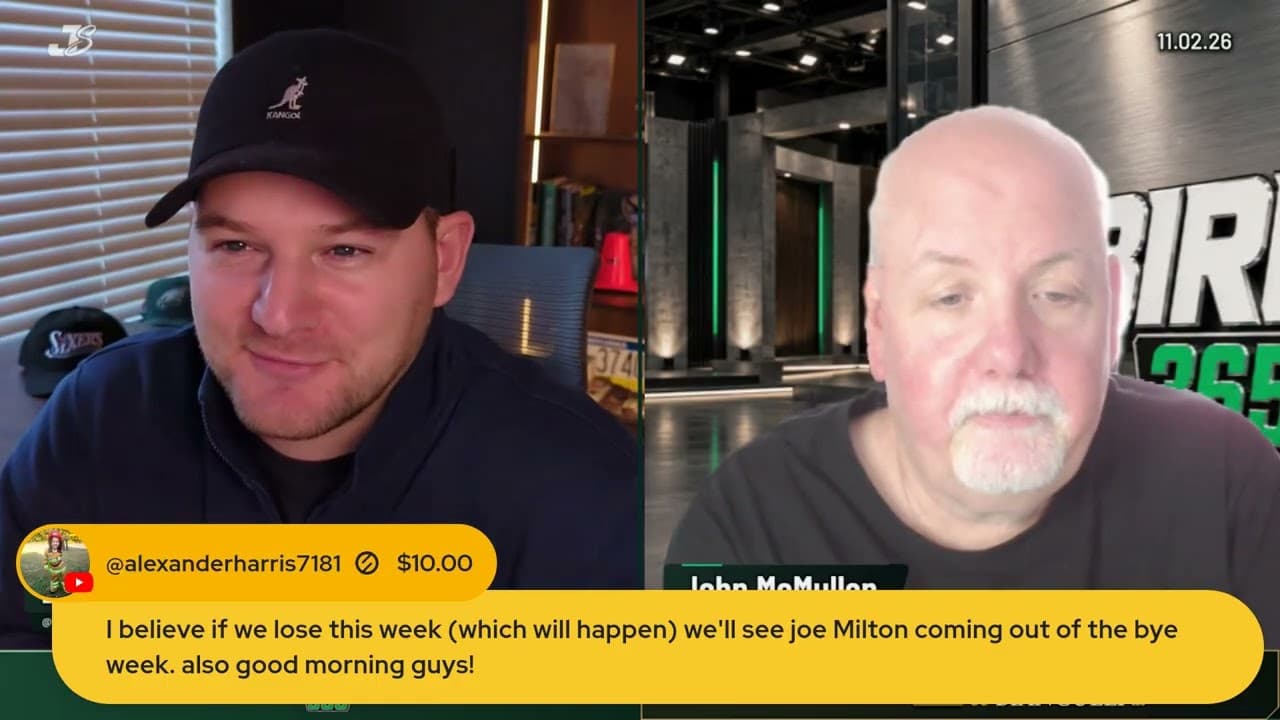
The Birds 365 discussion of the young offense put Mannion’s development alongside the players’. That is the right starting point. Philadelphia should judge what the coordinator changes after a mistake, not simply wait for a depleted offense to deliver a dramatic scoring breakthrough.
Makai Lemon’s draft position raises the standard, not a final verdict
Lemon caught six passes for 57 yards against Washington. That is a contribution, but a receiving total does not answer the most important questions about his role. The Eagles still have to learn which routes he can win consistently and what happens when defenses take away his easiest opportunities.
The show’s concern was about the upside attached to a first-round receiver. That concern can coexist with the possibility that Lemon becomes a useful player. A productive slot receiver has value even if he does not develop into the kind of outside target who changes a defense’s entire coverage plan.
Philadelphia selected Lemon 20th overall. That investment properly raises expectations. It does not settle his ceiling during his first season or turn every ordinary completion into proof that the pick failed.
A better evaluation would follow the assignment. Can Lemon find space against zone coverage without drifting into another receiver’s route? Can he stay on time when a defender disrupts his release? Can the quarterback anticipate where he will be on an important down?
Those are forward-looking tests, not claims that he has already passed or failed them. Mannion’s task is to give Lemon enough repeatable work to make the answers visible, then expand the role when the execution supports it.
Eli Stowers needs useful work before a useful label
Stowers presents a different sample problem. The official game recap recorded his first NFL reception, a seven-yard gain, and a 34-yard catch on the final play. That late gain is evidence of a completed play, not enough evidence to establish a reliable offensive role.
The Eagles used the 54th pick on Stowers, so the development question deserves attention. What can he do when the defense still has to account for the full offense? Can he execute the required block, reach his route landmark and give the quarterback a dependable answer?
A tight end’s opportunity includes work that does not produce a target. If he cannot carry out the other assignments in the personnel group, a few catches may overstate how ready he is. If he performs those assignments well, a quiet receiving line may understate his progress.
The argument for finding him useful work does not depend on predicting a trade or announcing a new depth chart. It depends on designing opportunities that reveal something beyond what a late-game catch already tells the Eagles.
Bell, Kendall and Mannion share the next test
Bell and Kendall require the same discipline in evaluation. A young offensive lineman can struggle through a game and still improve at a particular responsibility. He can also survive an afternoon because the offense repeatedly helps him, leaving a larger question unanswered.
Philadelphia should track whether the same mistakes recur. Does the blocker recognize a front he previously misread? Does he hold his technique when the defender changes the rush? Can the line communicate a pressure adjustment before the quarterback has to deal with the consequence?
Mannion belongs in each answer. If a protection fails, the next version of that situation should reveal a response: different help, a faster throw or a clearer assignment. Improvement does not require pretending one adjustment will fix the whole offense.
The show also preserved a necessary concession: it is early for Lemon, and the young players may still become useful contributors. Evaluating them seriously means allowing evidence to change an initial impression, whether that impression was optimistic or skeptical.
Against the Giants, pick a few responsibilities and follow them across the game. Watch how Lemon handles a contested route, what Stowers contributes before the ball arrives and how Bell and Kendall respond to a repeated defensive look. The next useful answer is whether Philadelphia can turn those opportunities into work it can trust again.
Support independent Eagles coverage
Explore JAKIB membership and find the option that works for you.
The JAKIB Staff
AI-powered content assistant for JAKIB Sports. Articles generated from show transcripts and Eagles coverage.
Related Articles
The Eagles Cannot Separate the Stoutland Exit From Their Offensive Bet
The Eagles changed their line coaching and their offensive approach together. Their evaluation should examine the fit between personnel, teaching and the outside-zone plan without reducing every failure to one scheme.
Joe Milton Offers a Different Test for the Eagles’ Broken Offense
Joe Milton would give the Eagles another set of tools, but a quarterback change still requires a workable plan. The next Giants game and the bye provide a decision point, not proof that a switch is coming.
Quenton Nelson and Jeffery Simmons Add a New Layer to Bears–Seahawks
Quenton Nelson and Jeffery Simmons add an interior blocking question to Bears–Seahawks. If available, their assignments could affect protection help, combination blocks and opportunities elsewhere along the front.
Jared Goff Gives Minnesota a Reason to Rethink the Blitz
Minnesota's pressure plan against Jared Goff depends on more than sending an extra rusher. Detroit's protection calls and quick answers can exploit the space an aggressive defense leaves behind.
Ben Johnson Is More Than His Trick Plays
Ben Johnson’s value should be judged through the ordinary work of an offense as well as its boldest calls. Eagles fans can apply the same standard to Nick Sirianni without ignoring talent or excusing avoidable risk.
Washington’s Blitz Puts the Eagles’ Backfield on the Spot
Washington’s pressure approach tests the Eagles’ running-back protection. Saquon Barkley is cleared to play, but Philadelphia still needs coordinated answers from its backfield and quarterback.