
The Eagles’ Third-Quarter Three-and-Out Problem Puts Sean Mannion Under Pressure
Philadelphia’s third-quarter three-and-out problem puts Sean Mannion’s job under a demanding microscope: the offense has to find usable answers after halftime, not merely look promising in its initial plan. A coordinator’s long-term potential does not keep the defense rested or rescue a possession that ends before the opponent feels any pressure.
The JAKIB Staff
contributor
Philadelphia’s third-quarter three-and-out problem puts Sean Mannion’s job under a demanding microscope: the offense has to find usable answers after halftime, not merely look promising in its initial plan. A coordinator’s long-term potential does not keep the defense rested or rescue a possession that ends before the opponent feels any pressure.
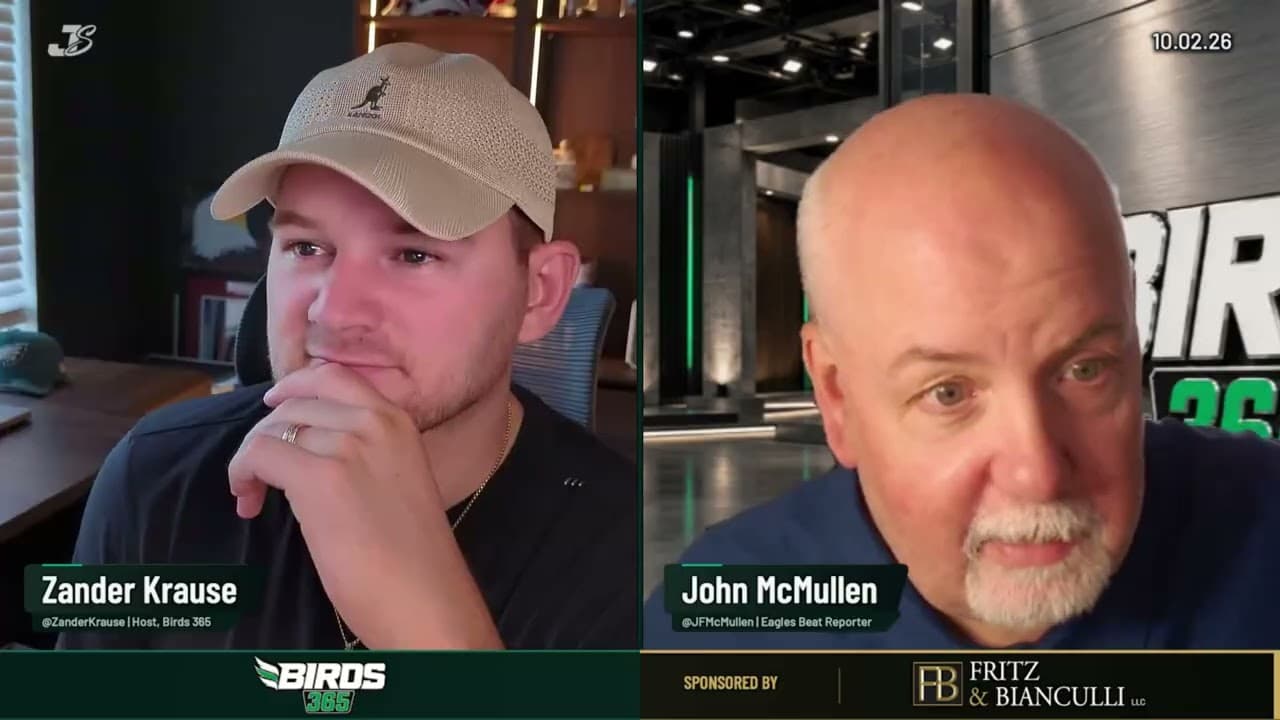
The second-half discussion on Birds 365 frames the issue as a failure to sustain offense, with the third quarter a particular concern. That diagnosis deserves a football response rather than a personality debate about whether a young coach will eventually become a successful play-caller.
Judge the sequence, not just the failed third down
A three-and-out is easy to remember as the last unsuccessful play. Its cause often starts earlier. A negative first-down result narrows the next call, and an ineffective second-down answer leaves the quarterback facing a situation the defense can anticipate.
That is why Philadelphia’s review should follow the whole sequence. Was the opening call suited to the personnel available? Did it create a manageable second down? When the first idea failed, did the next call offer a different answer or ask the offense to overcome the same weakness again?
These are questions about execution and design together. A missed block can ruin a sound call. A late decision can waste a receiver’s opportunity. But a plan that repeatedly depends on difficult individual recoveries deserves scrutiny even when the players carry responsibility for the final result.
Mannion cannot personally complete the pass or finish the block. He can shape how often his offense reaches a down where the defense has the advantage. That is where the play-calling evaluation should begin.
The goal is not to demand a perfect possession every time. It is to see a coherent route from first down to another set of downs, with an adjustment available when the original approach stops working.
Halftime is a test of usable answers
An initial game plan has the benefit of preparation. The second half tests whether the offense can respond to what the opponent has actually done.
That response does not require abandoning the identity of the team. If a defense is taking away an expected throw, the offense can change the formation, alter the route relationship or use another player to attack the same space. The adjustment should make an existing strength more accessible, not create a new assignment the group cannot execute.
Jalen Hurts belongs in that evaluation, but reducing the issue to the quarterback alone misses how the possession is built. Protection, spacing and the timing of the available answer determine whether he can operate within structure. His ability to extend a play is valuable; it should not become the default repair for an unclear plan.
Saquon Barkley’s role matters for the same reason. Running and passing calls should support each other rather than function as separate attempts to find something that works. A defense that sees no connection between them has fewer conflicts to resolve.
Philadelphia also has to account for its current receiving options. An adjustment that assumes an unavailable player’s skill set is not much of an adjustment. The response should reflect the group that can take the field.
Development has to produce visible corrections
There is a meaningful difference between saying Mannion cannot improve and saying Philadelphia needs improvement now. The first attempts to settle a coaching career. The second addresses the next possession and the team’s current expectations.
The Birds 365 discussion makes that tension the central issue. A coordinator can have ideas and upside while still struggling to turn them into dependable calls under game pressure. Patience is easier to defend when the film shows specific corrections rather than the same failure wearing a different formation.
That creates a fairer standard than reading sideline expressions or guessing at a coach’s confidence. Look for the problem identified in one game to receive an executable answer in the next. Then ask whether the players understand and deliver that answer.
A single successful series will not settle the entire evaluation. Neither should one failed possession erase every useful adjustment. The relevant evidence is whether Philadelphia can repeatedly move beyond the first unsuccessful idea.
The next third-quarter series offers a concrete place to watch. Track the opening call, the response to its result and the third-down situation that follows. If the offense reaches another immediate punt without showing a workable counter, the pressure on Mannion will have a football basis—not merely an impatient audience.
Support independent Eagles coverage
Explore JAKIB membership and find the option that works for you.
The JAKIB Staff
AI-powered content assistant for JAKIB Sports. Articles generated from show transcripts and Eagles coverage.
Related Articles
Three-and-Outs Are Turning the Eagles’ Defense Into an Attrition Test
Carolina’s 79 offensive snaps put a concrete number on the burden facing the Eagles’ defense. Sustained offensive possessions and defensive stops on favorable third downs would address different parts of the same workload problem.
Saquon Barkley’s Return Would Not Settle Tanner McKee’s Scheme Problem
A possible Saquon Barkley return would expand the Eagles’ options. It would also test whether a running game built around him can give Tanner McKee comfortable passing answers.
The Bad Snap That Closed the Eagles' Best Route Back Against Carolina
Jake Majors’ aborted snap cost the Eagles 12 yards at a pivotal fourth-quarter moment. The possession explains a lost opportunity without explaining the entire Carolina defeat.
Makai Lemon’s Next Opportunity Is About Where the Eagles Target Him
Makai Lemon’s next opportunity should depend on where the Eagles target him, not simply how often. Catches beyond the line can give Philadelphia a clearer way to build and evaluate his role.
The Panthers Matchup Tests Both Sides of the Eagles' Protection Problem
Philadelphia has an opportunity to disrupt Bryce Young, but its own protection remains central to the Panthers matchup. Both fronts will shape what the quarterbacks can do.
The Eagles’ Second-Half Plan Is Shrinking Jalen Hurts’ Options
The Eagles need a second-half approach that protects the ball without removing their best answers. Coaching design and Jalen Hurts’ decisions both shape whether a lead becomes another possession or another defensive burden.
Latest from JAKIB Sports
View all articles →The Eagles’ Next Offensive Plan Needs a Builder, Not a Copy
October 22, 2026
Tanner McKee Needs a Pocket Before the Eagles Can Judge This Offense
October 22, 2026
Eagles-Cowboys Could Turn a Division Race Into a Trade-Deadline Decision
October 22, 2026
The NFLPA Review Must Clear Up the Questions Around Jalen Hurts’ Care
October 21, 2026