
Jonathan Greenard’s Workload Could Decide the Eagles’ Matthew Stafford Matchup
Jonathan Greenard’s workload could shape whether Philadelphia makes Matthew Stafford rush his decisions or asks its secondary to cover for too long. The Eagles’ defensive plan cannot depend on the mere presence of a pass rusher; it depends on the pressure he can provide during the snaps that decide possessions.
The JAKIB Staff
contributor
Jonathan Greenard’s workload could shape whether Philadelphia makes Matthew Stafford rush his decisions or asks its secondary to cover for too long. The Eagles’ defensive plan cannot depend on the mere presence of a pass rusher; it depends on the pressure he can provide during the snaps that decide possessions.
The official Eagles injury report checked Friday morning listed Greenard with a pectoral injury and full participation Wednesday and Thursday. Jalen Carter was listed with a wrist injury and full participation on both days. Those practice entries establish participation, not a promised snap count or proof that either player faces no physical limitation.
Availability and impact are different questions
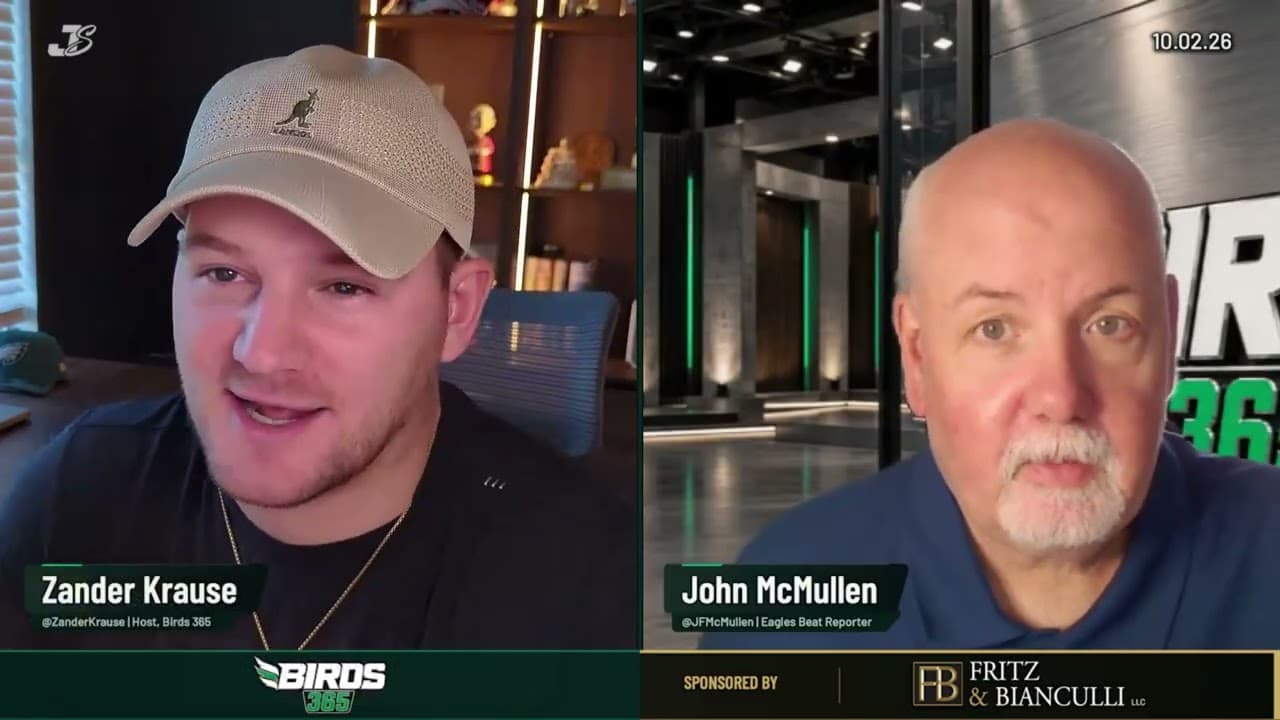
The defensive-line discussion on Birds 365 centers on Greenard’s workload rather than treating his availability as the end of the story. Philadelphia can have a player back in its rotation without getting a full game’s worth of his usual influence.
That distinction becomes important against a quarterback who can punish coverage when the rush gives him time. The first task is to make Stafford move through his decisions faster. Sacks are the obvious payoff, but an early throw, a disrupted platform or a forced reset can also end a promising play.
An edge rusher contributes to that disruption even when another defender finishes it. If his threat changes the protection, an interior player may gain an opportunity. If he forces the quarterback to step up, the interior rush has to close the space rather than leave a clean escape lane.
Greenard’s workload therefore has consequences beyond his own statistical line. The question is whether Philadelphia can maintain pressure through its rotation or gets a brief burst followed by too many comfortable passing downs.
Full participation is encouraging, but it does not answer that tactical question. The actual deployment will show how much of the pass-rush plan the Eagles are prepared to place on him.
Pressure and coverage should buy time for each other
The secondary cannot be asked to solve every problem created by a slow rush. Conversely, a pass rusher cannot arrive immediately on every snap. The defensive plan has to connect the two.
Coverage that takes away the first read can give the front another beat to finish. Pressure that reaches the quarterback before a route fully develops can keep a defender from having to survive an extended assignment. Either unit looks worse when the other provides no help.
That balance is especially important when deciding whether to send an extra rusher. A blitz may speed the quarterback up, but it also changes the space behind it. If Stafford identifies that space and delivers quickly, the defense has exchanged one problem for another.
Philadelphia’s strongest outcome would be creating disruption without constantly giving up a coverage resource. Greenard’s effectiveness can influence how often that outcome is available. It also affects how the rest of the edge rotation fits around him.
The useful measure is not simply whether Philadelphia wins an isolated rush. Watch whether those wins arrive soon enough to change the throw and whether the pressure remains connected across the front. A defender who reaches the pocket late has not necessarily protected the coverage.
Carter’s report does not settle the rotation
Carter’s wrist entry adds another reason to distinguish a practice designation from a game-performance assumption. The official report confirms the listed injury and participation level. It does not establish a diagnosis beyond that entry, a recovery timeline or the degree to which the wrist affects each assignment.
Any evaluation of his health should stay within those limits. Philadelphia’s deployment will provide better evidence than assuming that full participation means every task is unaffected—or that a listed injury makes productive play impossible.
The rotation around Carter and Greenard matters because pressure is a collective result. The edge cannot leave the quarterback a clean step-up lane, and the interior cannot rely on an edge win that never arrives. Fresh players still need coordinated rush responsibilities.
That is where workload becomes a coaching decision, not a demand to keep a recognizable name on the field indefinitely. More snaps are useful only if the player can deliver the required rush quality and the front remains organized around him.
When the Eagles face Stafford, watch Greenard’s use on the passing downs that extend or end drives. Then watch the quarterback’s feet and release, not just the sack column. If Philadelphia can make him reset before the route’s intended window, the workload is creating the kind of defensive help the secondary actually needs.
Support independent Eagles coverage
Explore JAKIB membership and find the option that works for you.
The JAKIB Staff
AI-powered content assistant for JAKIB Sports. Articles generated from show transcripts and Eagles coverage.
Related Articles
The Panthers Matchup Tests Both Sides of the Eagles' Protection Problem
Philadelphia has an opportunity to disrupt Bryce Young, but its own protection remains central to the Panthers matchup. Both fronts will shape what the quarterbacks can do.
Jonathan Greenard’s Bigger Role Could Change the Eagles’ Pass Rush
Jonathan Greenard gave the Eagles a glimpse of disruptive edge pressure in his debut, but a glimpse is not a pass-rush plan. His next workload could change how often Philadelphia hurries the quarterback—provided his return from a pectoral injury allows the role to grow.
Why Safety Is Philadelphia’s Hardest Defensive Fix After the Bears Loss
Chicago's 41-yard touchdown exposed a coverage breakdown, but the Eagles' safety concern runs deeper than one play. Philadelphia needs steadier communication, pursuit and tackling before the Rams game.
How Chicago’s Quarterback Question Changes the Eagles’ Defensive Plan
Caleb Williams is out, but Chicago had not named Tyson Bagent or Case Keenum as its starter at publication. Vic Fangio’s plan therefore has to control the Bears’ run game first and adjust to the quarterback who actually takes the field.
Why the Eagles' Pass-Rush Numbers Did Not Match the Film
Philadelphia's credited pressures against Washington looked better than the disruption on film. The Eagles still need an edge closer who can finish the drive-changing rushes that a pressure total alone cannot measure.
Why Philadelphia's Edge Depth Can Survive Without Jonathan Greenard
Jonathan Greenard's early absence removes a proven piece, but it does not leave Philadelphia without answers. Jalyx Hunt, Nolan Smith Jr., A.J. Epenesa and Arnold Ebiketie give the Eagles enough depth to protect the defense's ceiling.
Latest from JAKIB Sports
View all articles →Johnny Mundt’s Blocking Role Is Smaller Than the Eagles’ Offensive Demand
October 22, 2026
Tanner McKee’s Split Summer Leaves an Unfinished Development Question
October 22, 2026
The Eagles’ Scripted First Play Raised a Communication Problem
October 22, 2026
The Eagles’ Next Offensive Plan Needs a Builder, Not a Copy
October 22, 2026