
The Eagles’ Second-Half Offense Needs More Than a Fast Start
The Eagles' second-half offense needs more than a fast start because an opening plan cannot carry an entire game. Philadelphia's next offensive improvement should be measured by what happens after the defense has seen its preferred calls and adjusted.
The JAKIB Staff
contributor
The Eagles' second-half offense needs more than a fast start because an opening plan cannot carry an entire game. Philadelphia's next offensive improvement should be measured by what happens after the defense has seen its preferred calls and adjusted.
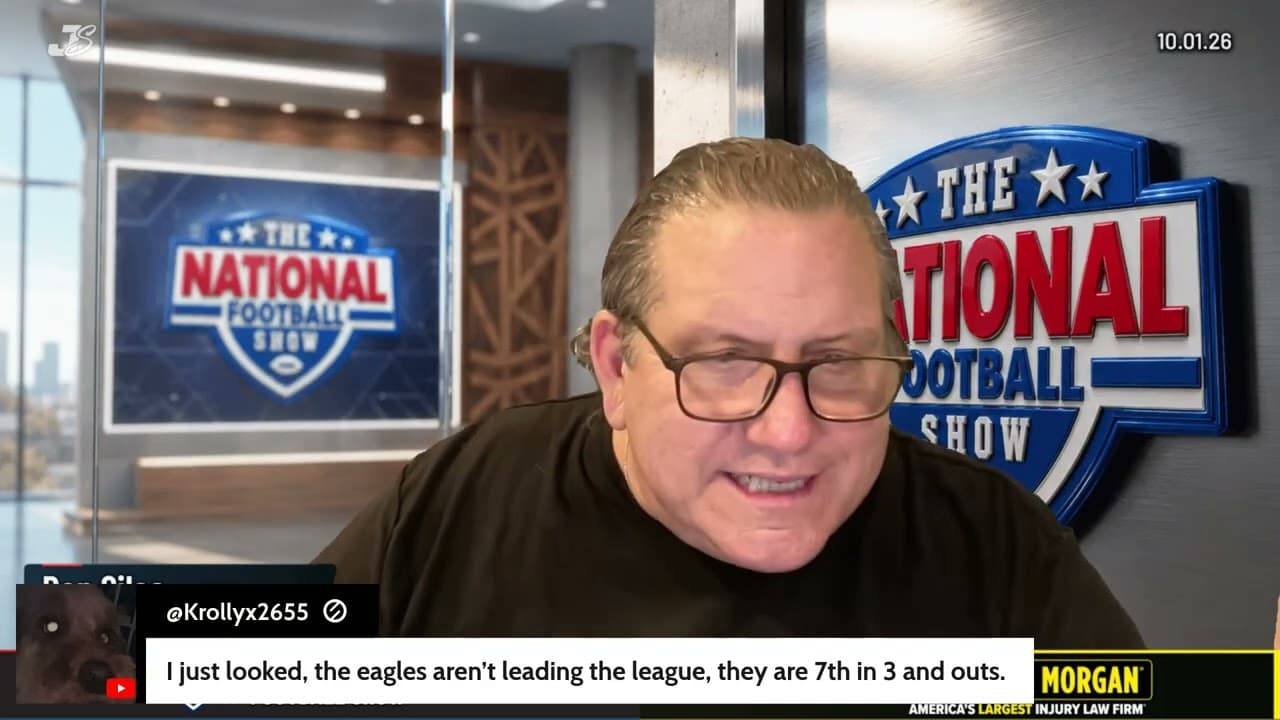
The National Football Show's drive review raises that problem directly: short possessions, limited rhythm and an offense that struggles to keep producing after halftime. The discussion includes running calculations of plays and yards, but those totals are not independently verified here. The football question does not depend on treating an on-air count as an official statistic.
Can the Eagles create a dependable second answer when the first one stops working? That is the test for Jalen Hurts and the entire offensive operation.
The opening script is only the beginning
A prepared sequence gives an offense a chance to attack expected looks. Formation, motion and personnel can reveal how the defense intends to handle the run and passing game.
Those early calls should generate information as well as yards. If a linebacker widens with motion, the offense learns something about the box. If a safety rotates late, the quarterback and staff gain a clue about the coverage rules. The value disappears when that information never changes the later plan.
A defense has its own halftime process. It can alter leverage, change pressure timing or force the ball toward a less productive option. Continuing to call a familiar play is not inherently wrong. Calling it without accounting for the changed response is.
Philadelphia should want recognizable offensive rules without predictable answers. The same formation can support a run, a quick throw or a deeper route. That connection makes a defense hesitate. Unrelated calls can leave it free to attack one tendency at a time.
Short possessions shrink the margin
A stalled drive does more than remove a scoring opportunity. It gives the opposing offense another possession and sends the defense back onto the field without much recovery time.
The solution is not a vague demand to control the clock. First the Eagles need to earn useful downs. A first-down gain that keeps the full playbook available can be more valuable than a low-percentage attempt that creates an immediate passing situation.
That does not mean Philadelphia should become timid. It means aggression should follow the matchup. A favorable early-down throw can be a better way to establish rhythm than forcing a run into a crowded front.
Hurts also needs a clear answer when a defender takes away the first read. If the next route is late, covered or built around a different protection expectation, the quarterback becomes responsible for inventing a solution after the structure breaks.
The staff should examine those stalled series snap by snap. Was the call defeated before the snap? Did a blocker lose? Did the receiver miss the spacing? Did Hurts reject an available completion? Those are different failures and deserve different repairs.
Adjustment should be visible on the next series
Sean Mannion and Nick Sirianni face a practical sequencing question: which successful first-half idea can be presented differently after the break?
A formation change can preserve the concept while altering the defense's alignment. Motion can clarify an assignment. A quick completion can punish pressure and create a more favorable next down. None guarantees success, but each offers a specific reason for the offense to improve.
The changes should also fit the players executing them. A screen is not an automatic pressure answer if its blocking assignment creates another unfavorable matchup. Moving the pocket is not useful if the route timing leaves Hurts without a timely target.
Philadelphia does not need to erase its identity at halftime. It needs an identity flexible enough to survive the opponent's adjustment. That includes knowing which call to abandon and which one deserves a better setup.
A late drive should not require a rescue act
Hurts can extend plays and keep a possession alive outside the original design. Those skills are valuable. They should add to a functioning plan rather than conceal its absence.
The Eagles' next second-half evaluation should focus on whether the first possessions after halftime produce cleaner decisions and manageable downs. An isolated explosive play can change the scoreboard without repairing the sequence around it.
Watch the response after the first stalled series. If Philadelphia returns with a connected counter and executes it, that is progress. If the same unfavorable situations keep sending Hurts into improvisation, a strong opening has only postponed the offense's hardest question.
Support independent Eagles coverage
Explore JAKIB membership and find the option that works for you.
The JAKIB Staff
AI-powered content assistant for JAKIB Sports. Articles generated from show transcripts and Eagles coverage.
Related Articles
The Eagles’ Next Offensive Plan Needs a Builder, Not a Copy
Sean Mannion’s next offensive plan should connect the quarterback’s reads, receiving roles and protection timing. A useful role for Makai Lemon and a dependable core of calls would give Philadelphia a foundation to develop.
Tanner McKee Needs a Pocket Before the Eagles Can Judge This Offense
Tanner McKee needs protection and a receiving answer he can use against Dallas pressure. The Eagles should give him those opportunities Monday, then hold him accountable for the available throws.
Howie Roseman’s Roster Reset Still Needs Immediate Impact Players
Howie Roseman’s roster reset needs players who contribute now as well as future flexibility. The Eagles’ additions, departures and retention decisions solve different problems and deserve separate evaluation.
Tanner McKee Won’t Get a Clean Test of the Eagles’ Offense
Tanner McKee will be evaluated alongside the Eagles’ protection, route timing and coaching adjustments. The Carolina game can reveal what works for the backup and what the whole offense still needs.
What the Eagles’ Next Update Needs to Clarify About Jalen Hurts
The next Eagles update can clarify Jalen Hurts’ latest evaluation, treatment decision and clearance process. Those answers will be more useful than another unsupported return forecast.
The Eagles’ Second-Half Plan Is Shrinking Jalen Hurts’ Options
The Eagles need a second-half approach that protects the ball without removing their best answers. Coaching design and Jalen Hurts’ decisions both shape whether a lead becomes another possession or another defensive burden.