
Chicago’s Quarterback Decision Tests Ben Johnson’s System Fit
Chicago’s quarterback debate turns on how Ben Johnson’s offense functions, not simply who has more talent. Caleb Williams’ questionable designation also keeps availability separate from the argument for Case Keenum.
The JAKIB Staff
contributor
Chicago’s quarterback decision asks Ben Johnson to weigh the fit of his offense alongside the ability of the player running it. A rhythm-based passing plan loses value if the quarterback cannot deliver its intended throws, but a preference for that rhythm does not automatically settle who should start.
The immediate decision remained unresolved in the Bears’ Friday injury update. Caleb Williams practiced fully Friday but was listed as questionable for the Falcons game in Atlanta after missing the previous three games with a hamstring injury. Full participation was not an announcement that he would start.
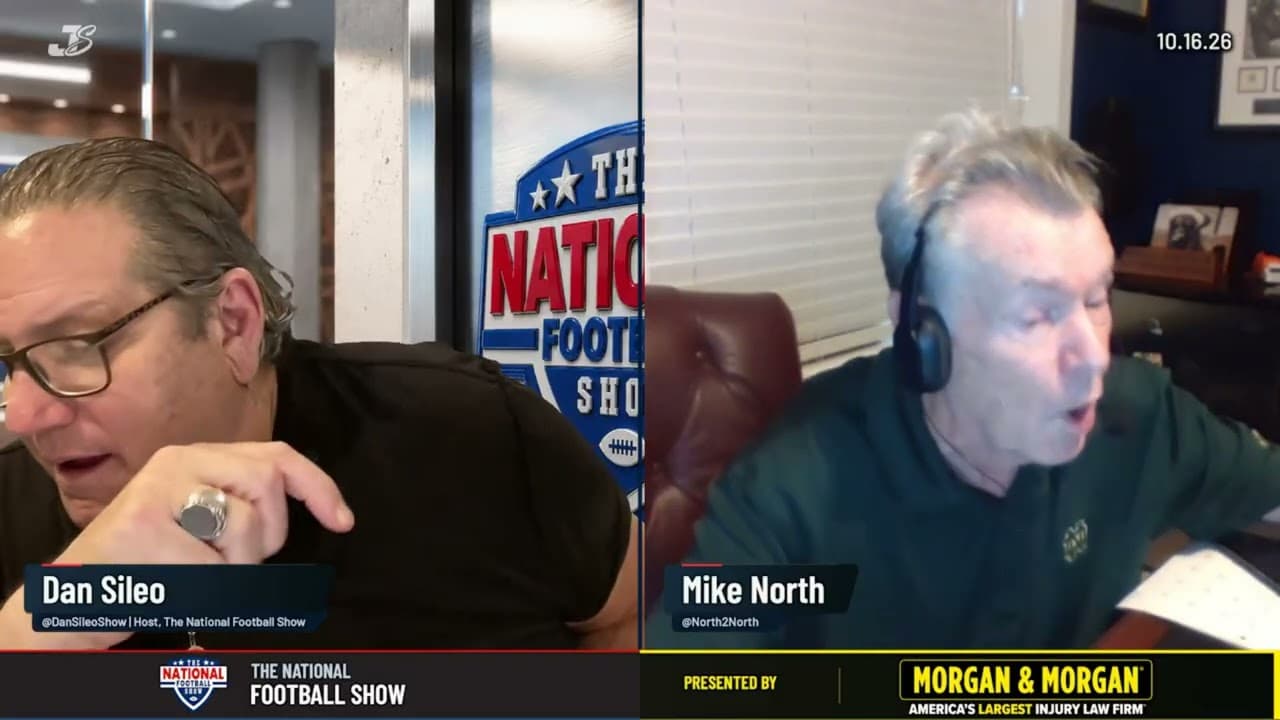
That status is separate from the argument Mike North made on The National Football Show: Case Keenum could be the better fit for the timing and structure Johnson wants. It is a guest’s football assessment, not a reported Bears decision or proof that Williams cannot operate the offense.
System fit begins with a shared clock
North’s argument favored a quarterback who reaches the drop, recognizes the answer and throws on schedule. The appeal is clear. A route combination has an intended sequence, and the quarterback’s delivery helps determine whether that sequence produces an opening or wastes one.
A receiver can arrive at the correct spot without remaining open indefinitely. The protection also has a limited amount of time to do its work. When those elements line up, a throw that looks routine can reflect several assignments executed together.
That gives system fit a practical meaning beyond a coach preferring one style. Can the quarterback recognize the coverage, trust the route and release the ball while the opportunity exists? The answer belongs in any evaluation of Johnson’s offense.
It still requires evidence. A veteran’s reputation for playing on time cannot guarantee the next read, and a quarterback’s athletic ability does not prove that he will abandon the structure. Both players deserve assessment by the decisions they make within the actual assignment.
Structure should leave room for a second answer
The strongest version of Johnson’s offense would make the intended play clear while preserving a response when the defense defeats it. Designing only for a perfect first read leaves the quarterback with an incomplete assignment.
Williams’ ability to create outside the initial structure belongs in that conversation. The question is how to use that option without making every possession depend on it. Extending a play can rescue an offense; extending a play unnecessarily can erase an available completion.
The same standard applies to a more conventional pocket approach. Getting the ball out quickly helps when the quarterback identifies the right answer. An early throw to the wrong place does not become a good decision because it arrived on schedule.
Chicago therefore has two related coaching tasks. Establish what the quarterback should see first, then make the next decision manageable if that option disappears. The balance can change with personnel without requiring the staff to discard everything it wants the offense to accomplish.
This is where North’s Keenum argument deserves consideration as a specific proposal. It asks whether a different quarterback would execute the preferred sequence more consistently. It does not establish that the Bears have accepted that premise or that one game would resolve it permanently.
Availability and evaluation remain separate decisions
Williams’ Friday status creates an availability question that cannot be answered by debating offensive style. Practice participation and a game designation supply information. The team’s eventual decision will supply the starting assignment.
The discussion also involved Tyson Bagent. His official Bears roster biography identifies Shepherd University as his college. The useful evaluation concerns how he handles Chicago’s assignments, rather than treating his college background as a shortcut to an NFL verdict.
Johnson can face reasonable questions about his quarterback choices without the debate becoming a generic ranking of arm talent. The sharper issue is what each available player allows the offense to execute and what adjustments his selection would require from everyone else.
No public argument about system fit removes the uncertainty in Williams’ listed status. Nor does a future starting announcement prove that every aspect of the choice will work. The decision and its execution deserve separate scrutiny.
Once Chicago confirms its starter, watch whether the passing game produces clear, timely answers and a workable response when the first read closes. That will reveal more about Johnson’s fit with his quarterback than the label attached to either player before kickoff.
Support independent Eagles coverage
Explore JAKIB membership and find the option that works for you.
The JAKIB Staff
AI-powered content assistant for JAKIB Sports. Articles generated from show transcripts and Eagles coverage.
Related Articles
Jake Majors’ Natural Position Matters in the Eagles’ Center Decision
Jake Majors’ natural position gives the Eagles a reason to limit disruption at center. Availability and exchange reliability should drive the decision without turning an unofficial depth chart into a starting lineup.
The Late-Game Decisions Driving the Eagles-Cowboys Blame Game
The Eagles and Cowboys reached painful last-second losses through different breakdowns. Reviewing offensive timing, kickoffs and defensive instructions together offers a clearer answer than choosing a single scapegoat.
Jeremiah Trotter Jr. Versus Jihaad Campbell Is an Instincts-and-Development Decision
The Eagles' linebacker debate separates dependable execution today from long-term development. Recognition and athletic ability need different tests, not permanent labels.
The Eagles’ Play-Calling Decision After Another Loss
The Eagles must evaluate Sean Mannion’s game-day calls after another uneven offensive performance. Josh Grizzard is an analytical alternative, not a reported staffing move.
The Clock Decision That Preserved Jacksonville’s Winning Chance
The Eagles preserved Jacksonville’s winning chance when their final possession left eight seconds for a kickoff. The clock stopped on Makai Lemon’s late catch, allowing the Jaguars to save their last timeout for the next play.
DeVonta Smith's Next Contract Adds Another Eagles Rebuild Decision
DeVonta Smith’s next contract is a roster-building decision, not a referendum on his talent. Philadelphia must price its passing-game future alongside a costly offensive-line transition.