
Why the Eagles Cannot Recreate the Nick Foles Reset in Two Days
Tanner McKee’s abrupt starting assignment calls for a clear, executable plan against Carolina. The Nick Foles comparison explains why adapting to a quarterback takes more than changing the call sheet.
The JAKIB Staff
contributor
Tanner McKee needs an Eagles game plan he can execute against Carolina, and Philadelphia has little time to reshape it. The Nick Foles comparison offers a useful principle—build around the quarterback—but a misleading expectation about how quickly that work can happen.
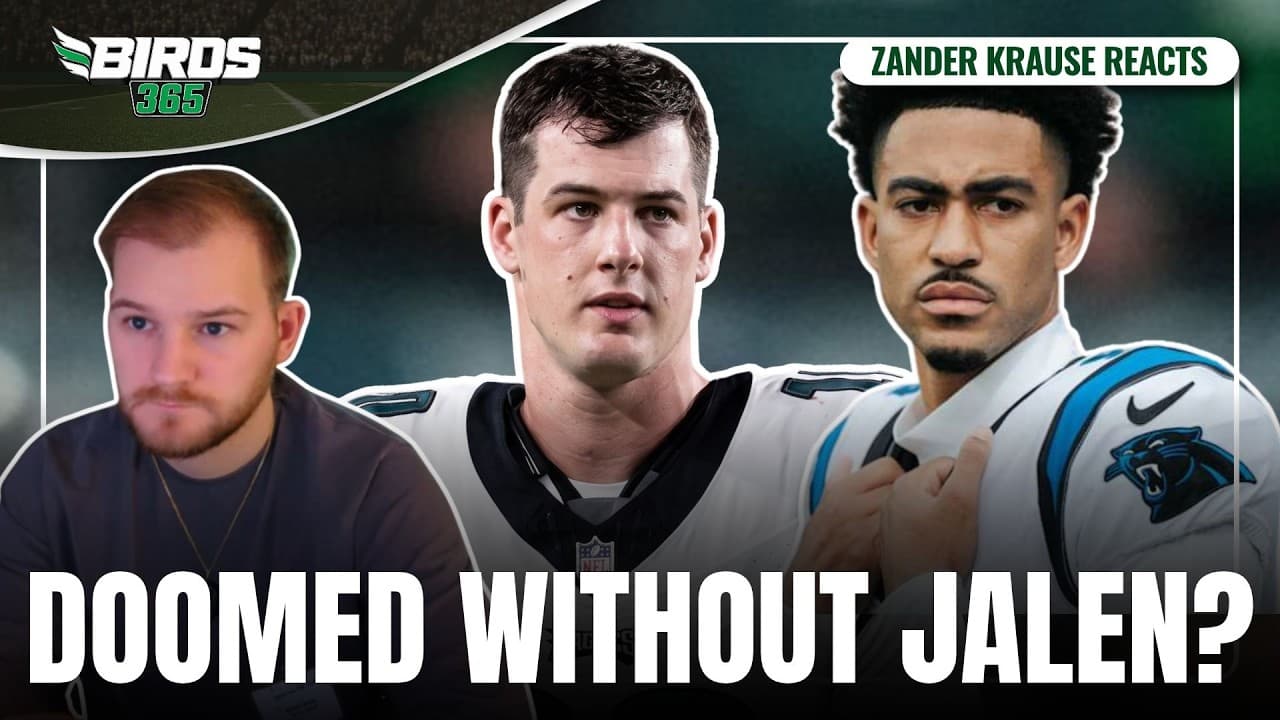
The Eagles have ruled Jalen Hurts out against the Panthers, and the team’s injury report identifies McKee as Sunday’s starter. That creates an immediate football assignment. It does not establish how long Hurts will be unavailable or provide a timetable for his return.
As discussed on Birds 365, the practical constraint is preparation. The “two days” in this comparison describes an abrupt change late in the week, rather than a verified count of McKee’s completed practices.
The Foles adjustment had room to develop
Philadelphia’s 2017 experience should encourage flexibility. It should also discourage the idea that a backup can inherit a fully rebuilt offense between one practice and the next.
A December 26 team report placed Foles beyond his first two starts, with the regular-season finale still ahead and home-field advantage secured. That sequence matters. The eventual postseason offense emerged from a longer preparation period than McKee faces before Carolina.
Even the team’s initial December analysis anticipated continuity after Carson Wentz’s absence. The useful historical lesson concerns adaptation over time. Treating the finished product as the first response skips the work that made it possible.
A quarterback change also involves more than deciding which plays look attractive on a call sheet. Receivers need compatible route timing. Linemen need clear protection responsibilities. Backs need to understand their assignments against pressure. A clever adjustment loses value if one player interprets it differently from the other ten.
McKee needs a smaller set of confident decisions
The strongest immediate response is to choose carefully from what the Eagles already know. Coaches can emphasize concepts that fit McKee without asking the entire offense to learn a different language.
That starts with the quarterback’s decisions before and after the snap. Which calls give him a clear answer against pressure? Which route combinations let him move through a familiar progression? Which plays can the offense repeat without announcing the same intention every time?
Those are planning priorities, not a claim about the contents of Philadelphia’s private game plan. The point is that selection can change an offense’s emphasis before a wholesale installation changes its structure.
McKee’s comfort also has value beyond the throw itself. A call he understands well leaves more attention for the defense. An unfamiliar call can consume that attention before the ball moves. Under a compressed schedule, simplicity should mean fewer uncertain decisions rather than an offense with no answers.
The same logic applies to the players around him. A receiver’s adjustment and the quarterback’s expectation have to meet at the same spot. Repetition helps establish that agreement. Sunday arrives whether the staff has completed that process or merely drawn up an appealing idea.
Judge the plan by the answers it provides
There is still room for coaching creativity. Changing the order of familiar calls, presenting an established concept differently or narrowing the quarterback’s menu can give McKee a more manageable assignment. None requires pretending he and Hurts are interchangeable.
The distinction matters when evaluating the opening possessions. A conservative-looking call may have a clear purpose if it establishes a dependable response. A more ambitious call deserves scrutiny if the offense cannot carry out its basic responsibilities. Difficulty alone does not make a plan well tailored.
Philadelphia should also resist making this one game carry the entire historical comparison. Foles’ eventual success cannot tell the Eagles which calls McKee will handle best on Sunday. That answer comes through preparation and execution with the players available now.
Watch how quickly McKee can identify an answer when Carolina challenges the initial call. If the offense gives him a workable response without requiring a fresh explanation in every huddle, the staff will have addressed the immediate problem. The next adjustment can grow from what Sunday actually reveals.
Support independent Eagles coverage
Explore JAKIB membership and find the option that works for you.
The JAKIB Staff
AI-powered content assistant for JAKIB Sports. Articles generated from show transcripts and Eagles coverage.
Related Articles
What Mike Pettine Changed Before the Eagles Visit Dallas
Dallas changed its defensive play caller, while Christian Parker remained coordinator. Tennessee’s drives show what Philadelphia should test next.
What Dak Prescott’s Sack Rate Reveals Before the Eagles Rematch
Prescott’s attempt-plus-sack rate and two zero-sack games show why sending extra rushers is only part of Philadelphia’s Thanksgiving challenge.
Where Eli Stowers’ Offensive Snaps Went Against Pittsburgh
Stowers went from limited offensive work before the bye to 20 special-teams snaps against Pittsburgh. The gamebooks show which tight ends took the offensive assignments.
How Quinyon Mitchell’s Status Shapes the Eagles’ Plan for Dallas
Monday’s estimated absences at corner leave Philadelphia weighing coverage help against a Dallas offense that already punished the Eagles through the air and on the ground.
The Eagles Have to Tackle Pittsburgh’s Short Passing Game
Aaron Rodgers can make an underneath completion useful without throwing deep. Philadelphia’s leverage and first tackle will determine what Pittsburgh gains after the catch.
Pittsburgh Will Test How Quickly the Eagles Can Identify a Free Rusher
Philadelphia’s protection answer has to connect the play call, the blocking check and Joe Milton’s immediate throw when Pittsburgh threatens an extra rusher.