
Where Eli Stowers’ Offensive Snaps Went Against Pittsburgh
Stowers went from limited offensive work before the bye to 20 special-teams snaps against Pittsburgh. The gamebooks show which tight ends took the offensive assignments.
The JAKIB Staff
contributor
Eli Stowers played 20 special-teams snaps against Pittsburgh and zero offensive snaps. That split gives Philadelphia a specific development question at tight end. He remained involved on game day, while the offensive work went to Dallas Goedert, Johnny Mundt and Zach Ertz.
The official gamebook lists Goedert on 47 of Philadelphia’s 53 offensive snaps, Mundt on eight and Ertz on six. Stowers and Grant Calcaterra had none. Tight ends can share the field, so those totals describe individual workloads rather than separate portions of a fixed 53-snap pie. NFL Steelers gamebook
Two lanes of playing time
Special teams had a different distribution. Stowers and Calcaterra each played 20 of 30 snaps in that phase. Mundt played 14. The distinction matters when assessing Stowers’s Sunday. His workload included substantial live competition, while the offense gave its assignments to other tight ends.
That distribution followed Ertz’s November 16 return to the 53-man roster, which brought Philadelphia to five tight ends. Pittsburgh supplied the first game evidence of how that group would be used after the roster move. Goedert carried most of the offensive workload, with smaller roles for Mundt and Ertz. Eagles Ertz roster announcement
The numbers establish the outcome of those choices. They do not establish why coaches assigned each player his role. A snap count alone cannot confirm an injury explanation, a permanent depth-chart change or a particular objective for Ertz. Each of those claims would require evidence beyond the distribution.
What changed from the previous games
Against Washington, Stowers played 13 offensive snaps and nine on special teams. He caught three passes for 53 yards. Two of those receptions produced 46 yards in the final seven seconds, which is important context for the receiving total. Much of that production arrived in a narrow stretch at the end. NFL Washington gamebook
Against the Giants, he played seven offensive snaps and nine on special teams. His only target was incomplete on Philadelphia’s final scoring drive. Taken together, those games show a limited offensive role before the bye, followed by no offensive work against Pittsburgh. NFL Giants gamebook
The special-teams workload moved in the other direction, rising from nine snaps in each of those games to 20 against Pittsburgh. That change gives the Eagles more game evidence in one phase while reducing the available evidence in another. It also explains why a total playing-time figure would obscure the central question.
What Philadelphia can evaluate
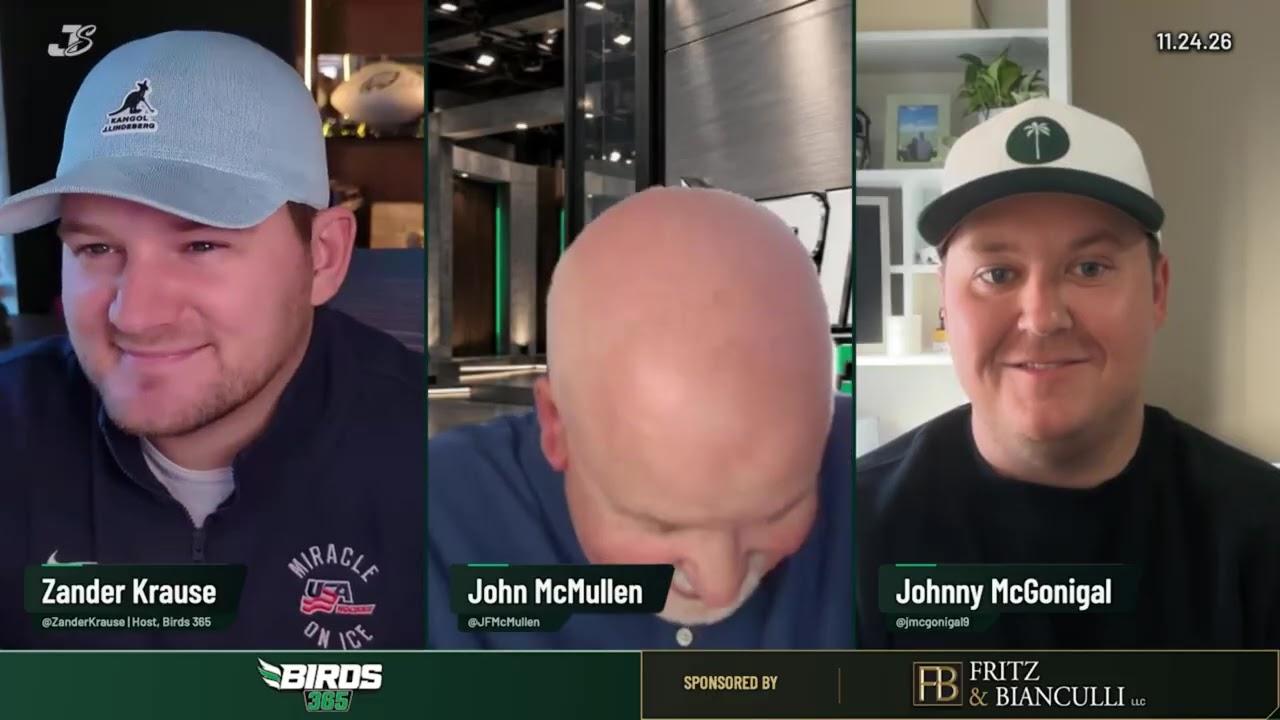
On Birds 365, Johnny McGonigal argued that Stowers needs offensive game experience to develop and build confidence. His criticism focused on the absence of even a small offensive role after the earlier opportunities. John McMullen also questioned the tight-end allocation. Those are evaluations of the team’s approach, with the gamebook providing the workload underneath the discussion.
Sirianni had publicly highlighted Stowers’s progress as part of developing younger players while trying to win each week. Coaches can assess practice assignments throughout the week. Offensive game snaps add evidence against an opponent under game conditions. Eagles Sirianni comments
Blocking assignments, route execution and recognition within the offense all benefit from that game evidence. Sunday added no offensive snaps to Stowers’s record for coaches to review. His special-teams work supplied a different set of assignments and competitive situations. A short offensive stint could show whether Stowers handles an edge assignment, gets to his landmark on time or adjusts to a coverage change. Each gives the staff something to evaluate even if the quarterback throws elsewhere.
The next game will show whether Philadelphia restores a small offensive role or continues this distribution. Pittsburgh established how the five-player room was used for one game. For Stowers, the open issue is when offensive opportunities return and what Philadelphia will be able to learn from them.
Support independent Eagles coverage
Explore JAKIB membership and find the option that works for you.
The JAKIB Staff
AI-powered content assistant for JAKIB Sports. Articles generated from show transcripts and Eagles coverage.
Related Articles
What Portland’s Offensive Glass Really Bought Against the Sixers
Portland collected 15 offensive rebounds against Philadelphia. What those second chances bought the Trail Blazers takes a closer look at the turnover and three-point numbers.
What Zach Ertz Is Chasing in Harold Carmichael’s Eagles Record
Zach Ertz needs seven catches to tie Harold Carmichael’s Eagles receptions mark. Their two careers show what the regular-season record counts and why the franchise keeps separate yardage and touchdown marks.
What a Daniel Jones Waiver Claim Would Mean for the Eagles
A team claiming Daniel Jones would assume his existing contract. Joe Milton’s scheduled Pittsburgh start frames what a hypothetical move would mean for the Eagles’ quarterback room.
Pittsburgh Will Test How Quickly the Eagles Can Identify a Free Rusher
Philadelphia’s protection answer has to connect the play call, the blocking check and Joe Milton’s immediate throw when Pittsburgh threatens an extra rusher.
Jim Schwartz's Eagles Case Starts With Making More of the Roster
A hypothetical Jim Schwartz reunion should be judged by personnel use and adaptation. His Eagles and Browns results offer evidence, with limitations that belong in the evaluation.
Ertz's Active-Roster Return Adds a New Decision for Eli Stowers
Zach Ertz is back on the Eagles' active roster, eight catches from passing the franchise record. Philadelphia can honor that pursuit while making room for Eli Stowers if football sets the order.