
Eagles Can Pursue the NFC East Without Sacrificing Future Trade Value
Philadelphia can compete for the division while evaluating each trade on its merits. The full Cam Jurgens exchange illustrates why future value and immediate roster costs deserve separate scrutiny.
The JAKIB Staff
contributor
The Eagles can chase the NFC East without treating every future draft pick as spending money. Competing for a playoff place and protecting long-term trade value are compatible goals, provided each deal improves the roster on terms Philadelphia can justify.
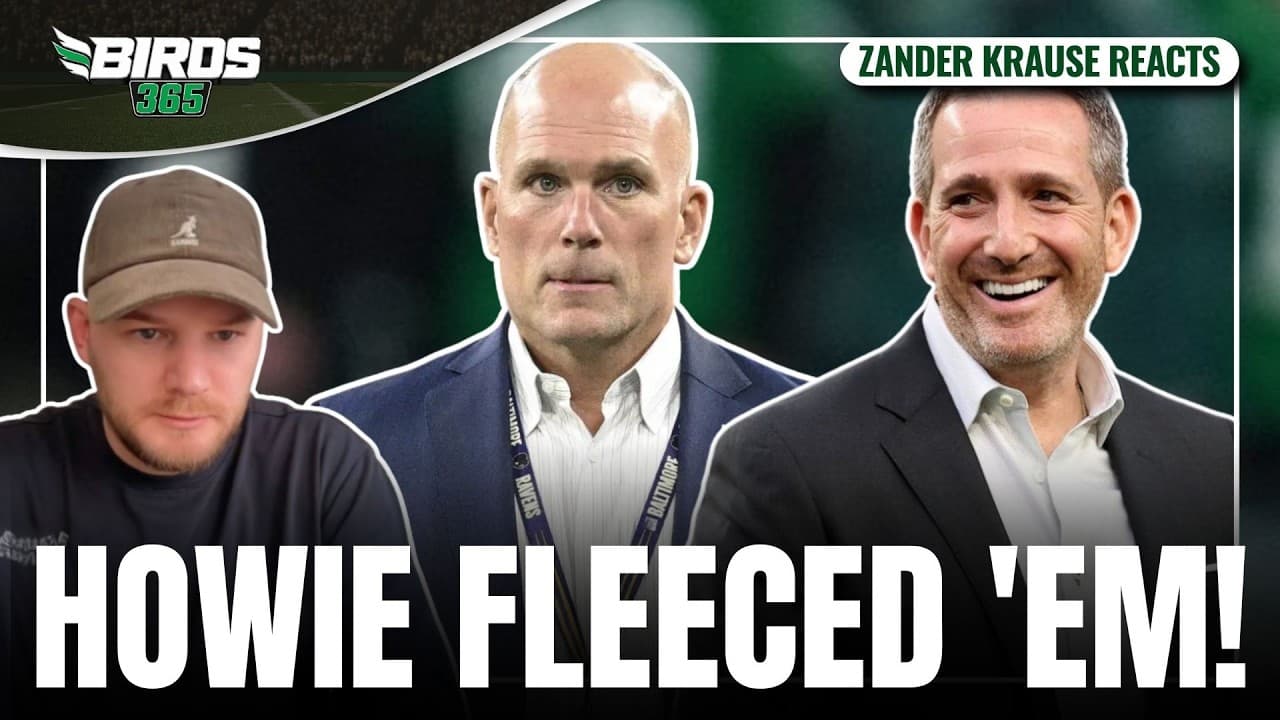
The Cam Jurgens agreement makes that distinction concrete. Philadelphia's official transaction log says the Eagles agreed to send Jurgens and a 2027 seventh-round pick to Baltimore for a 2027 fifth-round pick and a 2028 second-round pick.
That is not simply a second-rounder arriving without an outgoing asset. The full exchange matters, and so does the cost of replacing an offensive lineman. A draft return can be attractive while the immediate lineup consequence remains uncomfortable.
Neither observation settles every future trade. One buyer's offer does not establish a standing market for the rest of Philadelphia's roster.
The division race and the championship standard
Winning the division offers a route into the postseason. It does not prove the Eagles have solved the protection, receiving and consistency questions raised in the current game preview.
Those are separate evaluations. The first asks whether Philadelphia can put itself in the playoff field. The second asks whether its lineup and execution can survive the opponents waiting there.
A front office should pursue the first without pretending the second is already settled. Giving up on a possible playoff berth would waste an opportunity. Paying a premium for a short-term addition without a convincing football case could waste future options.
That leaves room for a disciplined middle course. Keep developing the available players, compete with the existing roster and examine offers individually. A weak week should not dictate the whole season, but a division opportunity should not excuse an expensive mistake either.
The important distinction is between maintaining competitiveness and buying reassurance. A recognizable name can improve the mood without improving the plays that are failing. Philadelphia should identify the actual job an addition would perform before deciding what that job is worth.
Trade value depends on the other side
The Jurgens return gives Philadelphia another future second-round selection. It does not mean another club will pay the same price for a different player, or that the Eagles can replace every departure cheaply.
A buyer evaluates its own need, available alternatives and the player's role in its system. Philadelphia evaluates the offered assets against the loss of snaps, depth and continuity. A deal works only where those separate assessments meet.
That is why a proposed wholesale sell-off is less useful than a player-by-player analysis. Some offers might be worth accepting even while pursuing the division. Others could weaken the current team without supplying enough future value to make the damage worthwhile.
There is also a difference between an available offer and an imagined one. Discussions about moving a veteran should not quietly assume a premium pick is waiting. The front office cannot build a strategy around returns it has not been offered.
The same discipline applies to buying. A rental and a younger player with a plausible continuing role are different investments. An addition that addresses both a current vacancy and a future need deserves a different calculation from one whose value ends after a few games.
Let the next games inform the deadline
The next stretch should provide evidence about the offense's workable floor. Can the line communicate well enough to keep the quarterback operating? Can the available receiving group produce first downs? Do returning players change the range of calls the coaches can trust?
Those answers should affect how aggressively Philadelphia approaches the market. They are more useful than declaring the season finished or demanding an all-in move before the roster has shown what it can sustain.
Injuries complicate that evaluation, but projected returns are not guarantees. A player returning to practice, returning to the lineup and returning to full effectiveness are different stages. The Eagles need to judge the version of the team that can actually play.
If an offer supplies substantial future value, Philadelphia should weigh it against a realistic replacement plan. If a potential acquisition fills a durable need at a reasonable price, remaining in the division race gives the team a reason to examine it.
The next useful trade question is not whether the Eagles are buyers or sellers in the abstract. It is which specific exchange would leave them better equipped to compete now and build the next credible contender.
Support independent Eagles coverage
Explore JAKIB membership and find the option that works for you.
The JAKIB Staff
AI-powered content assistant for JAKIB Sports. Articles generated from show transcripts and Eagles coverage.
Related Articles
Why Winning the NFC East Matters More to the Eagles Now
Winning the NFC East and looking like a Super Bowl contender are different tests. Philadelphia’s most controllable playoff route starts with a functional offense and division results.
Jalen Hurts Can Raise the Eagles’ Level, but He Cannot Replace an Entire Roster
Jalen Hurts can give the Eagles a chance against the Rams without being able to replace every missing player. Philadelphia’s injury report turns that distinction into a practical football problem, not an excuse to lower the quarterback’s standard.
Why Quarterback Durability Is Becoming the NFC East's Defining Advantage
The NFC East quarterback debate is shifting from pure talent to availability. Jayden Daniels, Jackson Dart and Jalen Hurts show how body type, pocket behavior and self-protection can reshape a division race.
Sean Mannion Faces Super Bowl Expectations Without a Grace Period
Sean Mannion enters his first season directing Philadelphia's offense with contender-level expectations and no room for a long apprenticeship. The Eagles chose upside and fit, but the results will be judged against the standard of a team expected to win now.
Philly.500 and Mark Holmes Set the NFC East Stakes for 2026
The Battle Royale locked in bold forecasts: 14 wins for Philadelphia and 12 for Dallas. Those numbers set a championship-level standard and turn every NFC East game into part of a much larger argument.
Why Dallas Is the Eagles' Biggest Threat in the NFC East
Dallas presents the clearest NFC East threat because its best route to beating Philadelphia runs through the trenches. The Cowboys can make the race real if they finish drives, control possession and force the Eagles to prove their run defense has changed.
Latest from JAKIB Sports
View all articles →Eagles Need Turnovers, Short Fields and First Downs to Challenge Jaguars
October 9, 2026
Eagles Face a Protection and Receiving Test Against Jaguars in London
October 9, 2026
Cam Jurgens Trade Exposes Two Competing Visions of the Eagles' Future
October 9, 2026
Replacing Nick Sirianni Would Not Remove the Eagles' Coaching Dilemma
October 9, 2026