
Eagles Need Turnovers, Short Fields and First Downs to Challenge Jaguars
Defense and special teams can give Philadelphia shorter routes to points in London. The offense still has to convert opportunities and produce enough first downs to support that formula.
The JAKIB Staff
contributor
The Eagles' route to beating Jacksonville in London depends on shortening the field and keeping their defense off it. Turnovers can create scoring chances, but the offense still has to produce enough first downs to make those chances count.
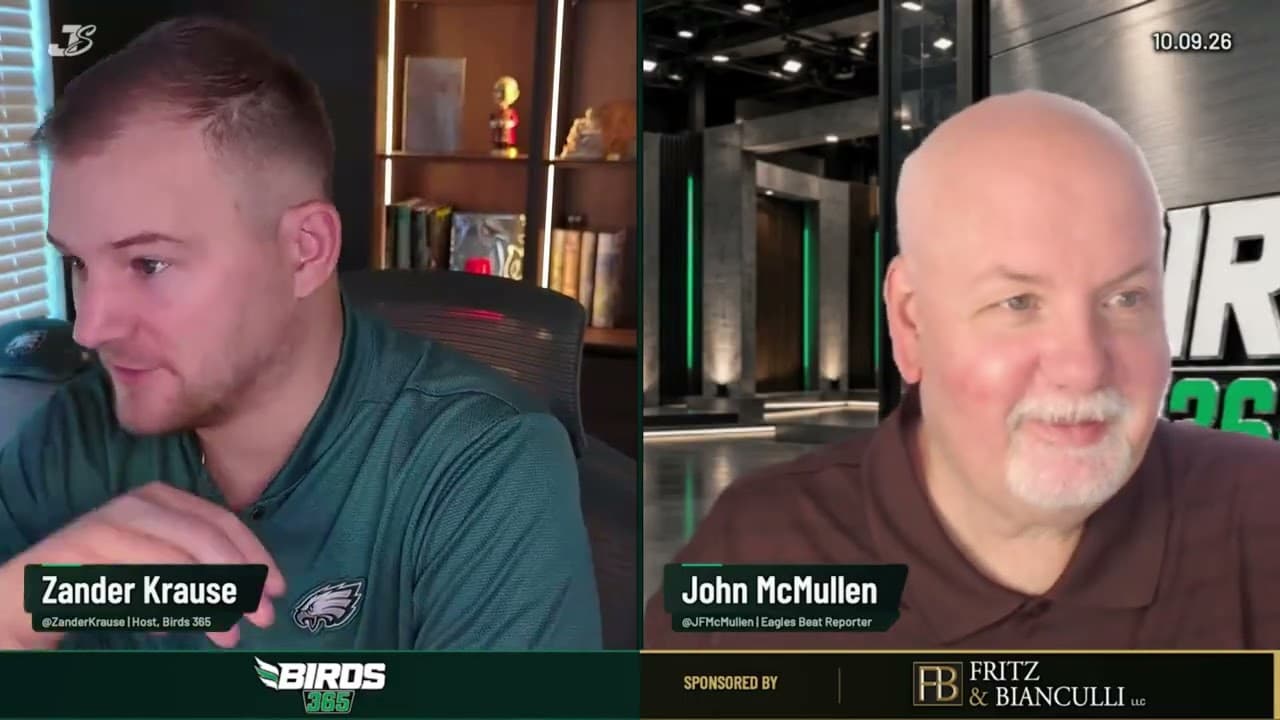
That is the central argument in the game's Birds 365 preview. Philadelphia can compete without an expansive offensive performance if its defense and special teams influence where possessions begin. It cannot assume those units will absorb an endless succession of short offensive series.
This is an upset formula, not a prediction of a guaranteed result. It identifies the plays that could make the game manageable for an offense facing protection and receiving uncertainty.
The most valuable early sign would be a connected sequence: a defensive stop, useful field position and an offensive possession that changes the scoreboard or gives the defense a meaningful break.
Turnovers matter most when the offense cashes them in
Taking the ball away from Jacksonville would do more than erase one opposing possession. A takeaway in useful field position could remove several difficult first downs from Philadelphia's route to a score.
That is particularly important when a full-field drive requires the offense to solve repeated pressure and coverage problems. A shorter field gives the coaches a smaller assignment and the quarterback fewer successful snaps to string together.
But a turnover does not award points. A sack, penalty or failed exchange on the next possession can turn a valuable opportunity into another punt. Philadelphia's first responsibility after a takeaway would be to avoid handing its advantage straight back.
The defense also cannot chase turnovers recklessly. A missed tackle or blown coverage can create the very explosive play the Eagles are trying to prevent. Sound assignments and coordinated pressure offer a better foundation than treating every snap as a chance to gamble.
Against Trevor Lawrence, the practical objective would be to make his decisions uncomfortable while maintaining coverage integrity. Whether that produces an interception, a hurried throw or a punt, the offense needs to receive a game it can still manage.
Special teams can help control the starting line
Field position is the other part of the formula. A well-placed punt can force Jacksonville to travel farther, while a clean return can keep Philadelphia from beginning another series backed up near its own goal line.
Braden Mann, Jake Elliott and Britain Covey are relevant to those possibilities. Their roles offer different ways to influence a close game: punting, converting scoring opportunities and handling returns. None of those jobs requires an invented expectation about a particular kick or return.
Avoiding mistakes is just as important. A coverage penalty, a muffed ball or a costly decision can erase the benefit of an otherwise strong sequence. The Eagles need special teams to reduce the offense's burden, not add a fresh emergency.
Elliott could become important if possessions repeatedly reach scoring range without reaching the end zone. Still, a field-goal attempt should not become the offensive ambition before a drive starts. Settling too early would ask the defense to protect an unnecessarily thin margin.
First downs are part of defensive support
The offense's contribution cannot be measured only in touchdowns. Moving the chains changes field position, uses time and prevents Jacksonville from receiving the ball again immediately.
That does not mean a conservative possession is automatically useful. Three low-risk plays followed by a punt still leave the defense with another assignment. Philadelphia needs conservative choices that produce a reasonable chance of a new set of downs.
Dallas Goedert could provide an intermediate target if he is available. The official injury report listed him as limited with a knee injury in Wednesday and Thursday practice, so his role remains conditional. The plan needs other answers rather than relying on a projected return as a certainty.
Dameon Pierce, whom Philadelphia promoted to the active roster on October 7, adds a backfield option alongside Will Shipley. How the carries are divided remains a game-plan question. More important than the identity of the first runner is whether the blocking and decisions create manageable next downs.
Hurts also needs a clear passing answer when Jacksonville commits to stopping the run. The offense cannot become so intent on avoiding mistakes that it abandons every chance to punish the defense's approach.
Watch what happens after Philadelphia's first favorable possession change. If the Eagles turn that opportunity into points and a sustained offensive series, the upset formula has traction. If they immediately give the ball back, the defense's next assignment becomes harder.
Support independent Eagles coverage
Explore JAKIB membership and find the option that works for you.
The JAKIB Staff
AI-powered content assistant for JAKIB Sports. Articles generated from show transcripts and Eagles coverage.
Related Articles
Cheap Replacements Keep the Eagles’ Cap Strategy Working
The Eagles’ financial flexibility depends on affordable players delivering real snaps. Moving cap charges can create room today, but player evaluation determines whether that room builds a useful roster.
The Eagles’ Backup Plan Has to Fit the Offense
The Eagles should evaluate their backup quarterbacks by what each allows the offense to keep doing. Dallas provided productive Tanner McKee possessions, while leaving a larger question about continuity behind Jalen Hurts.
The Eagles’ Defensive Contracts Have Put Accountability Under the Microscope
Long-term commitments to Jalen Carter and Jordan Davis raise the stakes for Philadelphia’s weekly defensive decisions. The Eagles can demand clearer execution and adjust roles without turning a poor performance into an unsupported verdict on effort.
Jalen Carter’s Dallas Matchup Shows the Cost of Losing With Strength
Jalen Carter’s Dallas matchup raises a specific technique question: what happens when the first surge fails? A timely counter offers a more useful correction than unsupported claims about effort or emotion.
A First-Round Quarterback Wouldn’t Fill the Eagles’ Other Roster Holes
A first-round quarterback would leave Philadelphia with important work at other positions. Separating starting upgrades from competition and depth gives the Eagles a more useful plan than treating one selection as a complete reset.
Seattle’s Quenton Nelson Trade Shows What Roster Flexibility Can Buy
Seattle announced a Quenton Nelson trade for two future picks, pending a physical. The Eagles can learn from the value of a defined upgrade without assuming they could copy the deal or explain it through quarterback salary alone.