
Howie Roseman’s Roster Reset Still Needs Immediate Impact Players
Howie Roseman’s roster reset needs players who contribute now as well as future flexibility. The Eagles’ additions, departures and retention decisions solve different problems and deserve separate evaluation.
The JAKIB Staff
contributor
Howie Roseman’s roster work should be judged by the difference it makes on the field, including what new players can contribute now. Retaining valuable Eagles and preserving future options both matter, but neither automatically replaces the production that leaves the building.
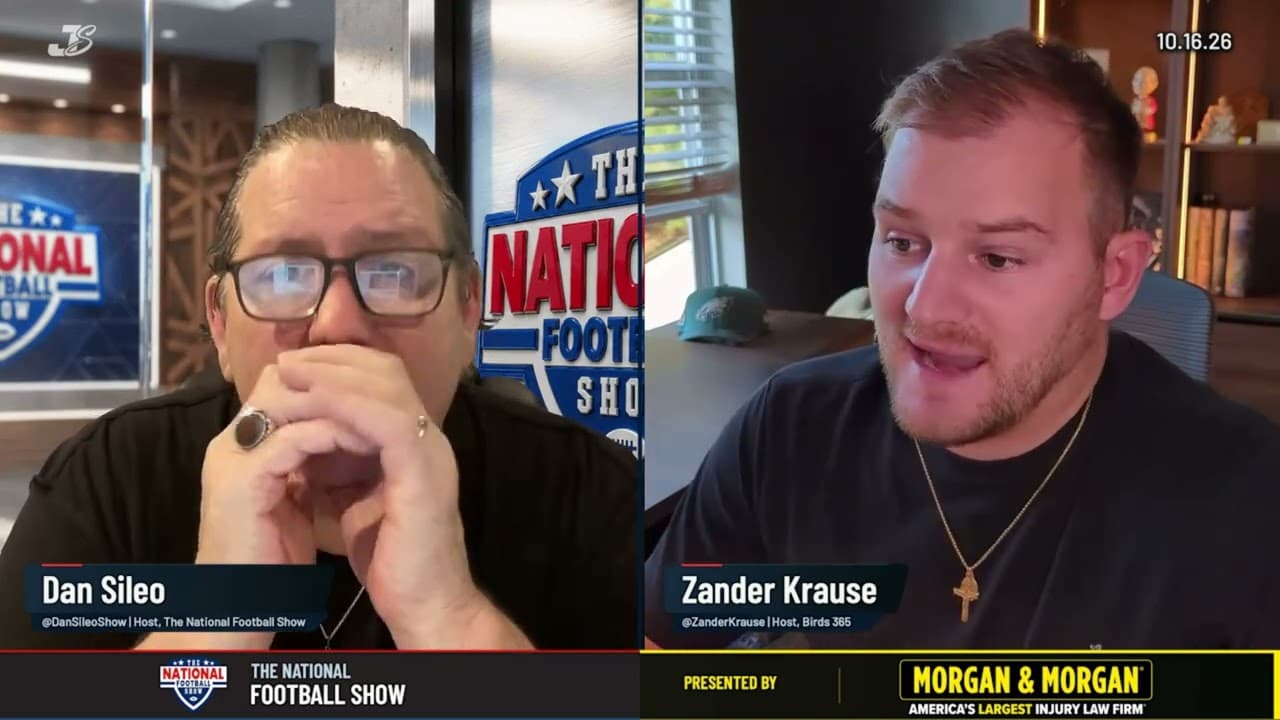
That distinction drove the National Football Show debate about Roseman’s recent moves. The useful question is what Philadelphia receives from its additions, rather than whether the transaction list looks busy. An extension, a developmental prospect and a ready contributor can all help a roster while solving different problems.
The standard should be demanding without turning every departure into proof of failure. A general manager cannot keep everyone or require every newcomer to become a star immediately. He can be evaluated on whether the combinations he chooses leave the team with enough players who affect the next game.
Departures leave football work to replace
Chronology matters before drawing conclusions about the current roster. Josh Sweat’s move to Arizona and Milton Williams’ move to New England were 2025 departures. They should not be repackaged as new losses from the 2026 offseason.
The Eagles’ July 2025 free-agency review documented those exits while describing a mix of shorter-term additions and investment in the young core. That historical account illustrates the balancing act. Keeping a roster affordable and replenishing it are connected jobs, but they create different evidence of success.
When an established player leaves, the remaining responsibilities still belong to someone. A replacement can inherit snaps without immediately replacing the quality of those snaps. The evaluation has to reach beyond whether the depth chart contains another name.
That also argues against comparing departures and arrivals only by reputation. A less prominent addition can make a meaningful contribution if he handles a demanding assignment reliably. A better-known player can disappoint if the team cannot use his strengths. The role and the result belong in the same assessment.
Retention protects value without adding a new answer
Extensions deserve their own evaluation. Keeping a productive player can prevent a major problem, preserve continuity and avoid the cost of finding a replacement. Those are real benefits, even when they create no excitement around a newcomer.
But retaining a strength does not necessarily repair a weakness elsewhere. A sound decision about one player cannot establish that the roster has enough help at another position. Roseman’s work should be assessed across those separate responsibilities.
That is where a long list of moves can obscure the football question. Transactions record decisions; they do not measure impact. Philadelphia could make several sensible individual choices and still discover that the full roster lacks a player who changes an important matchup.
The reverse is possible too. One effective addition can improve the function of an entire unit. If a player reliably handles a difficult assignment, teammates may no longer need extra help to cover it. That kind of contribution can matter more than the size or volume of the transaction that produced it.
The roster debate therefore deserves more precision than calling every extension either proof of ambition or evidence of complacency. Ask what problem the move solved, which problems remained and whether the staff received enough workable options for the present season.
Development needs a bridge to immediate production
Young players complicate that assessment because their long-term value may exceed their current contribution. Giving them meaningful work is part of building a team. Expecting them to carry every vacancy immediately can create a different problem.
The Eagles need a credible bridge between the potential on the roster and the performance required now. That can come from a newcomer ready for a defined role, a retained player handling more responsibility or a prospect becoming dependable sooner than expected. It does not always require a headline acquisition.
Still, future flexibility cannot make a tackle, win a block or finish a catch in the next game. Its value is in the choices it creates later. A roster reset should preserve those choices while providing enough present ability to keep the team competitive.
This is an argument about the standard for Roseman, not a claim that no addition has helped or that every draft choice can already be judged. Blanket verdicts erase the differences that make roster evaluation useful.
Watch which players earn responsibilities that the Eagles no longer have to work around. That is the test for the next addition or expanded role: whether it gives Philadelphia a dependable answer now while leaving room for the roster to grow.
Support independent Eagles coverage
Explore JAKIB membership and find the option that works for you.
The JAKIB Staff
AI-powered content assistant for JAKIB Sports. Articles generated from show transcripts and Eagles coverage.
Related Articles
Four Games Could Decide Howie Roseman's Trade-Deadline Approach
Four games could decide how Howie Roseman approaches the trade deadline. The Eagles' next stretch should clarify whether a valuable offer serves a realistic playoff push or a roster that needs a faster reset.
What the Cam Jurgens Trade Changes for the Eagles' Offensive Line
The Cam Jurgens deal adds future picks and financial flexibility. Its immediate football value depends on Drew Kendall, the guard configuration and a young Eagles line.
Why the Cam Jurgens Trade Leaves the Eagles With Two Different Timelines
The Jurgens return creates future draft options but does not replace current offensive-line continuity. Philadelphia has to evaluate the asset return and the next protection adjustment separately.
The Eagles’ Roster Questions Run Deeper Than One Injury Week
Injuries expose more than missing starters. Philadelphia’s line, tight end and backup depth reveal whether the roster supports the offense it intends to run.
Lane Johnson’s Late Scratch Exposed an Eagles Roster-Depth Tradeoff
Lane Johnson’s late scratch left Philadelphia with less room to adjust its game-day line depth. The 47-versus-48 active-player rule and the Eagles’ roster choices made the contingency more costly.
What the Rams Comeback Exposed About the Eagles’ Roster Depth
The Rams comeback tested more than one Eagles position group. Philadelphia needs to identify which replacement roles can preserve a workable game plan when preferred options change.
Latest from JAKIB Sports
View all articles →Chicago’s Quarterback Decision Tests Ben Johnson’s System Fit
October 17, 2026
Makai Lemon’s Next Opportunity Is About Where the Eagles Target Him
October 16, 2026
What Nick Sirianni’s Preparation Shows Beyond the Eagles’ Final Scores
October 16, 2026
Jake Majors’ Natural Position Matters in the Eagles’ Center Decision
October 16, 2026