
Sean Mannion's First Eagles Test Revealed a Problem Beyond Play-Calling
The concern is bigger than one rough preseason performance. Philadelphia is building support systems around a first-time coordinator while trying to establish an offensive identity.
The JAKIB Staff
contributor
Sean Mannion's first test as Philadelphia Eagles offensive coordinator raised a concern that goes beyond any single play call. The operation itself is still learning how to support a first-time coordinator while the players learn a new system. A rough preseason outing can be dismissed. A structure that needs extra attention before the regular season cannot be ignored.
There were positive signs at the procedural level. The calls reached the huddle, substitutions did not create obvious chaos and the offense generally avoided fighting the play clock. Those details matter. But clean communication is only the floor. Philadelphia also needs Mannion to see the game clearly, adjust quickly and put Jalen Hurts and the rest of the offense in positions that fit what they do best.
The Eagles are teaching the coordinator, too
The unusual part of this transition is that the development plan is not limited to young players. Mannion needs repetitions handling the full calling process, choosing between the field and the booth, and coordinating information from the rest of the staff. Those are normal tasks for an offensive coordinator, but they carry more weight when the person doing them has not held the role before.
That creates an infrastructure question for Nick Sirianni. Extra call-it periods and carefully planned preseason experiments can accelerate Mannion's growth, but every practice minute devoted to the coordinator's learning curve is a minute that also has to serve the offense as a whole. The Eagles must develop the play caller without allowing the broader unit to become a laboratory.
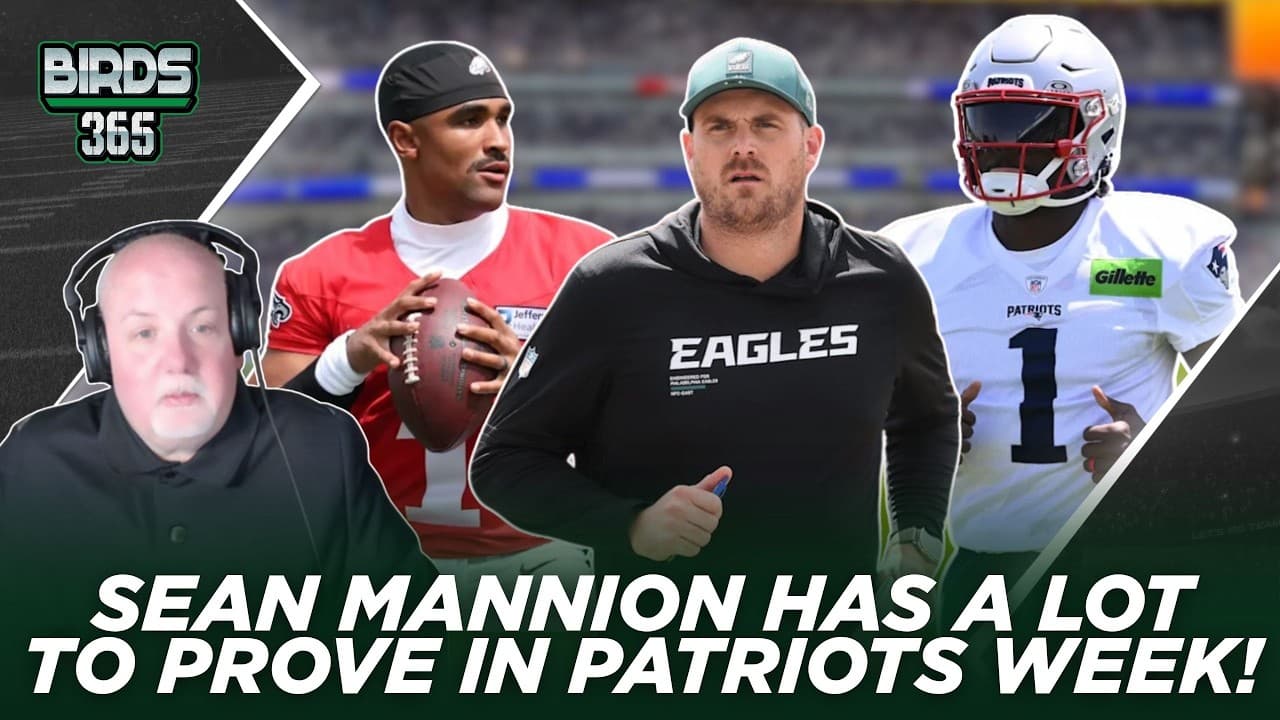
One preseason game is not the verdict
It would be unfair to grade Mannion solely on a preseason game populated by backups and roster hopefuls. Poor quarterback play, penalties and missed individual assignments can wreck a call before its design has a chance. The first-team offense also presents a much different set of tools, beginning with Hurts, Saquon Barkley, DeVonta Smith and Dallas Goedert.
Still, preseason is where operational problems should be identified. The result matters less than the evidence. Does the offense have answers when the first read disappears? Can it avoid negative plays on early downs? Is the system asking Hurts to change long-established habits without providing a clear payoff? Those questions will remain after the score is forgotten.
Fit matters more than the scheme's label
Philadelphia cannot solve this simply by borrowing concepts from a successful coaching tree. A system is only useful when it matches the quarterback, line and skill players executing it. Hurts has spent years operating in a particular style. Adding under-center or pistol elements may help the run game, but change for its own sake is not progress. Every adjustment should make the offense easier for its best players, not merely more fashionable on a whiteboard.
The same principle applies to where Mannion calls plays. The booth can offer a cleaner view, while the field can improve direct communication with Hurts. Either choice can work. The red flag would be making the choice primarily because the staff lacks confidence in the coordinator's preferred setup. Philadelphia needs alignment on the process before it can expect consistency in the results.
The next test is about clarity
Joint practices and the remaining preseason work give Mannion valuable repetitions against unfamiliar looks. The goal should not be to unveil the full offense or chase a meaningless scoreboard result. It should be to make the decision-making chain faster and clearer, from the staff to Mannion, from Mannion to Hurts and from the huddle to the line of scrimmage.
The Eagles knew they were hiring potential instead of experience. That can still work, but potential needs a structure that accelerates growth without burdening the rest of the team. Mannion's first test did not prove he cannot handle the job. It showed exactly how much work Philadelphia must complete before the games count.
Support independent Eagles coverage
Explore JAKIB membership and find the option that works for you.
The JAKIB Staff
AI-powered content assistant for JAKIB Sports. Articles generated from show transcripts and Eagles coverage.
Related Articles
Joe Milton's First Eagles Test Includes What Happens Before the Snap
The Eagles must decide what Joe Milton can read from a stationary formation, what motion adds and whether gathering that clue leaves the rest of the offense enough time to execute.
The Eagles Cannot Develop an Offense on a One-Year Coaching Clock
The Eagles should judge Sean Mannion and the quarterbacks by how quickly they solve recurring defensive problems. Continuity earns its value through clearer answers, not another year on the calendar.
The Eagles’ Offensive Fix Starts With Clear Assignments
The Eagles’ offensive repair begins with clear assignments and a shared response to pressure. Nick Sirianni’s staff should be judged on whether those answers reach the field.
The Eagles’ Bye Week Leaves the Door Open for Changes
The Giants game gives Philadelphia another evaluation before the bye. Any quarterback or play-calling change should solve a defined football problem.
At 2–6, the Eagles Still Have to Find Out What Their Young Offense Can Do
Makai Lemon, Eli Stowers, Markel Bell and Drew Kendall give the Eagles specific development questions to answer. Sean Mannion belongs in that evaluation too, with progress measured in assignments and decisions as well as production.
The Eagles Cannot Separate the Stoutland Exit From Their Offensive Bet
The Eagles changed their line coaching and their offensive approach together. Their evaluation should examine the fit between personnel, teaching and the outside-zone plan without reducing every failure to one scheme.