
Why Saquon Barkley Looks Like He's Running Behind the Giants Again
Saquon Barkley's patience becomes a liability when Philadelphia's offensive line cannot create movement. The Eagles have to change the blocking picture or give him a more direct rushing assignment instead of waiting for dominant lanes to return.
The JAKIB Staff
contributor
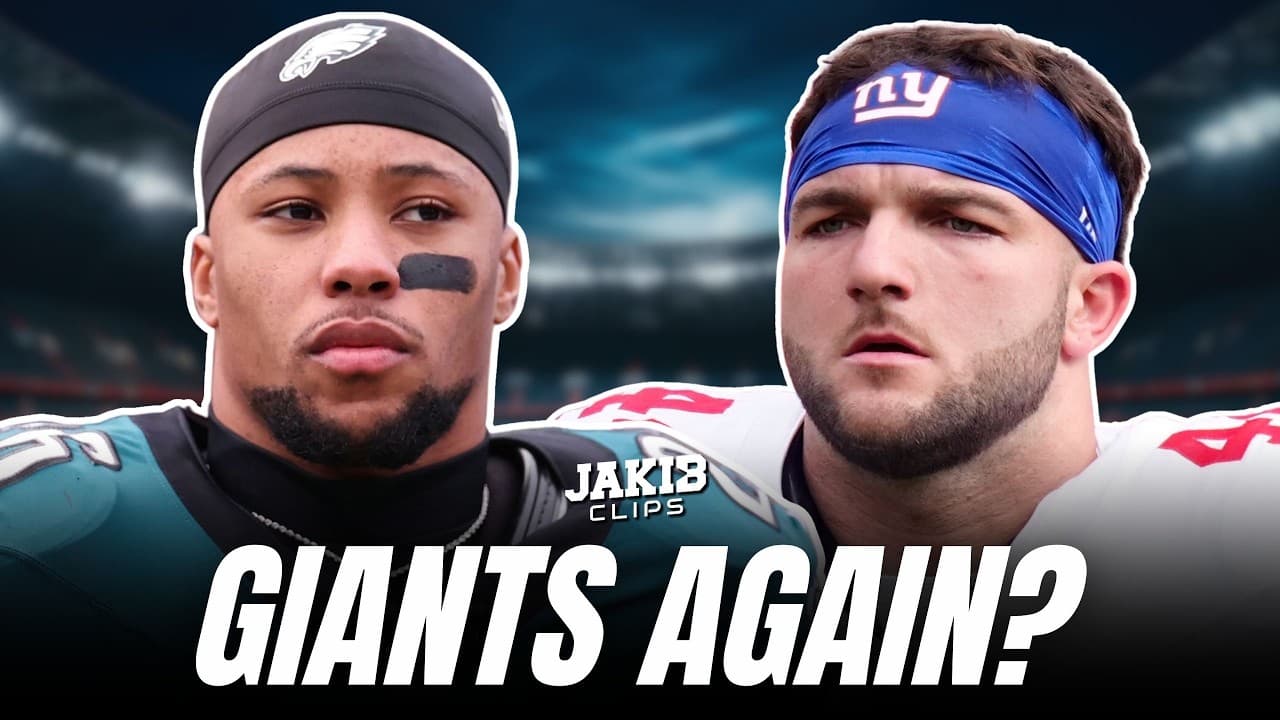
Saquon Barkley looks like he is running behind the New York Giants again because the Philadelphia Eagles are asking patience to create space that the offensive line is not producing. His style still works when blocks develop, but hesitation becomes a trap when penetration arrives first.
This is not a claim that Barkley suddenly lost his vision or explosiveness. It is a mismatch between the runner's timing and the current state of the line. Philadelphia has to adjust that relationship instead of expecting last season's movement to reappear because the same star is in the backfield.
Patience works only when the crease is coming
Barkley has made a career out of pressing the line, influencing linebackers and choosing the opening that gives him the biggest return. Behind a coordinated front, that extra beat lets a combination block finish and turns a modest run into an explosive one.
The same pause creates a different result when the interior is moving backward. A defender who has already crossed the line does not give the back time to manipulate the second level. The run becomes a collision in a shrinking space before Barkley can test the edge of the design.
That is why the current tape resembles the difficult stretches of Barkley's Giants career. The comparison is about the environment, not the uniform. A gifted runner is being asked to manufacture clean lanes behind a front that is losing too many early contacts.
Tank Bigsby offers a useful contrast
Tank Bigsby's more direct approach shows what the same blocking picture can demand. He can lower his pads, choose the available gap and take the small gain before the defense closes it. That does not make him the better back. It makes his style easier to access when the line is not controlling the point of attack.
Philadelphia should use that contrast as information rather than a referendum on the depth chart. Bigsby can handle the snaps that reward immediate downhill commitment. Barkley can still carry the larger burden, but the call has to give him a decisive picture instead of an invitation to wait behind a losing block.
A rotation could also protect the offense from becoming predictable. Direct runs with Bigsby force defenders to respect the first available gap. Barkley's snaps can then feature motion, wider tracks or misdirection that slows pursuit and gives his vision a meaningful choice.
Personnel cannot be the only signal. If every Bigsby snap means an immediate interior run and every Barkley snap means patience, the defense will adjust before the handoff. Philadelphia has to let both backs execute enough overlapping concepts to keep the response honest.
The run game has to change before the line does
The Eagles cannot wait for every interior blocker to recover or develop. They can change the entry point now. More immediate downhill runs would reduce the time defenders have to cross a face, while wider concepts could move the first collision away from the most vulnerable part of the line.
The passing game can help as well. Hurts' decisiveness creates opportunities to pair quick throws with the same initial run action. If linebackers cannot attack downhill without consequence, Barkley receives the fraction of space that his patient style is designed to exploit.
The wrong response would be asking Barkley to solve every muddy look through talent. That is how a team turns a premium runner into an expensive collision collector. His best trait is the ability to punish a defense once the blocking gives him a real decision.
Philadelphia's next game should reveal whether the staff views this as a temporary slump or a structural mismatch. Watch Barkley's track on the first several carries: if the design gets him moving decisively before contact, the Eagles have adjusted. If he is still waiting for absent lanes, the Giants comparison will keep following him through the season.
Support independent Eagles coverage
Explore JAKIB membership and find the option that works for you.
The JAKIB Staff
AI-powered content assistant for JAKIB Sports. Articles generated from show transcripts and Eagles coverage.
Related Articles
Why the Eagles’ Run and Pass Games Aren’t Working Together
The Eagles’ run and pass games aren’t working together when one fails to make the other easier. Against Jacksonville, 22 rushing yards left Jalen Hurts carrying a passing workload that produced too little sustained offense.
Jalen Hurts’ C-Minus Game—and the Offensive Line Behind It
A C-minus is a defensible editorial grade for Jalen Hurts’ uneven afternoon against Jacksonville. But fixing the Eagles’ passing game requires examining the protection and rushing support behind him, not simply circling the quarterback’s name.
Why the Eagles Couldn’t Finish Off Jacksonville
The Eagles couldn’t finish off Jacksonville because their offense stopped giving the defense breathing room. A 19-17 loss turned another winnable afternoon into a reminder that late heroics cannot replace sustained scoring.
Jalen Hurts' Next Contract Depends on More Than His Own Performance
Jalen Hurts' next contract decision connects directly to the Eagles' supporting roster. Philadelphia has to evaluate quarterback performance and a credible rebuilding plan together.
The Eagles' Makeshift Offensive Line Turns Jacksonville Into a Protection Test
The Eagles face Jacksonville with an offensive line in transition. Center uncertainty and Markel Bell's development will shape how Philadelphia protects Jalen Hurts.
Lane Johnson's Exit Turns Markel Bell Into an Eagles Development Test
Markel Bell inherits an immediate right-tackle audition after Lane Johnson’s retirement. Protection support and communication will determine how useful that development opportunity becomes.