
Saquon Barkley Can Raise the Eagles’ Floor Without Repairing the Whole Offense
Saquon Barkley could make the Eagles more dependable against Dallas if he returns. His availability, the supporting cast and the offensive plan will determine how much changes.
The JAKIB Staff
contributor
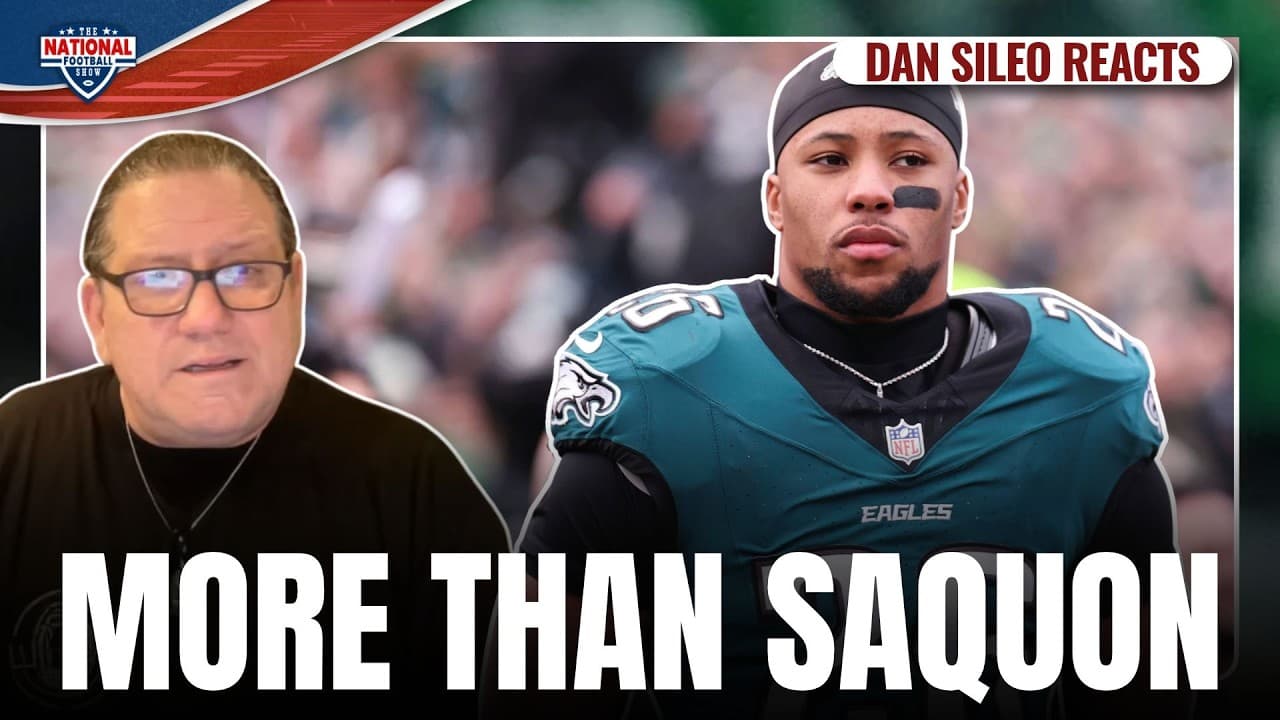
Saquon Barkley could give the Eagles a more dependable offense against Dallas without supplying a complete repair. If he returns Monday, the useful question is how many difficult possessions he can make manageable, rather than whether his presence restores an entire attack.
A healthy, available Barkley would change the choices Philadelphia can put in front of a defense. The size of that change would still depend on blocking, receiving options and how the calls fit together. A running back can finish a play. He cannot perform everybody else’s assignment.
Barkley’s value starts with the ordinary possession
The most practical benefit would be giving the Eagles another route out of a difficult series. An offense that can gain useful yards without demanding a difficult throw every time has more room to operate. That matters even on possessions that never produce a highlight.
Consider the decision facing a coordinator after a modest first-down gain. A credible running option can keep several calls available. A negative run changes the problem immediately, putting more pressure on the next protection and the next route. Barkley could improve the outcome, but the blocking determines where that play begins.
His potential contribution also reaches beyond carrying the ball. A back who can threaten space gives a play designer another way to make a defender choose. That is an offensive possibility, not a prediction that Dallas will change its coverage simply because Barkley enters the huddle.
Philadelphia should judge the benefit through repeatable possessions: manageable distances, a usable answer against pressure and fewer calls that depend on somebody rescuing a broken play. One long run can change a scoreboard. Several ordinary successful plays can change the offense’s working conditions.
Dallas offers an opportunity, with conditions attached
A season average describes what previous opponents produced. It cannot tell Philadelphia whether its own line will create the same openings, or whether an available Barkley could handle every situation. Treating that ranking as a promised rushing total would skip the work that produces those yards.
The sensible approach would be to identify runs the available blockers can execute cleanly and build complementary answers around them. Repeating an effective concept can force Dallas to adjust. Repeating a failing concept simply because the opponent carries a poor ranking wastes the opportunity.
The passing consequences matter, too. If defenders can crowd the line without paying for it elsewhere, the running back inherits a harder job. The Eagles would benefit from throws that punish those choices. Barkley’s name on the lineup would offer no substitute for timing or a clear read.
The available supporting cast sets the ceiling
If receiving options are limited, the design challenge becomes more specific. A coordinator can use formations and releases to help replacements, but every added responsibility takes preparation. A player asked to block, release and locate the right space still has to execute each part.
The line faces a related demand. Protection and run blocking belong in the same plan, because defensive adjustments affect both. A successful run should help create a useful next call. A passing concept should provide an answer when Dallas commits extra attention near the line.
That is the distinction worth carrying into Monday: Barkley could make Philadelphia more functional while the larger offensive questions remain open. The next meaningful checkpoints are Saturday’s availability update and the actual assignments the Eagles can execute with the players they have.
Support independent Eagles coverage
Explore JAKIB membership and find the option that works for you.
The JAKIB Staff
AI-powered content assistant for JAKIB Sports. Articles generated from show transcripts and Eagles coverage.
Related Articles
Saquon Barkley’s Value in an Eagles Rebuild Goes Beyond His Stat Line
Saquon Barkley’s leadership belongs in the Eagles’ roster discussion alongside his football role and the opportunities available to younger backs. His contract already runs through 2028, and long-term value does not settle game-day medical questions.
Washington’s Blitz Puts the Eagles’ Backfield on the Spot
Washington’s pressure approach tests the Eagles’ running-back protection. Saquon Barkley is cleared to play, but Philadelphia still needs coordinated answers from its backfield and quarterback.
The Eagles Can’t Price Their Trade Chips on Reputation Alone
Landon Dickerson, Dallas Goedert and Saquon Barkley present different trade questions. Philadelphia should judge a hypothetical return against buyer fit and the football it would surrender.
The Eagles’ Backup Plan Has to Fit the Offense
The Eagles should evaluate their backup quarterbacks by what each allows the offense to keep doing. Dallas provided productive Tanner McKee possessions, while leaving a larger question about continuity behind Jalen Hurts.
The Eagles’ Scripted First Play Raised a Communication Problem
Philadelphia’s opening sack against Carolina raised questions before pressure arrived. The correction starts with a shared call and a clear answer to pressure.
The Eagles’ Trade Deadline Math Goes Beyond a Future Comp Pick
A potential compensatory pick gives the Eagles one reason to keep a contributor, but future free-agent decisions can change that calculation. Any trade offer also has to cover the player’s football value and the cost of replacing his work.
Latest from JAKIB Sports
View all articles →The Eagles Still Need an Evaluation Window for Keyshawn James-Newby
November 12, 2026
Jalen Carter’s Next Test Is the Work Jordan Davis Leaves Behind
November 12, 2026
Moro Ojomo Is the Eagles’ Next Defensive-Line Price Test
November 12, 2026
Dallas’ Coaching Problem Runs Deeper Than Replacing Brian Schottenheimer
November 12, 2026