
Why Saquon Barkley Is Not a Perfect Fit for the Eagles' New Offense
Saquon Barkley remains the center of Philadelphia's offense, but Sean Mannion's new run design asks him to win differently. The Eagles can make the transition work without pretending it recreates the 2,000-yard formula that already proved ideal for their star back.
The JAKIB Staff
contributor
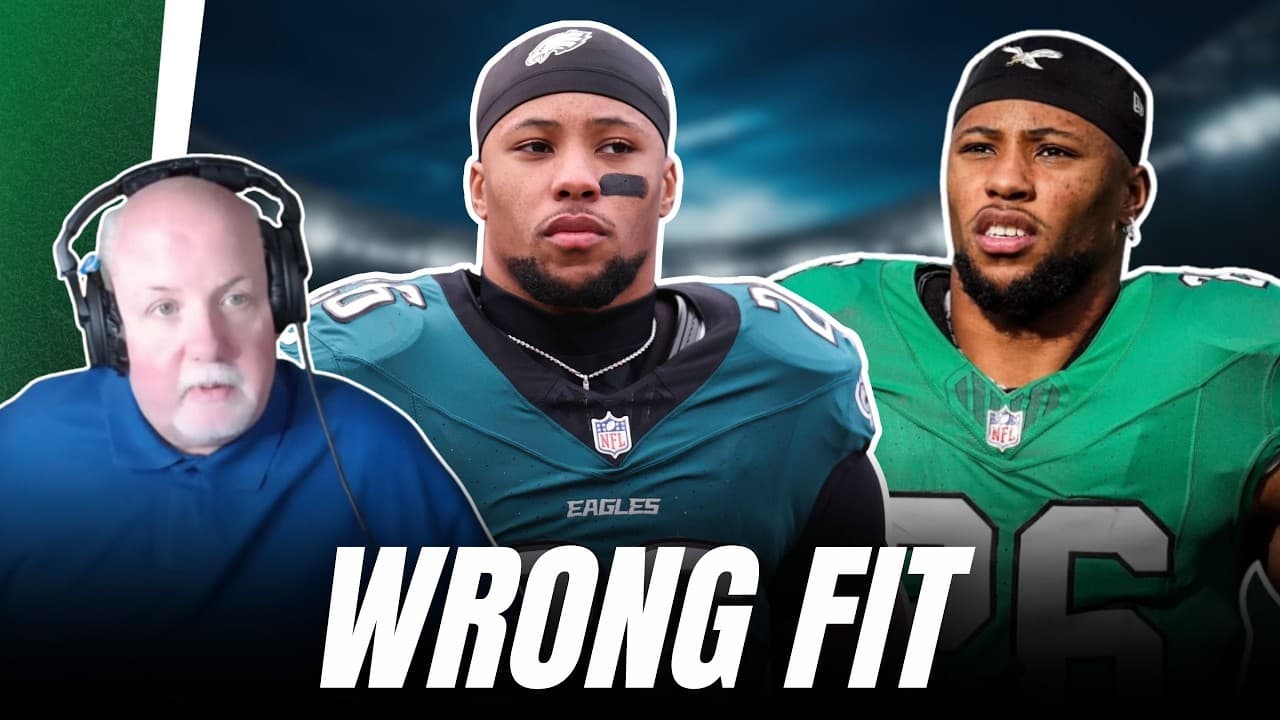
Saquon Barkley can remain an elite runner without being a perfect fit for the Philadelphia Eagles' new offense. That distinction matters because Sean Mannion's design changes the reads and timing around the player who still anchors the entire unit.
Philadelphia already found the ideal formula for Barkley during his 2,000-yard season. The line created decisive inside lanes, Barkley could attack downhill, and his jump cut punished defenders who committed too early. Moving away from that formula creates an adjustment, even if the talent remains overwhelming.
The new Eagles run game asks for more patience
The central change is the balance between inside and outside runs. Barkley's best Philadelphia work came with a direct path to the line and room to make one violent cut. A heavier outside-zone menu asks him to stretch the defense, stay patient behind the blocking and choose the crease later.
That approach can still produce explosive plays. Barkley has the vision, acceleration and contact balance to solve difficult pictures. The issue is efficiency: every extra read gives pursuit another moment to close, while a clean inside track lets him hit the second level before the defense can reset.
Mannion does not need to abandon his system to protect Barkley. The Eagles can preserve enough inside zone, shotgun and pistol work to keep his most natural answers available. A varied menu becomes useful when it creates conflict; it becomes wasteful if variety pushes the best player away from his clearest advantage.
Scheme fit does not reduce Barkley's role
The answer is not to manufacture touches for the other running backs. Barkley changes the defense before the snap, and removing him makes every call easier to diagnose. Tank Bigsby can provide dependable depth, but depth protects the offense from injury rather than replacing its featured player by committee.
Workload management belongs primarily during the practice week. On game day, Philadelphia gains more by keeping Barkley central and choosing his calls carefully than by chasing an artificial touch limit. The offense is already installing new ideas; reducing its most reliable source of gravity would make that transition harder.
A major receiving expansion also should not become the shortcut. Screens, checkdowns and an occasional wheel route can punish aggressive fronts, but Barkley's highest value remains forcing the defense to fit the run. The passing game should complement that threat instead of asking him to become a different kind of centerpiece.
The offensive line decides whether the adjustment works
Healthy blocking can cover a great deal of schematic friction. If the front reaches landmarks on time and prevents early penetration, Barkley gets the space required to be patient. If the timing breaks down, outside runs can turn into long lateral trips that end before his power or jump cut matters.
That makes September an evaluation of the whole operation, not a referendum on the running back. Mannion's sequencing, the line's communication and Barkley's pacing all affect the same play. Philadelphia should judge whether the new structure creates repeatable answers rather than waiting for one spectacular run to settle the argument.
The cleanest plan blends old certainty with new stress. Inside runs can punish light boxes, outside action can widen linebackers, and play-action can exploit the hesitation both create. Barkley remains the constant. The weekly question is whether the calls consistently place him one decision away from open grass.
The Eagles do not need to recreate every detail of the previous offense. They do need to recognize what the old formula revealed about their star. Week 1 will show whether Mannion treats Barkley's best traits as the foundation of the new system or merely another piece inside it.
Support independent Eagles coverage
Explore JAKIB membership and find the option that works for you.
The JAKIB Staff
AI-powered content assistant for JAKIB Sports. Articles generated from show transcripts and Eagles coverage.
Related Articles
Why the Eagles’ Second-Half Offense Remains Their Biggest Problem
The final kickoff decided the Jacksonville game, but Philadelphia’s 232-yard offense creates a more persistent test for Jalen Hurts and the play-calling staff.
Why the Eagles’ Run and Pass Games Aren’t Working Together
The Eagles’ run and pass games aren’t working together when one fails to make the other easier. Against Jacksonville, 22 rushing yards left Jalen Hurts carrying a passing workload that produced too little sustained offense.
Jalen Hurts’ C-Minus Game—and the Offensive Line Behind It
A C-minus is a defensible editorial grade for Jalen Hurts’ uneven afternoon against Jacksonville. But fixing the Eagles’ passing game requires examining the protection and rushing support behind him, not simply circling the quarterback’s name.
Why the Eagles Couldn’t Finish Off Jacksonville
The Eagles couldn’t finish off Jacksonville because their offense stopped giving the defense breathing room. A 19-17 loss turned another winnable afternoon into a reminder that late heroics cannot replace sustained scoring.
Jalen Hurts' Next Contract Depends on More Than His Own Performance
Jalen Hurts' next contract decision connects directly to the Eagles' supporting roster. Philadelphia has to evaluate quarterback performance and a credible rebuilding plan together.
The Eagles' Makeshift Offensive Line Turns Jacksonville Into a Protection Test
The Eagles face Jacksonville with an offensive line in transition. Center uncertainty and Markel Bell's development will shape how Philadelphia protects Jalen Hurts.