
Makai Lemon's Missed Reps Will Limit His Early Eagles Role
Makai Lemon's return helps the Eagles, but missed timing work with Jalen Hurts cannot be recovered at once. Motion and slot usage offer a practical early role while Dontayvion Wicks holds the advantage.
The JAKIB Staff
contributor
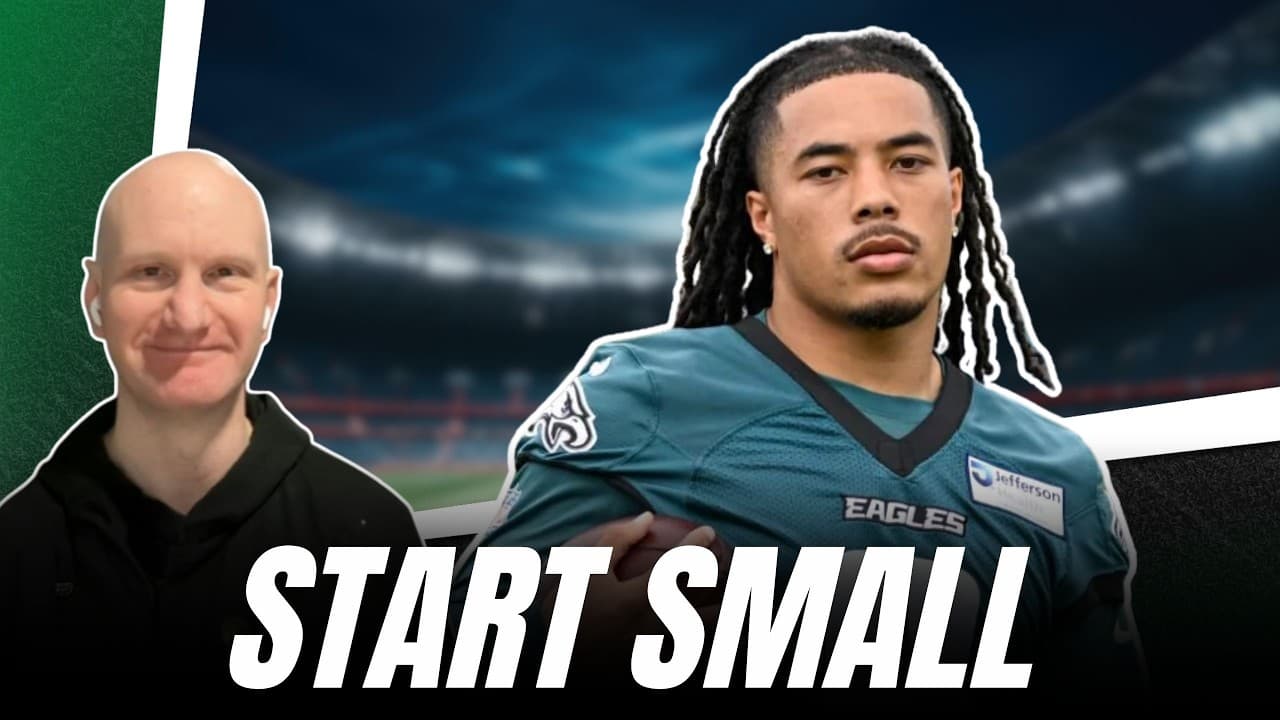
Makai Lemon is back on the field, but the Eagles cannot give him back the training-camp repetitions he missed. His early role should reflect that reality: selective motion and slot work while Dontayvion Wicks remains ahead in the receiver rotation.
That is not a verdict on Lemon's talent or long-term ceiling. It is a consequence of timing. A rookie entering a new offense needed every available rep with Jalen Hurts, and the hamstring interruption removed too many of them to pretend the transition will be immediate.
Receiver chemistry cannot be rushed
Quarterback-receiver timing develops through repeated details. The route depth, release, leverage read and adjustment against coverage all have to match the quarterback's expectation. Lemon lost opportunities to build those shared answers while the Eagles installed Sean Mannion's offense.
His return showed the difference between being available and being fully integrated. The offense worked to get him a touch, but his involvement remained limited. DeVonta Smith stepped back into practice and immediately looked like the polished target Philadelphia expects. Lemon's path will be more gradual.
The smart response is to narrow the assignment instead of forcing volume. Motion can help Lemon avoid static releases and reveal coverage. Slot alignments can create cleaner access to space. A defined menu lets him play fast while the broader route relationship with Hurts develops.
That package can still matter. A defense has to account for movement before the snap, and a quick touch can punish hesitation without asking Lemon to own the entire progression. Useful does not have to mean featured, especially while the rest of the offense establishes its weekly identity.
Wicks owns the early advantage
Dontayvion Wicks used the absences around him to become a primary practice target. He brought a reputation as a skilled route runner who creates separation, and his summer work gave the Eagles a larger sample inside their own offense. That makes him the logical second receiver when Philadelphia opens in heavier personnel.
Wicks still has something to prove. His focus and hands will be tested when Smith returns to the center of the passing game and Wicks receives fewer opportunities. Producing as a complementary target requires the same attention on five chances that a featured receiver brings to ten.
If Wicks handles that transition, Lemon will not pass him simply because of draft status. The rookie will have to make his smaller package productive, remain healthy and gradually earn the trust attached to broader assignments. That is a healthier development plan than manufacturing a depth-chart change before the evidence supports it.
The competition can remain open without becoming unstable. Wicks gets the first chance because his summer work earned it. Lemon gets a path to apply pressure through execution. Philadelphia can expand the rookie's responsibility when his timing and reliability make the choice easy.
That approach also protects Hurts. A quarterback learning a revised offense benefits from receivers who arrive at the expected landmark. Reducing uncertainty around one role helps the passing game find rhythm while Lemon catches up on the details he missed.
Professional habits can turn the setback forward
Lemon's comments about becoming more professional off the field point toward the right response. The context concerned body preparation, including hydration, diet, rest and the daily work required to remain available. Learning those habits early can turn a frustrating camp into useful career instruction.
The Eagles do not need Lemon to solve the entire passing game in September. Smith supplies the polished centerpiece. Wicks can handle the early complementary work. Barkley and the outside-zone run game give Mannion a structure that reduces pressure on every young receiver.
Lemon's first challenge is smaller and more concrete. Stay available, execute the motion and slot package, and turn limited touches into dependable plays. If he does that, the route tree and snap count can expand naturally. The depth-chart decision should follow his command of those early assignments, not the urgency attached to his draft position.
Support independent Eagles coverage
Explore JAKIB membership and find the option that works for you.
The JAKIB Staff
AI-powered content assistant for JAKIB Sports. Articles generated from show transcripts and Eagles coverage.
Related Articles
The Eagles’ Next Offensive Plan Needs a Builder, Not a Copy
Sean Mannion’s next offensive plan should connect the quarterback’s reads, receiving roles and protection timing. A useful role for Makai Lemon and a dependable core of calls would give Philadelphia a foundation to develop.
Makai Lemon’s Next Opportunity Is About Where the Eagles Target Him
Makai Lemon’s next opportunity should depend on where the Eagles target him, not simply how often. Catches beyond the line can give Philadelphia a clearer way to build and evaluate his role.
Why the Eagles’ Second-Half Offense Remains Their Biggest Problem
The final kickoff decided the Jacksonville game, but Philadelphia’s 232-yard offense creates a more persistent test for Jalen Hurts and the play-calling staff.
How the Eagles Lost the Final Eight Seconds Against Jacksonville
Philadelphia led Jacksonville with eight seconds left but lost on a final field goal. The clock, kickoff choice and coverage failure each deserve a separate review.
The Clock Decision That Preserved Jacksonville’s Winning Chance
The Eagles preserved Jacksonville’s winning chance when their final possession left eight seconds for a kickoff. The clock stopped on Makai Lemon’s late catch, allowing the Jaguars to save their last timeout for the next play.
Why the Eagles Couldn’t Finish Off Jacksonville
The Eagles couldn’t finish off Jacksonville because their offense stopped giving the defense breathing room. A 19-17 loss turned another winnable afternoon into a reminder that late heroics cannot replace sustained scoring.
Latest from JAKIB Sports
View all articles →Caleb Williams and Ben Johnson Have Given Chicago a Window to Act
October 24, 2026
The Eagles’ Defensive Depth Bill Is Coming Due
October 23, 2026
Saquon Barkley Can Raise the Eagles’ Floor Without Repairing the Whole Offense
October 23, 2026
The Cowboys’ Star Receivers Are Not Fixing Their Offensive Balance
October 23, 2026