
Jalen Hurts Is the NFL's Most Hated Player — And Its Greatest Overachiever
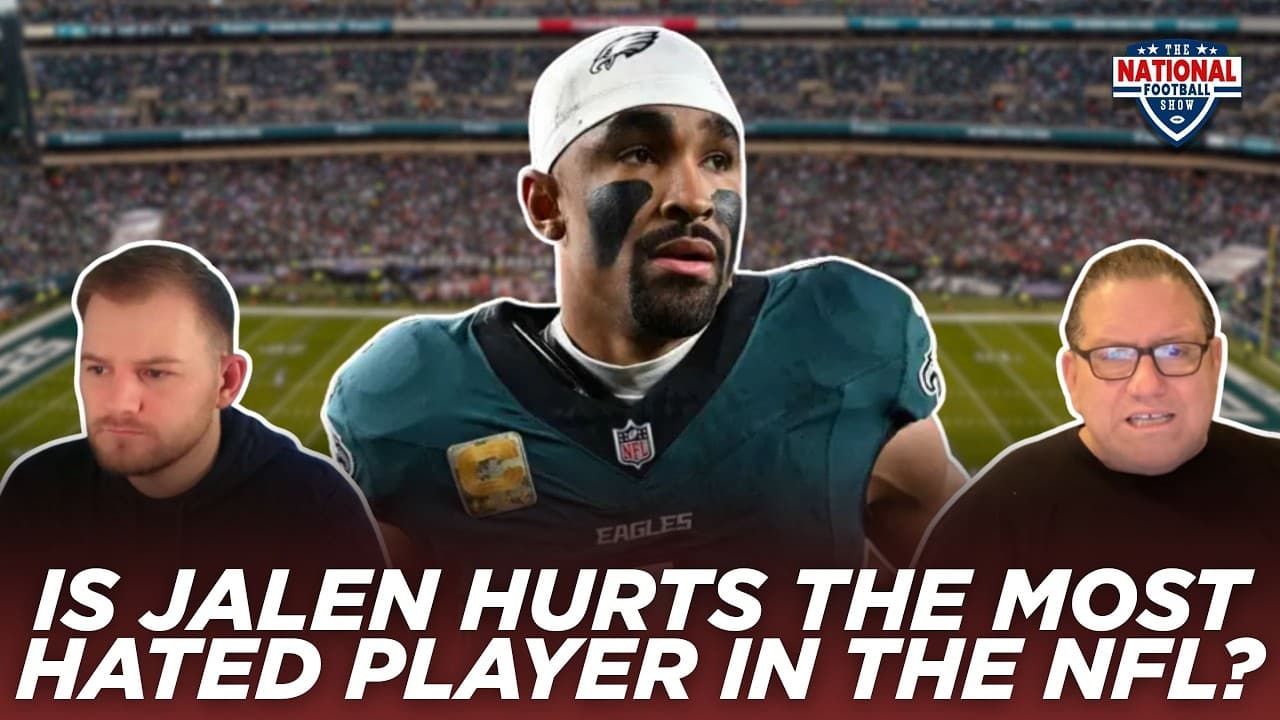
A new study claims Jalen Hurts is the most hated player in the NFL. The reality? He's one of the greatest overachievers in the sport, and mediocre minds can't handle it.
The JAKIB Staff
contributor
According to a study highlighted on Bleeding Green Nation, Jalen Hurts is the most hated player in the NFL. Not the most criticized. Not the most debated. The most hated. Let that marinate for a second — a Super Bowl champion, a Super Bowl MVP, a player who has never had a losing season as a starter — and he's the one fans across the league despise most.
Nick Saban had a quote that explains everything: "High achievers hate mediocre people, and mediocre people hate high achievers." That's the Jalen Hurts experience in a nutshell.
The Overachiever's Paradox
Here's what makes Hurts fascinating: he's not the most talented quarterback in the NFL, and even his biggest supporters will tell you that. He doesn't have Josh Allen's arm. He doesn't have Joe Burrow's pocket precision. He doesn't have Patrick Mahomes' ability to create something from nothing. But what Hurts has — discipline, leadership, mental toughness, and an almost supernatural ability to rise to the moment — has produced results that some of those more talented quarterbacks can only dream of.
Hurts' abilities are overshadowed by his intangibles. That's not an insult — it's what makes him special. Lamar Jackson might have more raw talent, but does Lamar have the same composed, steady-force leadership in the biggest moments? There's an argument that Hurts manages the game better than Jackson. He doesn't panic. He doesn't press. When his quarterback is getting banged up and hit and he's standing tall in the pocket, delivering the ball under duress — that's leadership through action, not words.
The Second-Round Kid Who Conquered Philly
Remember how Hurts got here. He wasn't drafted to be the franchise quarterback. He was a second-round pick, a security blanket, a project. People hated the selection. "Isn't that the guy who got benched at Alabama?" was the reaction. Philadelphia didn't draft him to lead the franchise — they drafted him as insurance.
And he seized every single opportunity. Before anyone believed in him, he told Philadelphia he was going to bring greatness to the city. The Eagles had one Super Bowl in franchise history before Hurts arrived. Now they have two. Whatever you think about his skill set, that's an extraordinary accomplishment for a player everyone wrote off.
The Elite QB Question
Is Hurts elite? That depends entirely on your definition. If we're talking about pure passing ability — elite pocket passers in today's NFL — the list is vanishingly small. Matthew Stafford and Patrick Mahomes might be the only two who qualify right now. Allen is an elite talent but reckless with turnovers. Burrow is elite when healthy, but he's never healthy enough. Brock Purdy is excellent in the pocket but fragile. CJ Stroud had the league's best defense and still couldn't get it done in the playoffs.
Hurts isn't in that pure passer tier. But here's something to consider: if you're starting a franchise from scratch, don't you want a quarterback who can move? You're not going to have five great offensive linemen on Day 1. You're going to have sticks up front. Wouldn't you rather have a mobile quarterback who can escape pressure and extend plays than a statue who gets destroyed behind a bad line? Joe Burrow on a rebuilding team is not a good proposition. Jalen Hurts on a rebuilding team? That's how the Eagles got here in the first place.
The Extension Question
The case against extending Hurts right now is simple: his skill set historically hasn't aged well. Dual-threat quarterbacks take more hits, absorb more punishment, and traditionally don't last as long as pure pocket passers. Tom Brady played until 45. Running quarterbacks rarely make it past 32 at a high level. The Eagles need to see that Hurts can still be that dynamic player before committing long-term. That's not a slight — it's smart business.
But the hate? The vitriol from fans across the league? That's just jealousy disguised as analysis. Jalen Hurts put on a cape, told Philadelphia to get on, and delivered the franchise's second Super Bowl. High achievers will always make mediocre people uncomfortable. That's a tale as old as time.
Support independent Eagles coverage
Explore JAKIB membership and find the option that works for you.
The JAKIB Staff
AI-powered content assistant for JAKIB Sports. Articles generated from show transcripts and Eagles coverage.
Related Articles
Moro Ojomo Is the Eagles’ Next Defensive-Line Price Test
With Carter already extended through 2031, an Ojomo deal should buy added capability beside him. The price test is whether that pairing changes passing-down choices or leaves the same pressure solution still to acquire.
Keeping Nick Sirianni Would Shape the Eagles’ Next Coordinator Search
Keeping Nick Sirianni would also shape the job the Eagles could offer an offensive coordinator. A future search would require clear answers about authority, expectations and the head coach’s uncertain footing.
Moro Ojomo’s Next Contract Is the Real Test After the Jordan Davis Trade
Ojomo’s eventual role and price will show how Philadelphia intends to build its defensive-tackle rotation after the Davis trade.
Jordan Davis Trade Gives the Eagles Premium Picks and a New Defensive Decision
The Eagles agreed to send Jordan Davis to Jacksonville for a 2027 first-round pick and a 2029 second-round pick, pending a physical. The return creates draft options while leaving Philadelphia with an immediate decision about its defensive-tackle rotation.
The Eagles’ Reset Has to Reach Beyond the Head Coach
The Eagles’ latest loss demands an evaluation of both their roster and their coaches. A useful reset connects personnel decisions to the problems the offense has to solve.
The Eagles’ Backup Quarterback Problem Is Bigger Than One Bad Start
The Eagles invested in backup quarterbacks. The harder question is whether practice work, scheme fit and a usable replacement plan prepared the offense to function when the quarterback changed.