
Why the Eagles’ 2-0 Start Still Depends on Fixing the Run Game
The Eagles are 2-0, but their running game is still the question they cannot carry indefinitely. Philadelphia has survived an uneven interior line and inconsistent rushing production; Monday against Chicago will show whether the offense can create dependable yards without asking Jalen Hurts to solve every difficult down.
The JAKIB Staff
contributor
The Philadelphia Eagles are 2-0, but their running game is still the question they cannot carry indefinitely. Winning close games while the interior line searches for consistency is a credit to the offense's resilience, not proof that its foundation is settled.
Monday's trip to Chicago gives Philadelphia a useful test. The Bears present a different problem from the first two opponents, but the larger issue belongs to the Eagles: can they create ordinary rushing yards before third down becomes another rescue mission for Jalen Hurts?
Two wins do not erase the line problem
Philadelphia beat Washington and Tennessee by narrow margins. Those results count fully in the standings. They also leave room to examine how the offense arrived there, especially the snaps when the ground game offered little relief and the passing game had to manufacture answers under pressure.
The concern is not that every run must break open. A productive ground game gives an offense manageable second downs, credible play-action looks and a way to control a defense late. When interior movement disappears, even good play calls can become long-yardage situations before the quarterback has a chance to operate.
There is a difference between a back missing a lane and a lane never developing. Philadelphia has to separate those problems on film. If the point of attack is lost, changing the runner alone will not repair it. If the crease exists, the backs and blocking need better timing to reach it together.
That distinction matters with Saquon Barkley and the rest of the backfield managing early-season wear. Philadelphia cannot build an entire rushing plan on one player turning a blocked two-yard gain into something exceptional. The less glamorous interior work determines whether the offense has repeatable answers.
The line is also adjusting to a new offensive approach. That context explains some rough edges without making them harmless. A new system earns patience when execution improves week by week; it does not receive a free pass if the same penetration keeps disrupting first down.
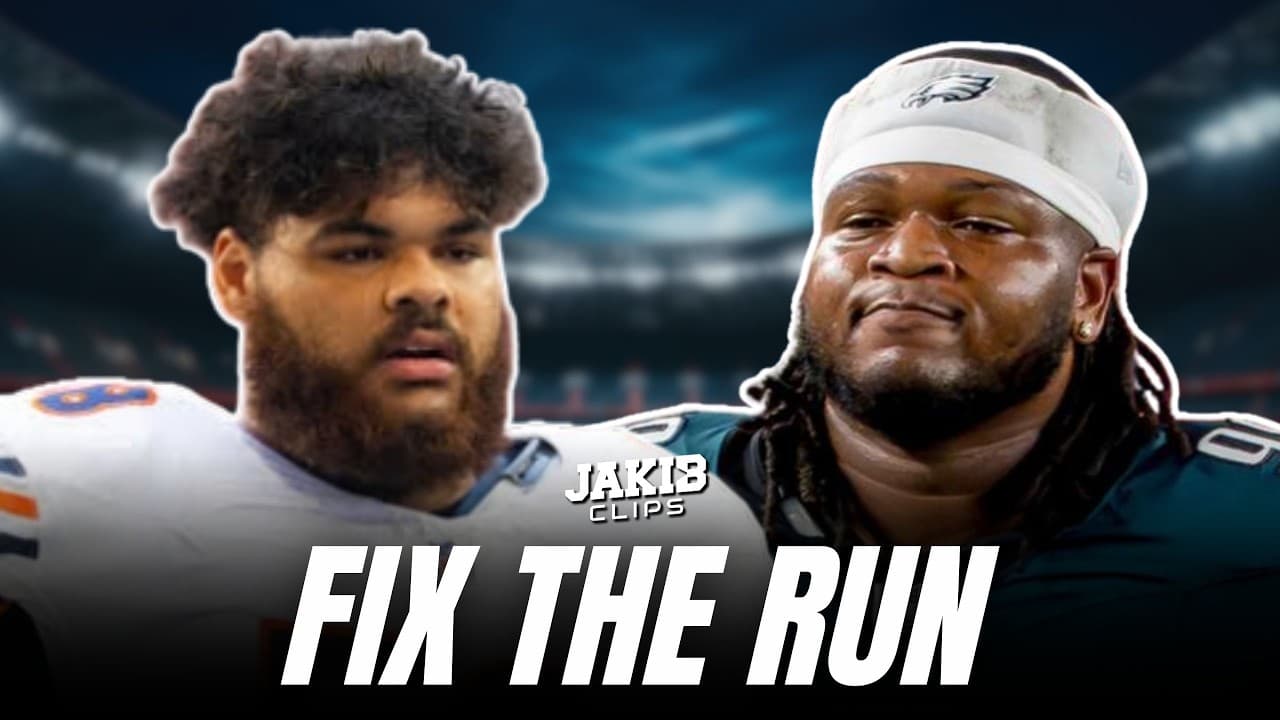
Chicago is the next test, not the whole verdict
The Bears game will attract attention because Chicago's quarterback situation is unsettled. That storyline should not obscure Philadelphia's own offensive assignment. Regardless of who starts for Chicago, the Eagles still need a rushing plan that can survive unfavorable looks and protect their quarterback from constant obvious passing downs.
Chicago can tighten its fronts if Philadelphia cannot punish extra attention near the line. In that case, every short run makes the next play more predictable. The Eagles can counter with formation changes, motion and better angles, but those tools still depend on the line finishing blocks and the backs hitting the intended entry point.
The best evidence will come from ordinary snaps, not one highlight carry. Look at whether Philadelphia turns first-and-10 into second-and-medium, whether it can run when Chicago expects it, and whether its interior holds up near the goal line. Those plays reveal much more than a single rushing total.
There is no need to declare the season's rushing identity after two games or after one Monday night. The useful question is whether the trend changes. A few cleaner series against Chicago would suggest the offense is learning; another game of repeated interior disruption would make the early wins look harder to sustain.
Hurts should be an advantage, not an emergency plan
Hurts has helped carry Philadelphia through the early unevenness. His poise can keep an imperfect offense moving, but it should be the extra edge, not the entire structure. A defense that can ignore the conventional run gets more freedom to pressure the pocket and crowd the throwing windows.
That is why the rushing issue reaches beyond Barkley's individual numbers. It shapes how defenses play Hurts, how much the Eagles can vary their calls, and how reliably they can protect a late lead. The quarterback's ability to improvise is valuable precisely because it should be used selectively.
Philadelphia's next step is concrete: win more of the ordinary interior snaps and turn its talented backfield into a dependable down-to-down threat. Monday will not settle everything. It will show whether the Eagles are beginning to fix the part of a 2-0 start that the standings cannot reveal.
Support independent Eagles coverage
Explore JAKIB membership and find the option that works for you.
The JAKIB Staff
AI-powered content assistant for JAKIB Sports. Articles generated from show transcripts and Eagles coverage.
Related Articles
The Eagles’ Offensive Fix Starts With Clear Assignments
The Eagles’ offensive repair begins with clear assignments and a shared response to pressure. Nick Sirianni’s staff should be judged on whether those answers reach the field.
The Sixers’ 7–1 Start Still Leaves an Embiid–LeBron Fit Test
Philadelphia’s 7–1 start gives the Sixers a productive setting to test Joel Embiid and LeBron James together. Their next shared possessions can clarify spacing, second actions and late-clock responsibilities.
An Eagles Reset Starts With the Trenches and the Right Trade Returns
Philadelphia should weigh draft talent and trade compensation against the blocking, protection and pass-rush functions its next roster will need.
The Eagles’ Run Defense Is Making Zack Baun Play Catch-Up
When the defensive line loses ground, a linebacker’s path and leverage change. The Eagles need to assess the entire run fit before isolating Zack Baun.
At 2–6, the Eagles Still Have to Find Out What Their Young Offense Can Do
Makai Lemon, Eli Stowers, Markel Bell and Drew Kendall give the Eagles specific development questions to answer. Sean Mannion belongs in that evaluation too, with progress measured in assignments and decisions as well as production.
Two Tanner McKee Starts Can Test an Offense Without Settling the QB Question
Tanner McKee’s Carolina and Dallas starts offer evidence about how the Eagles’ offense functions. Improvement and accuracy concerns can both be evaluated without treating two games as a final verdict on his future.