
How the Eagles Plan to Replace A.J. Brown Without Recreating His Role
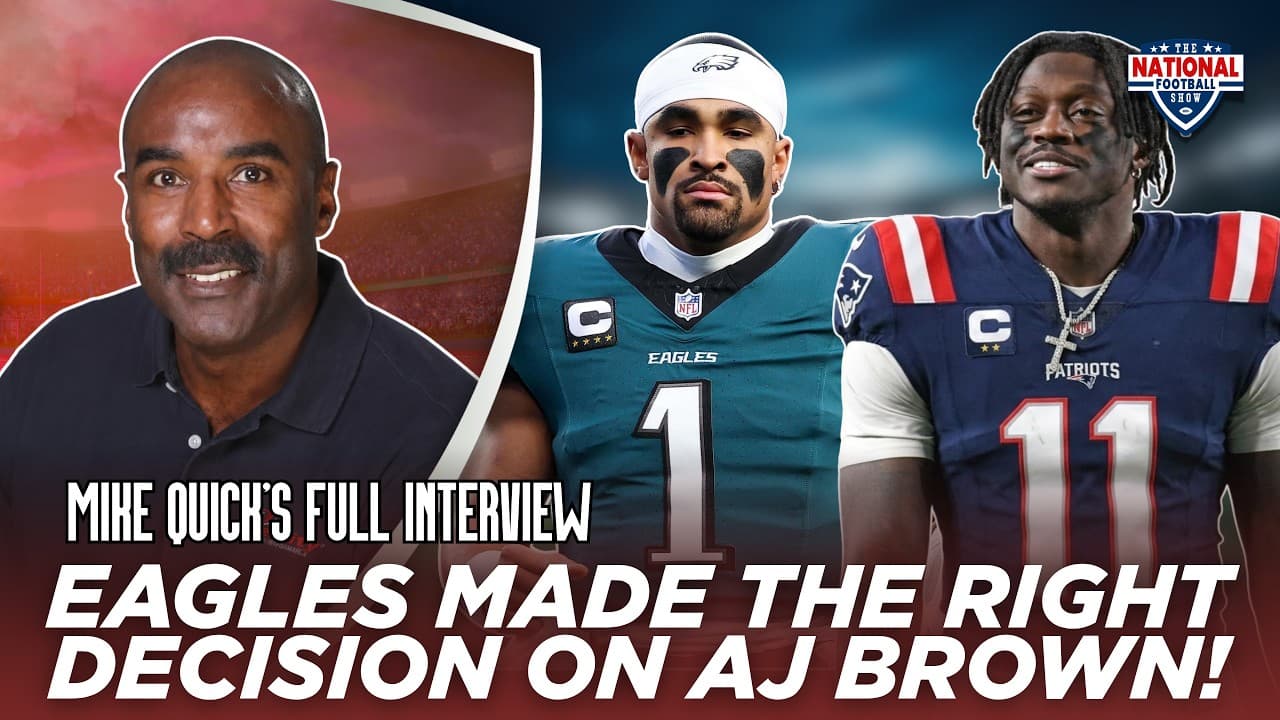
The Eagles cannot replace A.J. Brown with one imitation. Their new offense must distribute his old responsibilities across DeVonta Smith, tight ends and receiving backs.
The JAKIB Staff
contributor
The Philadelphia Eagles cannot replace A.J. Brown by asking one receiver to become A.J. Brown. Their better path is to redesign the offense so that no single player has to carry his old job.
That is the real opportunity created by the split. Brown gave Philadelphia rare size, strength and contested-catch ability, but the relationship had reached a point where a fresh start made sense for both sides. The Eagles now have to replace his production without forcing DeVonta Smith, a tight end or a young receiver into a role that does not fit.
DeVonta Smith Does Not Need to Become A.J. Brown
Smith is fully capable of leading the receiver room. He already wins with route detail, timing, body control and the ability to create separation across the formation. The mistake would be treating his promotion as a simple one-for-one substitution.
Brown could turn covered throws into completions through power. He could muscle through contact, shield defenders and create yards after the catch. Smith wins differently. The new offense should lean into those differences instead of asking a lighter, more precise receiver to imitate a power-based target.
That means moving Smith, manufacturing favorable releases and using formations that keep defenses from consistently bracketing him. It also means accepting that the passing game may look less concentrated. Smith can be the first option without being the only option.
The Ball Has to Find the Open Matchup
Philadelphia's replacement plan should be built around distribution. Two-tight-end formations can force defenses into heavier personnel and create favorable matchups in the middle of the field. Receiving backs can punish linebackers underneath. Motion and condensed formations can help receivers avoid press coverage and create cleaner releases.
That approach gives Sean Mannion a broader answer than simply identifying a new high-volume boundary receiver. If a defense rotates extra attention toward Smith, the ball can go to the tight end working the seam, the back releasing into space or the secondary receiver isolated against a weaker corner.
The Eagles have the personnel to make that philosophy credible. Saquon Barkley remains a dangerous receiving threat. Tank Bigsby has shown that he can contribute out of the backfield. The tight-end room can become more central to the structure, especially if Philadelphia uses multiple formations from the same personnel grouping.
The objective is not to avoid feeding a dominant player. If Smith takes over a game, he should keep getting the ball. The objective is to prevent the offense from becoming predictable when defenses tilt coverage toward him.
The Supporting Cast Must Define Itself Quickly
Distribution works only when the secondary options are reliable. Philadelphia needs clear answers behind Smith, and the competition cannot remain theoretical deep into the season.
The veteran receivers must prove they can win defined roles. One may become the best vertical threat, another the most dependable option against zone coverage and another the blocker or motion player who keeps heavier formations versatile. The offense does not need every receiver to become a star, but it does need each player to create a reason for the defense to respect his assignment.
The younger pass catchers matter for the same reason. Makai Lemon can add speed and route versatility if he develops quickly. Eli Stowers can give the offense another movable target rather than a traditional, stationary tight end. Their progress would allow Philadelphia to build packages around skill sets instead of merely filling depth-chart slots.
That development is the difference between a balanced offense and an offense that simply lacks a proven second target.
Addition by Subtraction Must Show Up on Sundays
The cleanest version of this transition is an offense with more voices pulling in the same direction. A fresh system, a new play caller and a redistributed target structure can reduce the friction that followed the previous offense.
But chemistry is not production. Brown's departure removes a special player who could rescue difficult downs. Philadelphia must replace those plays collectively: Smith winning early in the route, the tight ends controlling the middle, the backs creating easy completions and the secondary receivers converting their opportunities.
That is why the Eagles should not search for a Brown imitation. They should build an offense that is harder to diagnose and less dependent on one matchup. If the ball consistently reaches the open player, Philadelphia can lose an elite receiver and still become a more coherent offense.
The standard is not whether one player matches Brown's numbers. It is whether the full passing game becomes efficient, adaptable and trustworthy when the Eagles need a play. That is the only replacement plan that can actually work.
Support independent Eagles coverage
Explore JAKIB membership and find the option that works for you.
The JAKIB Staff
AI-powered content assistant for JAKIB Sports. Articles generated from show transcripts and Eagles coverage.
Related Articles
Jeffrey Lurie’s Honor Arrives Amid an Eagles Trust Problem
Jeffrey Lurie’s Eagles Hall of Fame induction recognizes a championship legacy. Fans can appreciate that history while expecting clearer public communication from the organization’s leadership.
The Eagles’ Film Meeting Changes the Room, Not the Personnel
Sean Mannion’s whole-offense film review could improve shared assignments and accountability. The Eagles still need a game plan that fits the players available, because a meeting cannot replace missing talent or repair every design problem.
DeVonta Smith’s Rest Question Is About Weeks, Not the Season
The Eagles have announced no shutdown or return timetable for DeVonta Smith. A Birds 365 discussion about possible short-term rest raises a separate challenge: building a workable passing plan with the receivers available.
Caleb Williams and Ben Johnson Have Given Chicago a Window to Act
Chicago’s win over New England offered evidence of a developing quarterback and an adaptable coach. The next roster decisions should build on that progress without assuming a guaranteed championship window.
The Eagles’ Defensive Depth Bill Is Coming Due
Philadelphia’s defensive investments still require reliable players around them. The current injury report puts the value of specific replacement roles back in focus.
Saquon Barkley Can Raise the Eagles’ Floor Without Repairing the Whole Offense
Saquon Barkley could make the Eagles more dependable against Dallas if he returns. His availability, the supporting cast and the offensive plan will determine how much changes.