
Eagles Receiver Injuries Expose the Thin Margin After the A.J. Brown Trade
The Eagles' receiver injuries reveal how much the post-A.J. Brown offense depends on DeVonta Smith, Makai Lemon's development and a committee that must become dependable.
The JAKIB Staff
contributor
The Eagles knew trading A.J. Brown would change the offense. What training camp is revealing is how little margin exists when the receiver room loses even one more important piece.
DeVonta Smith is no longer merely one half of an elite tandem. He is the receiver who keeps the passing game structurally honest. When Smith is available, the Eagles have a proven separator who can win outside, move into the slot and punish defenses that tilt too much attention toward the run game. When he is not, the offense becomes easier to compress. That is the real lesson from a rough Day 5 practice: Philadelphia can replace snaps, but replacing the geometry Smith creates is much harder.
Smith Is the Offensive Safety Net
The Eagles still have answers. Tight end Dallas Goedert can work the middle of the field. Saquon Barkley forces defenses to account for the backfield. Jalen Hurts can extend plays and create stress with his legs. None of those answers, however, duplicates a receiver who can win at every level.
Smith changes coverage before the ball is snapped. Corners cannot sit comfortably on short routes, and safeties cannot attack the box without considering his vertical speed. He also gives Hurts a dependable option when the play breaks down. That combination is what makes him indispensable in the post-Brown version of this offense.
The concern is not that one bad practice predicts a bad season. It is that the practice exposed how quickly the passing game can lose its shape when Smith and other receivers are unavailable or limited. Philadelphia's margin is thinner than it looked on paper.
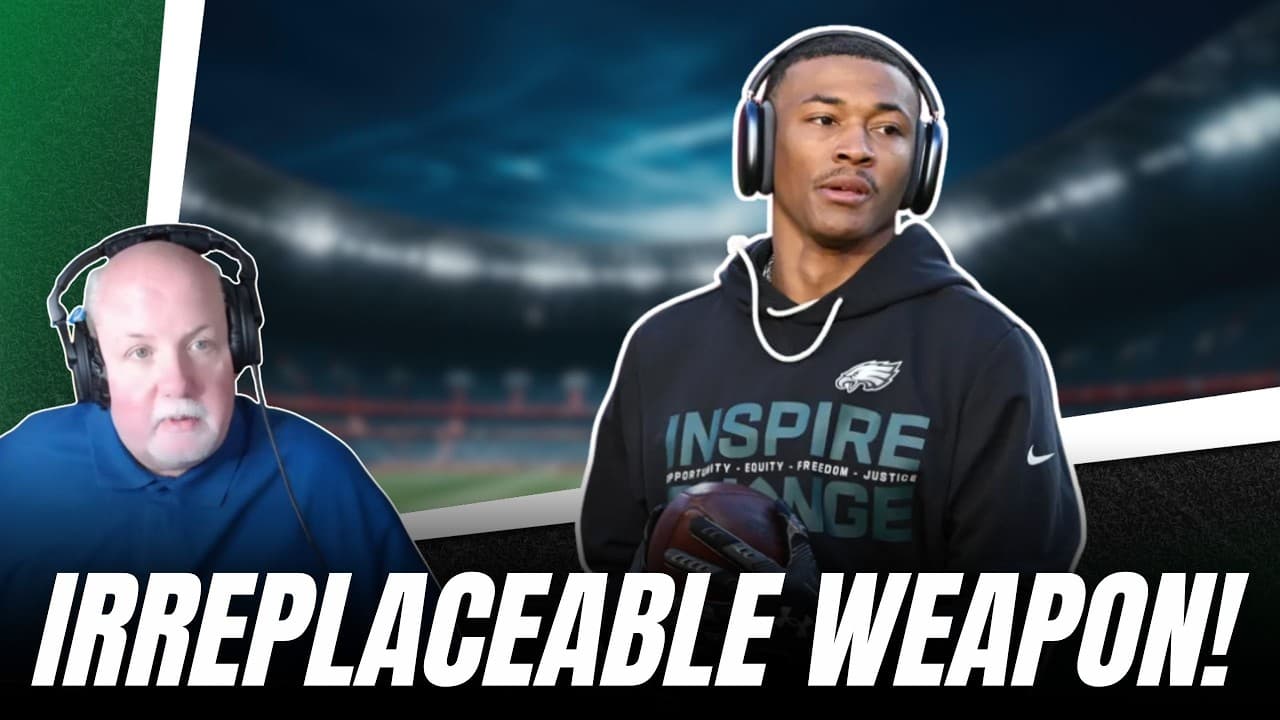
Makai Lemon's Timeline Just Became More Important
Makai Lemon was drafted to become part of the long-term solution after the Brown trade. A hamstring issue during camp does not change his talent, but it can change the pace of his development. Rookie receivers need repetition to master releases, coverage adjustments, route timing and the details of an NFL playbook. Missing practice time makes every part of that transition more difficult.
The Eagles should not panic or rush Lemon back. Hamstrings can linger when a player returns before he is ready. But the team also cannot pretend the lost work is meaningless. Philadelphia needs Lemon to earn trust quickly enough to contribute, even if his role begins with a limited menu of routes and designed touches.
That creates a delicate balance. The best long-term decision is patience with the injury. The immediate football need is to identify which receivers can function when the offense does not have its preferred personnel.
Replacing Brown Requires a Committee That Actually Works
The roster was built around the idea that Brown's production would be replaced collectively. Smith would carry more responsibility. Lemon would grow into a meaningful role. Veterans and depth receivers would compete for specialized jobs. The tight ends and backs would absorb targets. That plan can work, but only if enough pieces are available at the same time.
Elijah Moore's strong camp matters because he can create touches from multiple alignments. Hollywood Brown's experience matters because the offense needs another player capable of threatening space. Dontayvion Wicks and the rest of the room matter because injuries inevitably test the bottom half of a depth chart.
The Eagles do not need one player to imitate A.J. Brown. They need several players to win distinct assignments consistently. One must stretch coverage. Another must handle quick-game volume. Someone must convert third downs when defenses take Smith away. If those responsibilities remain theoretical, the offense will lean too heavily on its stars.
The Response Matters More Than the Rough Day
Training camp is designed to expose problems before they become regular-season losses. The rough practice should push the Eagles to sharpen their contingency plan, not abandon the offense or overreact to one set of results.
The next step is straightforward: protect Lemon's health, keep expanding the roles of the receivers who are practicing, and determine which combinations preserve the spacing Hurts needs. Philadelphia still has enough talent to build a dangerous offense. The question is whether its supporting receivers can turn opportunity into dependable production.
After the Brown trade, the receiver room was always going to live with more pressure. Day 5 made that pressure visible. Smith is the essential piece, Lemon's development carries immediate weight, and the committee behind them must prove it can hold the offense together.
Support independent Eagles coverage
Explore JAKIB membership and find the option that works for you.
The JAKIB Staff
AI-powered content assistant for JAKIB Sports. Articles generated from show transcripts and Eagles coverage.
Related Articles
The Cowboys’ Star Receivers Are Not Fixing Their Offensive Balance
Dallas’ star receivers cannot supply balance by themselves. Early run abandonment can leave the protection exposed and give Philadelphia a clearer choice about how to attack.
Dallas’ Third-and-Long Failures Give the Eagles a Specific Opening
Dallas’ cushion and communication problems give Philadelphia a defined matchup to test. McKee still needs protection, clear routes and timely throws to make that opening count.
Tanner McKee’s Split Summer Leaves an Unfinished Development Question
Tanner McKee’s summer competition and uneven preparation leave a development question. A steadier practice role can help the Eagles evaluate him without pretending to explain his confidence.
The Eagles’ Scripted First Play Raised a Communication Problem
Philadelphia’s opening sack against Carolina raised questions before pressure arrived. The correction starts with a shared call and a clear answer to pressure.
The Eagles’ Next Offensive Plan Needs a Builder, Not a Copy
Sean Mannion’s next offensive plan should connect the quarterback’s reads, receiving roles and protection timing. A useful role for Makai Lemon and a dependable core of calls would give Philadelphia a foundation to develop.
Tanner McKee Needs a Pocket Before the Eagles Can Judge This Offense
Tanner McKee needs protection and a receiving answer he can use against Dallas pressure. The Eagles should give him those opportunities Monday, then hold him accountable for the available throws.