
The Eagles' New Offense Risks Taking Away Jalen Hurts' Best Weapon
Philadelphia wants a cleaner, progression-based passing game, but the structure could mute the improvisation that makes Jalen Hurts dangerous. The offense will work only if order creates answers without turning the quarterback into someone he is not.
The JAKIB Staff
contributor
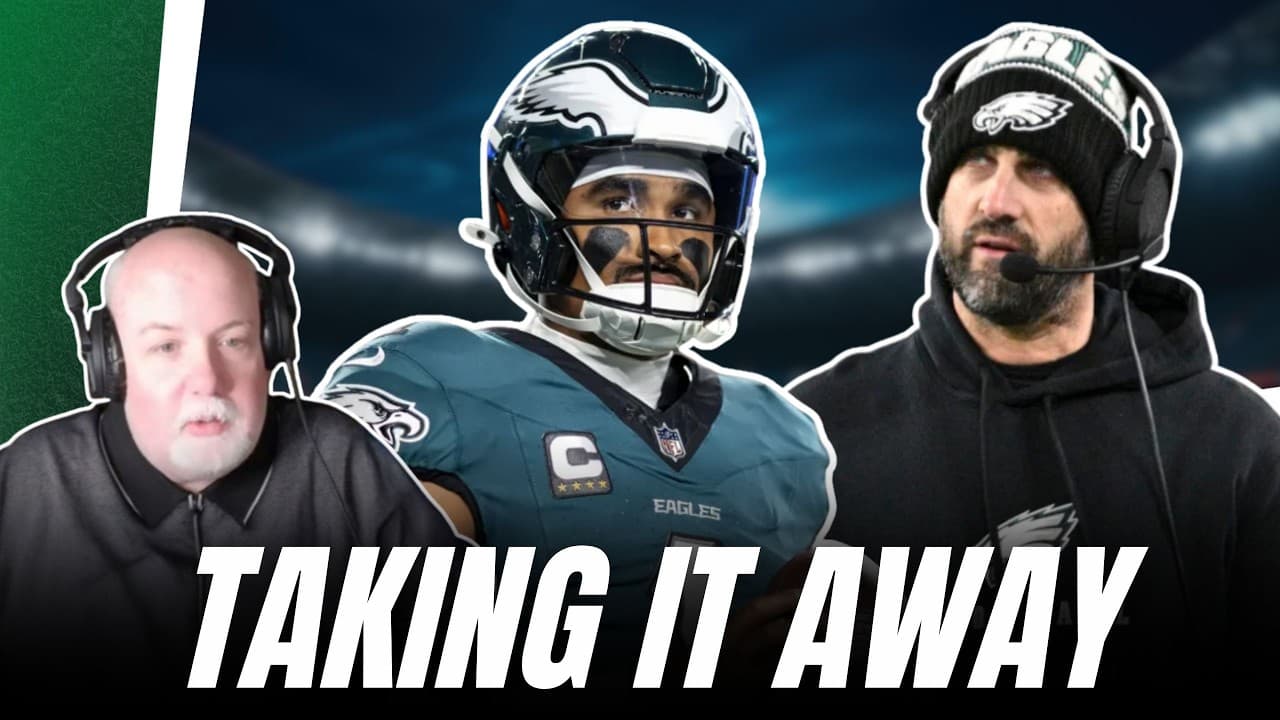
The Philadelphia Eagles are building a new offense around Jalen Hurts, yet the central risk is already clear. A system designed to create orderly progression reads could also reduce the movement, improvisation and off-schedule pressure that make Hurts hardest to defend.
That tradeoff matters because quarterback development is not a simple march toward one universal style. Hurts does not need chaos on every snap, but Philadelphia gains nothing by sanding away the traits that have rescued broken plays, stressed coverage rules and forced defenses to account for every gap.
Structure Can Help Without Becoming a Cage
The appeal of a progression offense is easy to understand. The quarterback works through a defined sequence instead of spending the entire play diagnosing every disguise. The ball can come out on time, receivers know when their window should arrive, and the offense has a repeatable answer against complicated coverage presentations.
Those benefits become liabilities when the sequence matters more than the player. Hurts has always forced defenses to survive a second phase. A clean pocket can turn into a scramble lane, a covered concept can become an explosive throw outside structure, and a third down can survive after the original design loses.
An under-center foundation also changes the geometry around him. Play action can hold linebackers and create defined windows, but it can reduce the immediate spacing and vision that a dual-threat quarterback gets from the shotgun. Philadelphia must make sure the new picture gives Hurts something valuable in return.
The Missing Element Is Defensive Stress
The best version of this offense should make defenders wrong before the snap and uncomfortable after it. Motion, condensed formations and play-action sequencing can simplify the first read. Hurts' legs should then punish any defense that overcommits to those answers rather than disappear from the weekly plan.
That does not require a return to constant designed quarterback runs. The Eagles can protect Hurts from unnecessary contact while preserving selective draws, keepers and movement throws. Even a small package forces edge defenders to hesitate and creates space for the running back, tight end and backside receiver.
The greater concern is removing his freedom when the progression breaks down. Coaches can demand disciplined footwork and timely decisions without treating improvisation as disobedience. A quarterback who understands the structure and knows when to escape it is more dangerous than one who simply completes the diagram.
September Will Reveal the Real Balance
Regular-season pressure will expose whether the balance is right. Watch where Hurts takes the snap, how often the scheme moves the launch point and whether the offense carries answers when the first read is covered. Those details will show whether Philadelphia built around its quarterback or around an imported ideal.
The opening weeks should also reveal how much control Hurts has at the line of scrimmage. A pure progression can speed decisions, but veteran quarterback play requires ownership. If he recognizes leverage, pressure or a favorable matchup, the system should help him exploit it instead of forcing him to stay on rails.
Personnel usage will offer another clue. Shotgun snaps can preserve the threat of Hurts as a runner, while under-center looks can strengthen play action and change the defense's first steps. The Eagles do not need one formation to win the argument. They need enough variety that opponents cannot predict which part of the quarterback's game has been removed by alignment alone.
Philadelphia does not have to choose between timing and talent. The smart answer is a disciplined offense that creates clean throws, then preserves Hurts' ability to change the equation when the play demands it. If the Eagles gain order but lose that threat, they will have solved the wrong problem.
Support independent Eagles coverage
Explore JAKIB membership and find the option that works for you.
The JAKIB Staff
AI-powered content assistant for JAKIB Sports. Articles generated from show transcripts and Eagles coverage.
Related Articles
Why the Eagles’ Second-Half Offense Keeps Stalling
Philadelphia cannot explain another stalled second half with one bad play. The Eagles need a repeatable early-down plan and real counters when a defense adjusts.
Why the Eagles’ Second-Half Offense Remains Their Biggest Problem
The final kickoff decided the Jacksonville game, but Philadelphia’s 232-yard offense creates a more persistent test for Jalen Hurts and the play-calling staff.
What Lane Johnson’s Retirement Changes for the Eagles’ Offense
Lane Johnson’s retirement changes more than the name at right tackle. Philadelphia now has to redistribute protection responsibility without shrinking the entire passing game.
Why the Eagles’ Offense Still Has No Clear Identity
The Eagles have tried to blend new and familiar offensive concepts. The real test is whether Jalen Hurts and the line have connected answers when defenses change the picture.
The Eagles’ Second-Half Offense Needs More Than a Fast Start
The Eagles' second-half offense needs more than a fast start because an opening plan cannot carry an entire game. Philadelphia's next offensive improvement should be measured by what happens after the defense has seen its preferred calls and adjusted.
The Eagles’ Blocking Personnel Are Limiting Sean Mannion’s Offense
The Eagles’ blocking personnel are limiting the concepts Sean Mannion can make reliable. Better calls matter, but screens and play-action need assignments that survive contact before Jalen Hurts can provide the payoff.
Latest from JAKIB Sports
View all articles →The Eagles' Offensive-Line Succession Problem Has Reached Jalen Hurts
October 13, 2026
Four Games Could Decide Howie Roseman's Trade-Deadline Approach
October 13, 2026
The Eagles' Second-Half Collapse Is More Than an Injury Problem
October 13, 2026
The Eagles’ Bigger Problem Beyond the Final Kickoff
October 13, 2026