
Why the Eagles' New Offense May Need Half a Season to Settle In
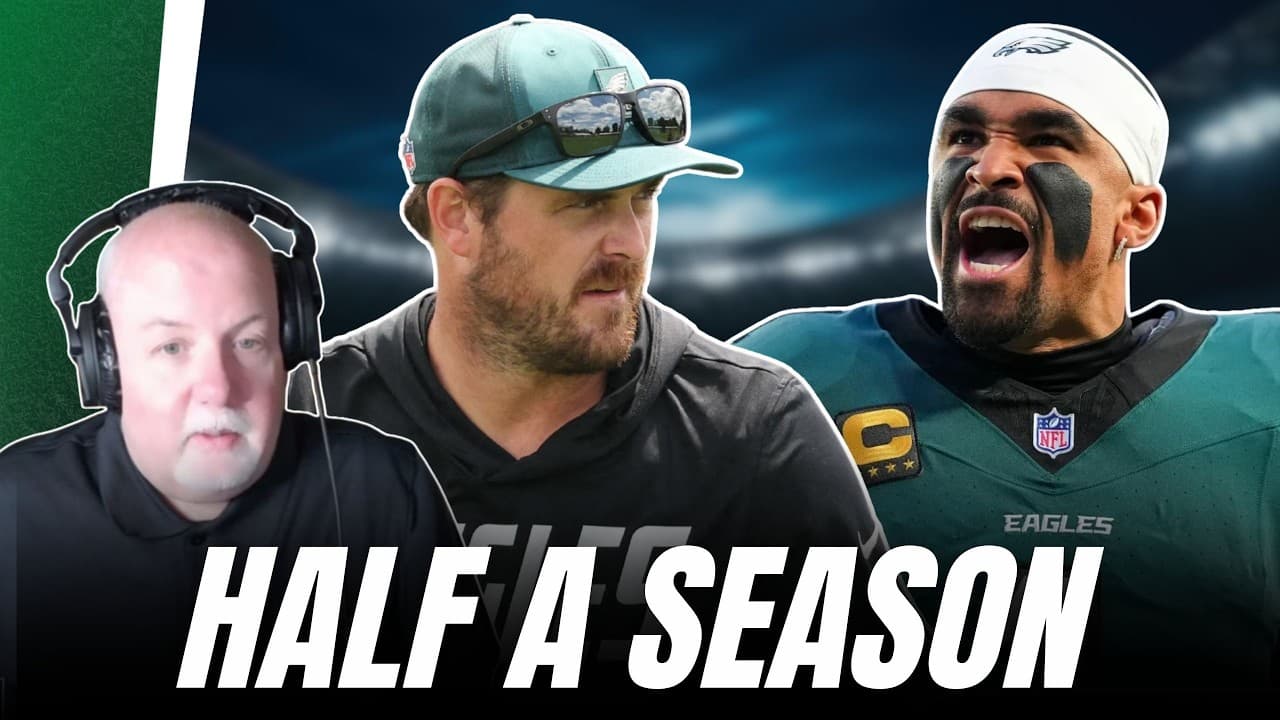
Sean Mannion's first Eagles offense may need half a season before it looks settled. Philadelphia can survive the learning curve if its defense controls games and Jalen Hurts delivers efficient football while the passing game finds its rhythm.
The JAKIB Staff
contributor
The Philadelphia Eagles may need half a season before Sean Mannion's new offense reaches its proper level. That timeline sounds uncomfortable for a contender, but it becomes manageable if the defense carries September and October while Jalen Hurts keeps the offense efficient.
The practical target is not immediate dominance. Average production through the first half would give Mannion time to establish his timing-based system, learn how his best players respond in real games and build toward above-average football for the stretch run. Philadelphia's margin comes from having enough talent elsewhere to absorb that work.
Sean Mannion's real evaluation starts with the starters
Preseason football could show the language, pace and structure of the new offense. It could not reproduce a unit built around Hurts, Saquon Barkley, DeVonta Smith, Jordan Mailata and Lane Johnson. Those players change which concepts are credible, how defenses fit the run and how quickly pressure reaches the quarterback.
That is why ugly reserve snaps cannot settle the larger argument. Mannion was hired during the offseason and enters his first year as Philadelphia's offensive coordinator. His system will be judged by how well it translates the strengths of the starting lineup, not by whether backups made every preseason installation look smooth.
The early emphasis should be simple: stay on schedule, protect the football and lean on the running game. Mannion does not need to prove that scheme is more important than personnel. He needs to create clean answers for a talented group and resist forcing a new identity before the players can execute it at full speed.
The defense buys patience, not a free pass
Philadelphia's defense creates the runway. A deep front, athletic second level and experienced coordinator can keep games from becoming weekly shootouts. If that group controls field position and third down, the offense can develop without asking Hurts to erase every mistake with a spectacular play.
That protection has limits. A championship team cannot spend four months hiding its passing game. Average is a useful first-half line only if the offense is fixing specific problems: quicker processing, cleaner spacing, dependable answers against pressure and better timing between Hurts and a reshaped group of targets.
The offensive line also sets the ceiling. A healthy group can keep the run game efficient and prevent new concepts from becoming obvious passing situations. Any physical decline up front would compress Mannion's timeline because the offense would lose the steady foundation needed to work through mistakes.
Progress should show up in situations before it appears in a season-long ranking. Fewer wasted first downs, better answers on third-and-medium and cleaner red-zone sequencing would prove that the players understand what Mannion wants. Those gains can stabilize close games even if the overall yardage remains ordinary.
The staff also has to separate installation trouble from personnel trouble. Timing can improve through repetition, while a target who cannot separate or a blocker who cannot hold up requires a different solution. Honest diagnosis will matter more than protecting the elegance of the original plan.
Efficiency is the right demand for Jalen Hurts
Hurts does not need to become a pass-happy quarterback to validate the coordinator. His job is to make the correct decisions, turn favorable looks into completions and avoid giving opponents short fields. Efficient quarterback play can be aggressive when the matchup calls for it and patient when the defense has already tilted the game.
The larger test arrives after that learning period. By midseason, the Eagles should know which passing concepts travel, which protection answers Hurts trusts and which supporting players can win defined roles. The defense can carry the transition, but the offense must emerge from it with enough growth to beat strong opponents in December and January.
Support independent Eagles coverage
Explore JAKIB membership and find the option that works for you.
The JAKIB Staff
AI-powered content assistant for JAKIB Sports. Articles generated from show transcripts and Eagles coverage.
Related Articles
Quenton Nelson and Jeffery Simmons Add a New Layer to Bears–Seahawks
Quenton Nelson and Jeffery Simmons add an interior blocking question to Bears–Seahawks. If available, their assignments could affect protection help, combination blocks and opportunities elsewhere along the front.
The Eagles’ Backup Plan Has to Fit the Offense
The Eagles should evaluate their backup quarterbacks by what each allows the offense to keep doing. Dallas provided productive Tanner McKee possessions, while leaving a larger question about continuity behind Jalen Hurts.
Two Tanner McKee Starts Can Test an Offense Without Settling the QB Question
Tanner McKee’s Carolina and Dallas starts offer evidence about how the Eagles’ offense functions. Improvement and accuracy concerns can both be evaluated without treating two games as a final verdict on his future.
Saquon Barkley Can Raise the Eagles’ Floor Without Repairing the Whole Offense
Saquon Barkley could make the Eagles more dependable against Dallas if he returns. His availability, the supporting cast and the offensive plan will determine how much changes.
Cam Jurgens’ Return to Center Gives the Eagles a New Comparison
Cam Jurgens says returning to center feels natural as he learns Baltimore’s offense. His next performances can sharpen the Eagles’ role and scheme debate, with clear limits on coaching conclusions.
Tanner McKee Needs a Pocket Before the Eagles Can Judge This Offense
Tanner McKee needs protection and a receiving answer he can use against Dallas pressure. The Eagles should give him those opportunities Monday, then hold him accountable for the available throws.