
Why the Eagles Plan to Move Jalen Hurts More in 2026
The Eagles can preserve their run-first identity while moving Jalen Hurts more often in the passing game. Rollouts, sprint-outs and play action can simplify his reads, stress the edge and create open-field touches for Saquon Barkley.
The JAKIB Staff
contributor
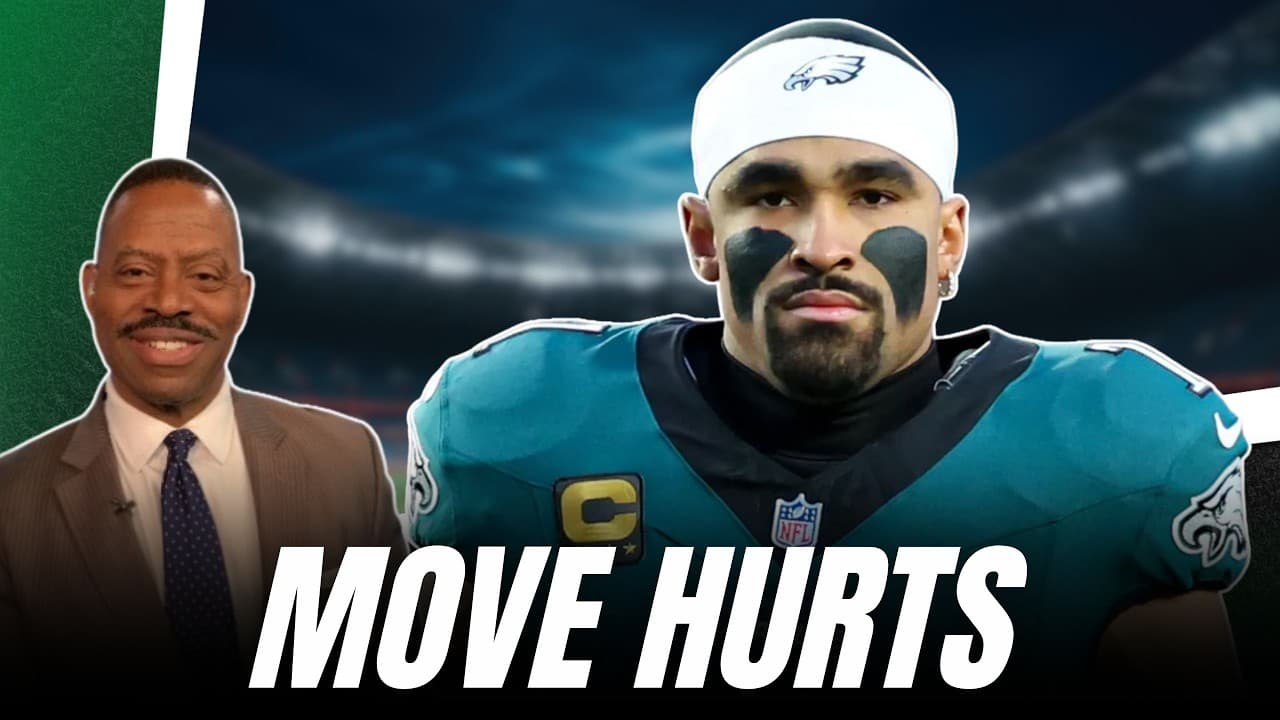
The Eagles can make Jalen Hurts a more efficient passer in 2026 by changing where the pass begins. More rollouts, sprint-outs and designed movement would connect his mobility to Philadelphia's run-first identity, forcing defenses to defend the quarterback, Saquon Barkley and the passing concept from the same initial picture.
That approach is not an argument for turning every play into backyard football. It is a way to create defined reads and better leverage before Hurts has to improvise. The offensive line sells the run, the defense steps toward Barkley, and Hurts reaches the edge with a cleaner view. If the primary throw closes, his legs can punish a coverage unit that has already shifted laterally.
The run game gives movement its power
Philadelphia's offense still begins with the line and Barkley. A credible downhill run threat forces linebackers to step forward and edge defenders to squeeze the mesh point. That reaction creates the space for movement passes. The Eagles do not have to choose between physical football and a more dynamic passing plan. The physical threat is what makes the moving pocket dangerous.
Play action can also help the tight ends and backs enter routes against defenders whose eyes are in the backfield. A flat route becomes harder to cover when the edge is deciding whether Hurts kept the ball. A crossing route gains room when the second level takes one false step toward Barkley. Those are small advantages, but an offense built on repeated favorable angles can sustain drives without asking for a spectacular throw every third down.
Movement should create answers, not chaos
The design has to remain disciplined. Moving the launch point cuts the field and can make the offense predictable if every rollout comes with the same route combination. Sean Mannion has to vary the presentation. The Eagles can pair a keeper with a shot play, a quick throw, a run-pass option or a Barkley touch while preserving the same backfield action.
Hurts also has to use the sideline and the throwaway when the defense wins. Designed movement should reduce negative plays, not invite the quarterback to hold the ball while searching for a second life. The best version gets him to a clear decision quickly: throw to the leverage advantage, take the available lane or end the play before pressure turns a neutral down into a damaging one.
That structure can protect Hurts while still using his athleticism. A controlled keeper after a clean read is different from repeated late escapes through a collapsing pocket. Philadelphia wants the threat of the quarterback run because it changes defensive spacing. It does not need unnecessary contact to prove that threat is real.
Barkley becomes more dangerous in space
The same movement package can expand Barkley's receiving role. Getting him the ball while he is already moving forces defensive backs to tackle in space and makes linebackers match his acceleration. The Eagles can create those touches through screens, swings and play-action releases without abandoning the carries that establish their identity. Motion can widen a defender before the snap, while a rollout can pull the pursuit away from Barkley's release. That gives the back room to catch, turn and attack a smaller tackler instead of absorbing contact near the line.
The real evaluation begins when a defense shuts down the first run concepts. Philadelphia's answer should not be a static dropback series that ignores Hurts' best stress points. Mannion can keep the formation and personnel connected while changing the launch point and the conflict defender. Watch the first meaningful third downs of the season: if Hurts is moving with clear choices, the Eagles will have translated their preseason intent into a repeatable offensive answer.
Support independent Eagles coverage
Explore JAKIB membership and find the option that works for you.
The JAKIB Staff
AI-powered content assistant for JAKIB Sports. Articles generated from show transcripts and Eagles coverage.
Related Articles
The Cowboys’ Star Receivers Are Not Fixing Their Offensive Balance
Dallas’ star receivers cannot supply balance by themselves. Early run abandonment can leave the protection exposed and give Philadelphia a clearer choice about how to attack.
Dallas’ Third-and-Long Failures Give the Eagles a Specific Opening
Dallas’ cushion and communication problems give Philadelphia a defined matchup to test. McKee still needs protection, clear routes and timely throws to make that opening count.
The Eagles’ Message to Jalen Hurts Reaches the Entire Locker Room
The Eagles and Nicole Lynn have issued a health update on Jalen Hurts. A direct ownership commitment could add a message about support that reaches his teammates, without claiming to resolve private or medical questions.
Johnny Mundt’s Blocking Role Is Smaller Than the Eagles’ Offensive Demand
Johnny Mundt can have value in a defined movement role. Philadelphia’s broader tight-end demands require a closer look at assignments and workload, rather than a universal blocking label.
Tanner McKee’s Split Summer Leaves an Unfinished Development Question
Tanner McKee’s summer competition and uneven preparation leave a development question. A steadier practice role can help the Eagles evaluate him without pretending to explain his confidence.
The Eagles’ Next Offensive Plan Needs a Builder, Not a Copy
Sean Mannion’s next offensive plan should connect the quarterback’s reads, receiving roles and protection timing. A useful role for Makai Lemon and a dependable core of calls would give Philadelphia a foundation to develop.