
Why Team Building Separates Jalen Hurts From Dak Prescott
Quarterback comparisons between Jalen Hurts and Dak Prescott miss the structure around each player. Protection, run-game support, defensive depth and roster continuity determine how often a quarterback can play on schedule instead of carrying every flaw.
The JAKIB Staff
contributor
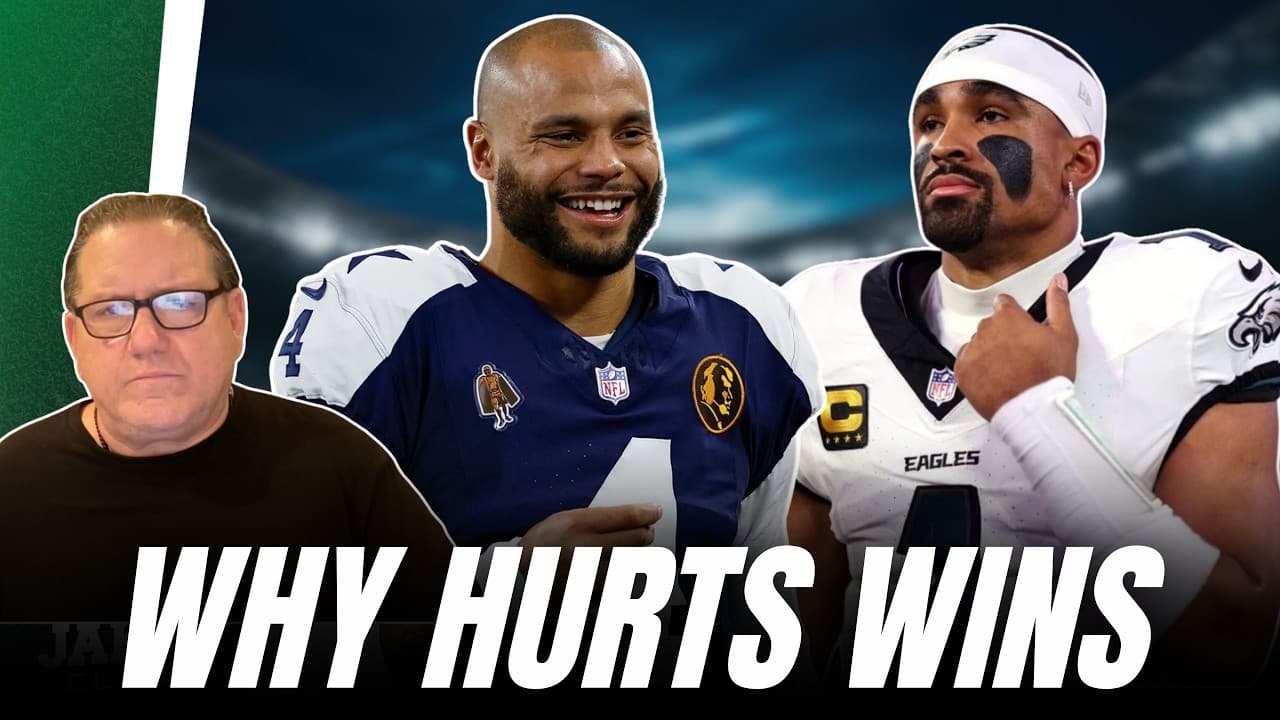
Jalen Hurts and Dak Prescott are judged as if quarterback play happens in isolation. It does not. Philadelphia's advantage comes from team building that gives Hurts a credible run game, protection answers and a defense capable of keeping the offense out of desperation mode. Those conditions shape winning more consistently than a weekly argument over which quarterback throws the prettier ball.
Prescott can be the more polished conventional passer on a given Sunday and still face a harder path if Dallas asks him to solve every structural weakness. Hurts can play an uneven passing game and remain in control when the Eagles run efficiently, protect the football and win enough snaps on defense. That is not an excuse for either player. It is the environment in which their decisions become wins or losses.
Quarterback support changes the required play
A strong run game changes what the quarterback has to accomplish. Second-and-medium keeps play action, movement and the quarterback run available. Third-and-long narrows the call sheet and invites pressure. The statistical comparison may record only the final pass, but the roster determines whether that pass comes against a balanced defense or a front attacking an obvious situation.
Protection works the same way. A stable line gives the quarterback time to reach a second read and allows the coordinator to release more receivers into the concept. Protection uncertainty forces extra help, changes route timing and makes the quarterback responsible for escaping problems created before the ball arrives. Elite play can overcome those moments. No serious roster plan should require it on every important drive.
Defense determines how patient an offense can remain
The other side of the ball changes quarterback behavior too. A defense that limits explosive plays and creates field position lets the offense stay patient. The coordinator can call the run on a quiet series, punt if necessary and trust another possession will come. A defense that leaks points turns every empty drive into an emergency and pushes the quarterback toward higher-risk throws.
That pressure shows up late in games. A quarterback protecting a lead can choose the safe completion, use his legs and force the opponent to spend timeouts. A quarterback chasing points has to attack tighter windows while the pass rush ignores the run. The same player can look controlled in one environment and reckless in the other. Team quality often creates the difference before the snap.
Leadership matters most when the structure bends
Roster support does not remove quarterback responsibility. Hurts still owns the protections, ball security and critical-down decisions within Philadelphia's structure. Prescott owns the same work in Dallas. Leadership becomes most visible when an injury changes the line, the run game stalls or the defense gives away a lead. The quarterback has to keep the offense connected when the ideal plan stops being available.
Hurts' distinct value is that his running threat can restore an advantage after the original design breaks down. A keeper can punish an unblocked edge. A scramble can turn a covered third down into a new series. Prescott creates more of his answers through anticipation and conventional distribution. Both styles can win, but each needs a roster built to magnify its strengths instead of repeatedly exposing its weaker situations.
The better comparison in 2026 will be how often each organization gives its quarterback a manageable game. Track the down-and-distance, protection and score before assigning every result to the passer. If Philadelphia keeps Hurts in a balanced offense while Dallas forces Prescott into obvious rescue mode, the separation will begin with roster construction. The quarterbacks will still decide critical snaps, but their teams will decide how many impossible ones they face.
Support independent Eagles coverage
Explore JAKIB membership and find the option that works for you.
The JAKIB Staff
AI-powered content assistant for JAKIB Sports. Articles generated from show transcripts and Eagles coverage.
Related Articles
Caleb Williams and Ben Johnson Have Given Chicago a Window to Act
Chicago’s win over New England offered evidence of a developing quarterback and an adaptable coach. The next roster decisions should build on that progress without assuming a guaranteed championship window.
Cam Jurgens’ Return to Center Gives the Eagles a New Comparison
Cam Jurgens says returning to center feels natural as he learns Baltimore’s offense. His next performances can sharpen the Eagles’ role and scheme debate, with clear limits on coaching conclusions.
The Eagles’ Message to Jalen Hurts Reaches the Entire Locker Room
The Eagles and Nicole Lynn have issued a health update on Jalen Hurts. A direct ownership commitment could add a message about support that reaches his teammates, without claiming to resolve private or medical questions.
Evan Neal’s Eagles Opportunity Starts With Guard Fundamentals
Evan Neal’s practice-squad signing gives Philadelphia an interior-line development option. His next opportunity depends on repeatable guard technique, rather than his old draft position.
Tanner McKee’s Split Summer Leaves an Unfinished Development Question
Tanner McKee’s summer competition and uneven preparation leave a development question. A steadier practice role can help the Eagles evaluate him without pretending to explain his confidence.
The Eagles’ Scripted First Play Raised a Communication Problem
Philadelphia’s opening sack against Carolina raised questions before pressure arrived. The correction starts with a shared call and a clear answer to pressure.