
Makai Lemon’s Next Opportunity Is About Where the Eagles Target Him
Makai Lemon’s next opportunity should depend on where the Eagles target him, not simply how often. Catches beyond the line can give Philadelphia a clearer way to build and evaluate his role.
The JAKIB Staff
contributor
Makai Lemon’s next opportunity should give the Eagles more than another completed pass behind the line of scrimmage. Philadelphia should make room for catches that let him finish a route, secure the ball and move the offense forward before asking him to manufacture extra yards.
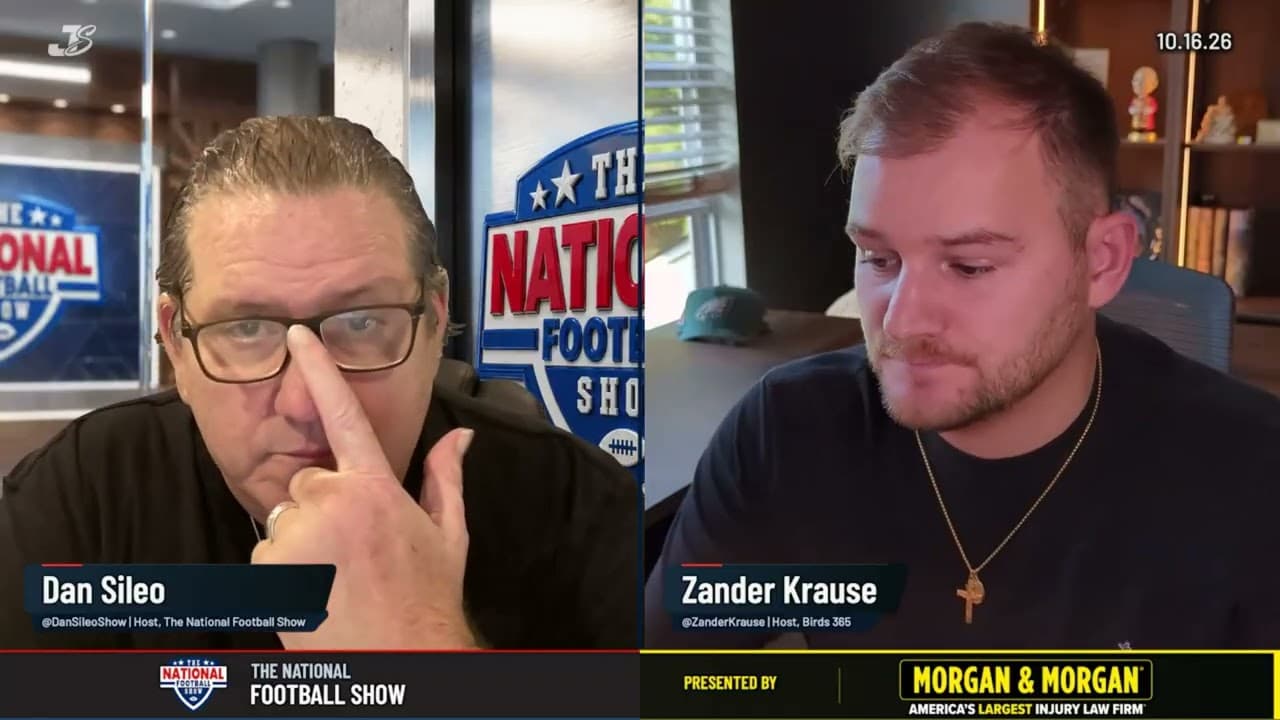
That is the useful distinction in the National Football Show discussion of Lemon’s role. More targets could help him establish himself, but their location matters. A completion can count as an opportunity while leaving the receiver with most of the work still ahead.
The recommendation does not require eliminating screens or forcing throws into coverage. It asks the Eagles to give Lemon a broader set of useful assignments, then judge how he handles them. A receiver’s development benefits from chances to do more than rescue a play after the catch.
Give Lemon a route with a useful destination
A pass behind the line can punish an aggressive defense when the blocking and timing cooperate. When they do not, the receiver may catch the ball with a defender already closing and no clean path forward. The completion alone says little about the quality of the opportunity.
A target beyond the line changes that starting point. If Lemon creates separation and catches the ball there, the play can produce something before the first attempted tackle. Any additional yardage then adds to the gain rather than merely recovering what the offense gave away at the snap.
That makes route selection part of the evaluation. The question is where Lemon can present a clear target within the coverage, at a distance the quarterback can reach on time. Simply sending him farther downfield does not answer it.
Short routes can serve that purpose. A receiver does not need a deep target to contribute beyond the line. He needs a destination that fits the down, the coverage and the timing of the throw. Asking for more useful targets should begin there.
There is a specific example in the Eagles’ October 3 profile of Lemon. The team described a third-and-8 dig against Tennessee in Week 2: Lemon adjusted to a throw slightly behind him and completed the catch through contact for a 14-yard first down. That is historical evidence of a useful assignment, not a prediction that the same play will work against every coverage. It shows the distinction: the catch itself accomplished something before any extra running.
Confidence can grow through repeatable work
The source discussion connected a larger role with the possibility of building Lemon’s confidence. That remains a possibility, not a report about his state of mind or a guarantee that added volume will change his performance.
The football case is more concrete. Repeated opportunities let the receiver and quarterback establish timing. They also give coaches a clearer basis for deciding which assignments deserve another call. A cleanly executed route and catch can earn repetition without requiring a spectacular individual effort.
An early completion can be valuable for that reason. It gives the offense evidence about a connection it may want to use again. But calling a play solely to register an easy catch risks confusing activity with progress. The location and purpose of the catch still count.
Lemon also has responsibilities that target design cannot erase. He has to arrive where the quarterback expects, secure the throw and finish the play appropriately. Better opportunities should make those responsibilities easier to evaluate, rather than excuse mistakes when they occur.
The next useful step is a role the Eagles can trust enough to repeat. One ambitious target may test a receiver. Several well chosen opportunities can show whether he is becoming a dependable part of the passing game.
Make the defense account for the next catch
A receiver becomes more useful when the defense has to respect more than one possible assignment. If Lemon can contribute beyond the line, defenders have another route destination to account for. That can give the offense a reason to revisit a familiar formation with a different purpose.
This is a proposed direction, not a claim about Philadelphia’s target chart or its private game plan. The available source supports asking for a more productive mix. It does not establish an exact percentage of screens, a separation ranking or a projected catch total.
The Eagles can test that direction without turning Lemon into the entire offense. Choose an opportunity that fits the defensive look, throw it on time and see whether the same connection deserves another chance. The quality of the result should guide the next call.
Watch where Lemon is when the ball arrives and what remains necessary for a successful play. A catch that already advances the offense offers a stronger foundation for his next opportunity than another completion that leaves him fighting just to reach the line.
Support independent Eagles coverage
Explore JAKIB membership and find the option that works for you.
The JAKIB Staff
AI-powered content assistant for JAKIB Sports. Articles generated from show transcripts and Eagles coverage.
Related Articles
What the Eagles’ Next Update Needs to Clarify About Jalen Hurts
The next Eagles update can clarify Jalen Hurts’ latest evaluation, treatment decision and clearance process. Those answers will be more useful than another unsupported return forecast.
Why the Eagles’ Second-Half Offense Remains Their Biggest Problem
The final kickoff decided the Jacksonville game, but Philadelphia’s 232-yard offense creates a more persistent test for Jalen Hurts and the play-calling staff.
How the Eagles Lost the Final Eight Seconds Against Jacksonville
Philadelphia led Jacksonville with eight seconds left but lost on a final field goal. The clock, kickoff choice and coverage failure each deserve a separate review.
The Clock Decision That Preserved Jacksonville’s Winning Chance
The Eagles preserved Jacksonville’s winning chance when their final possession left eight seconds for a kickoff. The clock stopped on Makai Lemon’s late catch, allowing the Jaguars to save their last timeout for the next play.
Why the Eagles Couldn’t Finish Off Jacksonville
The Eagles couldn’t finish off Jacksonville because their offense stopped giving the defense breathing room. A 19-17 loss turned another winnable afternoon into a reminder that late heroics cannot replace sustained scoring.
DeVonta Smith's Next Contract Adds Another Eagles Rebuild Decision
DeVonta Smith’s next contract is a roster-building decision, not a referendum on his talent. Philadelphia must price its passing-game future alongside a costly offensive-line transition.
Latest from JAKIB Sports
View all articles →Chicago’s Quarterback Decision Tests Ben Johnson’s System Fit
October 17, 2026
Howie Roseman’s Roster Reset Still Needs Immediate Impact Players
October 17, 2026
What Nick Sirianni’s Preparation Shows Beyond the Eagles’ Final Scores
October 16, 2026
Jake Majors’ Natural Position Matters in the Eagles’ Center Decision
October 16, 2026