
Why the Eagles May Regret Losing A.J. Brown
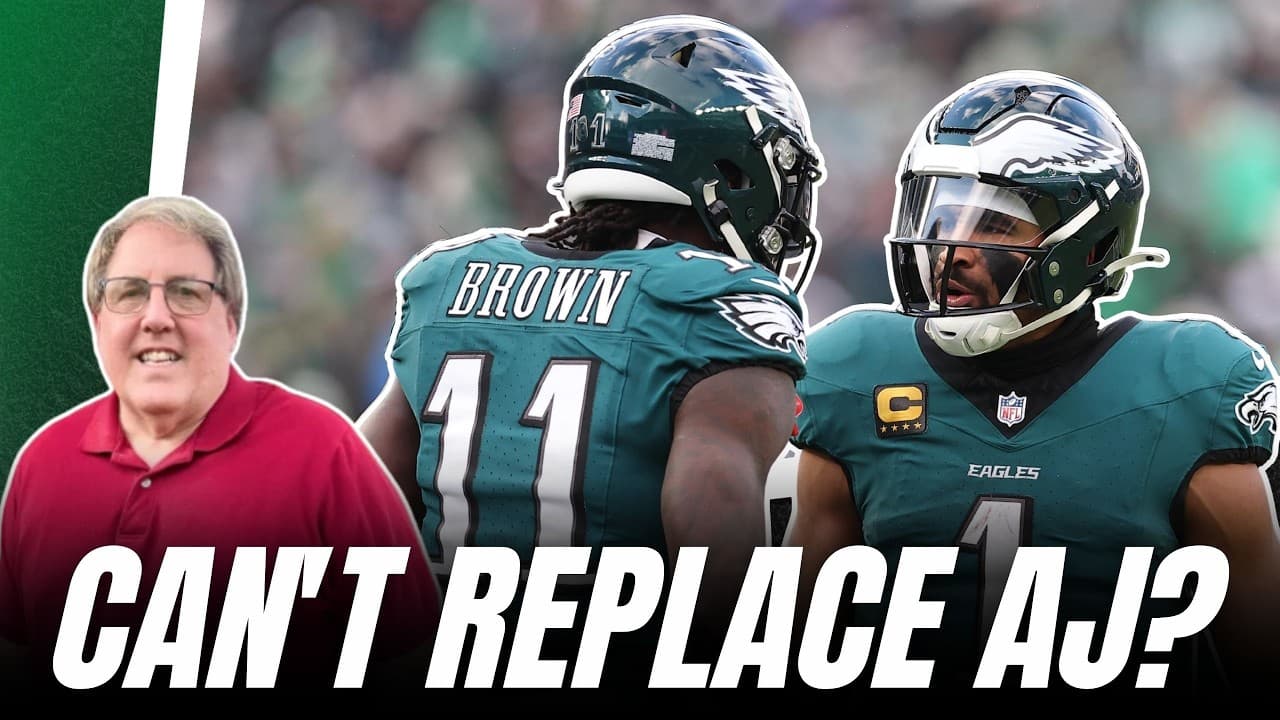
The Eagles can defend the logic behind moving A.J. Brown, but replacing a true number-one receiver is harder than replacing a name on the depth chart. The cost may show up in the structure of the entire offense.
The JAKIB Staff
contributor
The Eagles may have believed they could replace A.J. Brown's production through a deeper collection of weapons, a stronger run game and a reworked passing structure. That theory is possible. It is also much harder than replacing one receiver's catches on a spreadsheet. Brown functioned as a true number-one target, and players with his combination of size, physicality and explosive ability are scarce.
Philadelphia can still build a productive offense without him. The risk is that his absence changes what every other player is asked to do.
A number-one receiver changes defensive behavior
Brown demanded attention that created space elsewhere. Defenses had to consider safety help, physical corner matchups and the danger of allowing isolated coverage outside. That influenced how opponents defended DeVonta Smith, Dallas Goedert and Saquon Barkley before the ball was snapped.
When that presence disappears, the issue is not only who receives Brown's targets. The defense can redistribute its resources. Smith may see more focused coverage. Windows can tighten in the middle of the field. The quarterback may have fewer obvious answers when protection breaks down or the called concept loses its first matchup.
That is why replacing a top receiver by committee often sounds easier than it looks. Several players can combine for similar volume without reproducing the same stress on a defense.
The Eagles are asking projection to become production
Philadelphia's current plan depends on development and role expansion. Makai Lemon must progress. The veteran depth must prove dependable. Mannion's offense must create favorable opportunities, and Hurts must distribute the ball efficiently enough to prevent opponents from loading resources toward the remaining stars.
There is a path for that plan to work. Smith is capable of leading a passing attack, Barkley changes the box count and a well-designed offense can create separation through formation and motion. But the margin for error is smaller without Brown.
An injury or slow start from one projected contributor could expose the lack of another proven outside answer. The Eagles cannot manufacture experience after the season begins. If the receiver room struggles, the trade will be judged not only by what Philadelphia received, but by the support it failed to preserve around Hurts.
Repair may have been cheaper than replacement
The most uncomfortable question is whether the relationship could have been repaired. Elite talent creates complicated negotiations, strong personalities and difficult moments. Winning organizations still have to determine when tension is manageable and when separation is necessary.
Moving Brown may have provided financial flexibility or reduced organizational friction. Those benefits matter. Yet flexibility only helps if the resources create equal or greater value. A premium receiver entering his prime is not easily recreated through several smaller moves.
The Eagles now carry the burden of proving that the broader roster is stronger because of the decision. If the offense becomes less explosive or less reliable on critical downs, the savings will feel abstract compared with the production that left.
The verdict will come in high-leverage moments
Regular-season totals will tell only part of the story. The Brown decision will be felt on third down, in the red zone and late in close games when defenses understand the situation and force a receiver to win.
Hurts needs targets who can separate on schedule and finish contested plays when the design does not create a clean opening. Smith can carry a major share of that responsibility, but asking him to replace every dimension Brown provided would miss the point. The Eagles need the entire receiver plan to function.
Philadelphia has earned trust for aggressive roster building, and one transaction does not erase that record. But this was a high-stakes bet. True number-one receivers are rare precisely because they simplify difficult football problems.
The Eagles may ultimately prove they were right to move on. Until the new offense shows it can create the same fear and reliability without Brown, regret is not an overreaction. It is the natural risk attached to letting an irreplaceable skill set walk out the door.
Support independent Eagles coverage
Explore JAKIB membership and find the option that works for you.
The JAKIB Staff
AI-powered content assistant for JAKIB Sports. Articles generated from show transcripts and Eagles coverage.
Related Articles
The 2017 Eagles' Locker-Room Lesson for a Team Losing Its Leaders
The 2017 Eagles offer a useful example of players supporting one another in crisis. Applying that lesson today requires a fair evaluation of Jordan Mailata and honesty about what outsiders cannot know.
The Eagles' Second-Half Collapse Is More Than an Injury Problem
The Eagles' second-half collapse is more than an injury problem. Philadelphia's offense has to produce answers after its opening success, not just explain why the available personnel changed.
Why the Eagles Keep Losing Their Offensive Rhythm After Halftime
The Eagles’ halftime problems raise a specific question: can their offense answer defensive adjustments? Examine quarterback execution, connected play design and the limits of claims about coaching interference.
Jalen Carter Still Has Not Reached Jeffrey Simmons' Every-Down Standard
Jalen Carter can still produce dominant flashes, but Philadelphia needs him to control complete drives rather than isolated snaps. Jeffrey Simmons supplied the comparison: elite interior play travels through every down and every game situation.
What Marquise Brown's Snap Complaint Reveals About the Eagles' Receiver Hierarchy
Marquise Brown's frustration forces the Eagles to define what earns receiver snaps: draft investment, projected upside or current readiness. That answer will shape Makai Lemon's development and the credibility of Philadelphia's offensive competition.
How A.J. Brown's Exit Could Unlock Dallas Goedert
A.J. Brown's departure changed the Eagles' target hierarchy, and Dallas Goedert immediately supplied two touchdowns in the opener. Sean Mannion can use the tight end as the middle-field anchor that stabilizes Philadelphia's new receiver structure.
Latest from JAKIB Sports
View all articles →The Cowboys’ Star Receivers Are Not Fixing Their Offensive Balance
October 23, 2026
Dallas’ Third-and-Long Failures Give the Eagles a Specific Opening
October 23, 2026
The Eagles’ Coaching-Hire Debate Has Three Different Decisions
October 23, 2026
Cam Jurgens’ Return to Center Gives the Eagles a New Comparison
October 23, 2026