
The Waddle Trade Just Changed AJ Brown's Market — And Not in the Eagles' Favor
Jaylen Waddle's blockbuster trade didn't inflate AJ Brown's value — it flooded the market with elite receiver supply. Here's why the economics work against the Eagles if they ever explore a move.
The JAKIB Staff
contributor
The Tyreek Hill-Jaylen Waddle trade just reshuffled the receiver market. If you're an Eagles fan hoping AJ Brown's trade value skyrocketed, here's a cold splash of reality: supply and demand says otherwise.
The Economics of the WR Trade Market
When the Dolphins moved Waddle in a blockbuster deal, it didn't create scarcity at the top of the receiver market — it created supply. Now there are MORE elite receivers theoretically available via trade, not fewer. That's basic economics, and it works against the Eagles.
Think about it from a buyer's perspective. If you're a team looking for a number-one receiver, you now have options. The market isn't bidding up because there's competition among the sellers too. More supply, same demand, lower price.
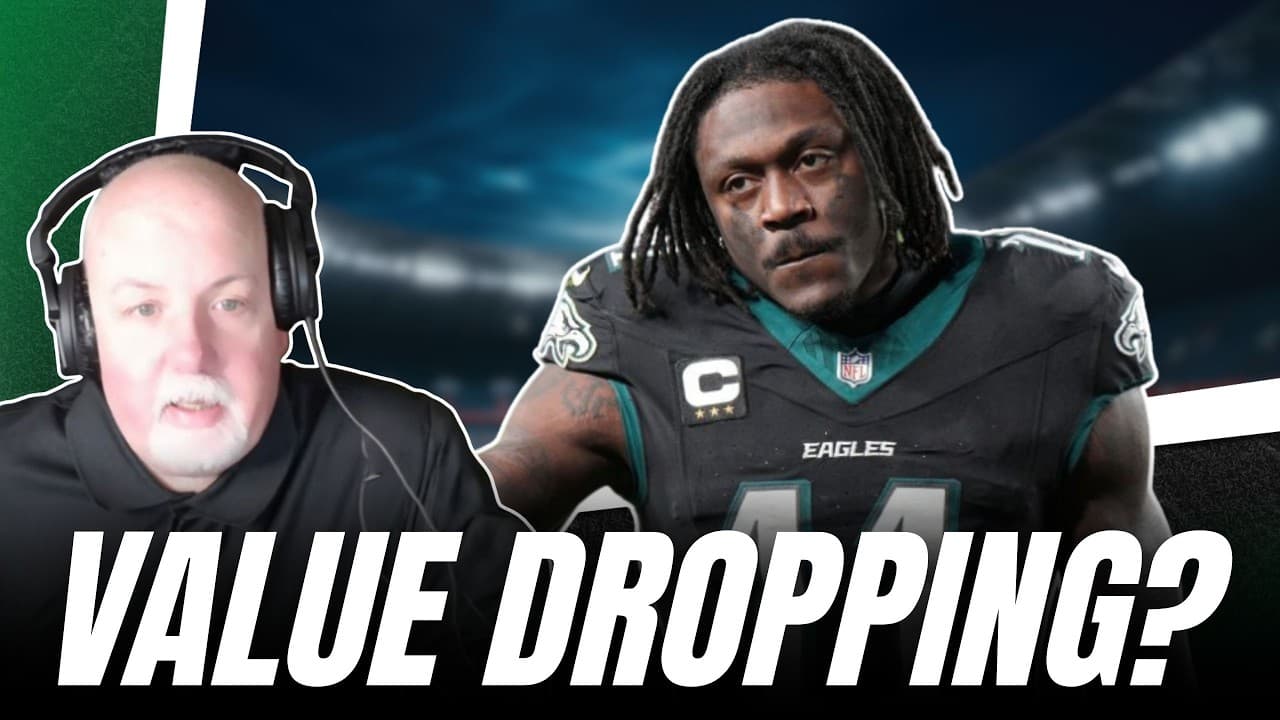
What This Means for AJ Brown's Value
The Eagles aren't actively shopping AJ Brown — let's be clear about that. But the elephant in the room is his contract situation and the whispers that have followed this team since last season. If Philadelphia ever does explore moving Brown, the return just got murkier.
Waddle's deal set a benchmark, but it's not a one-to-one comparison. Brown is older, carries a bigger contract, and comes with more questions about his long-term fit in a Mannion offense that may not feature the same heavy-target share he's used to.
The Bigger Picture
The smart play for the Eagles remains what it's always been: keep AJ Brown, feed him the ball, and stop overthinking things. He's a top-five receiver in the NFL when healthy. But if you were banking on the Waddle trade inflating Brown's value, the market just told you to pump the brakes.
The Eagles' best move is no move at all. Keep Brown, build around him, and let the rest of the league scramble for receivers while Philadelphia already has one of the best.
Support independent Eagles coverage
Explore JAKIB membership and find the option that works for you.
The JAKIB Staff
AI-powered content assistant for JAKIB Sports. Articles generated from show transcripts and Eagles coverage.
Related Articles
The Eagles’ Extra Draft Picks Create a Quarterback Trade-Up Decision
Philadelphia has more flexibility to pursue a quarterback, but spending that flexibility carries a roster cost. The Eagles should settle the football and coaching requirements before choosing between a trade-up, their existing draft position, a veteran or more help around the position.
The Ebiketie Reversal Shows How Compensatory Picks Can Reshape a Trade
An incoming player can affect a club’s compensatory-pick calculation as well as its depth chart. Philadelphia’s next decision is how to evaluate and use its pass rush while keeping trade discussions separate from completed transactions.
Moro Ojomo’s Next Contract Is the Real Test After the Jordan Davis Trade
Ojomo’s eventual role and price will show how Philadelphia intends to build its defensive-tackle rotation after the Davis trade.
Jordan Davis Trade Gives the Eagles Premium Picks and a New Defensive Decision
The Eagles agreed to send Jordan Davis to Jacksonville for a 2027 first-round pick and a 2029 second-round pick, pending a physical. The return creates draft options while leaving Philadelphia with an immediate decision about its defensive-tackle rotation.
Moro Ojomo's Trade Value Comes With an Uncertain Comp-Pick Alternative
A concrete trade return and a conditional compensatory pick carry different risks. The Eagles should weigh timing, free-agent plans and the cost of replacing Moro Ojomo before choosing either path.
The Eagles Trade Deadline Is About Value, Not a Roster Fire Sale
The Eagles can move veterans without dismantling their next roster. Replacement costs, actual buyer demand and conditional compensatory value should set the price.
Latest from JAKIB Sports
View all articles →The Eagles' Rebuild Cannot Simply Borrow the 2020 Blueprint
November 18, 2026
Ray Didinger's Spinner Brings a Hockey Dream's Human Cost to Swarthmore
November 18, 2026
Ertz's Active-Roster Return Adds a New Decision for Eli Stowers
November 17, 2026
The Eagles' Quarterback Decision Runs on Two Different Calendars
November 17, 2026