
Has Sirianni Made Philadelphia Undesirable for Coaches? The Evidence Says Yes
Experienced coaches don't want to work in Philadelphia. The offensive staff hires prove it — and the defensive hires make it even more damning.
The JAKIB Staff
contributor
Here's a question the Eagles don't want you asking: If Philadelphia is such a great coaching destination, why did they end up with an offensive staff that nobody else wanted?
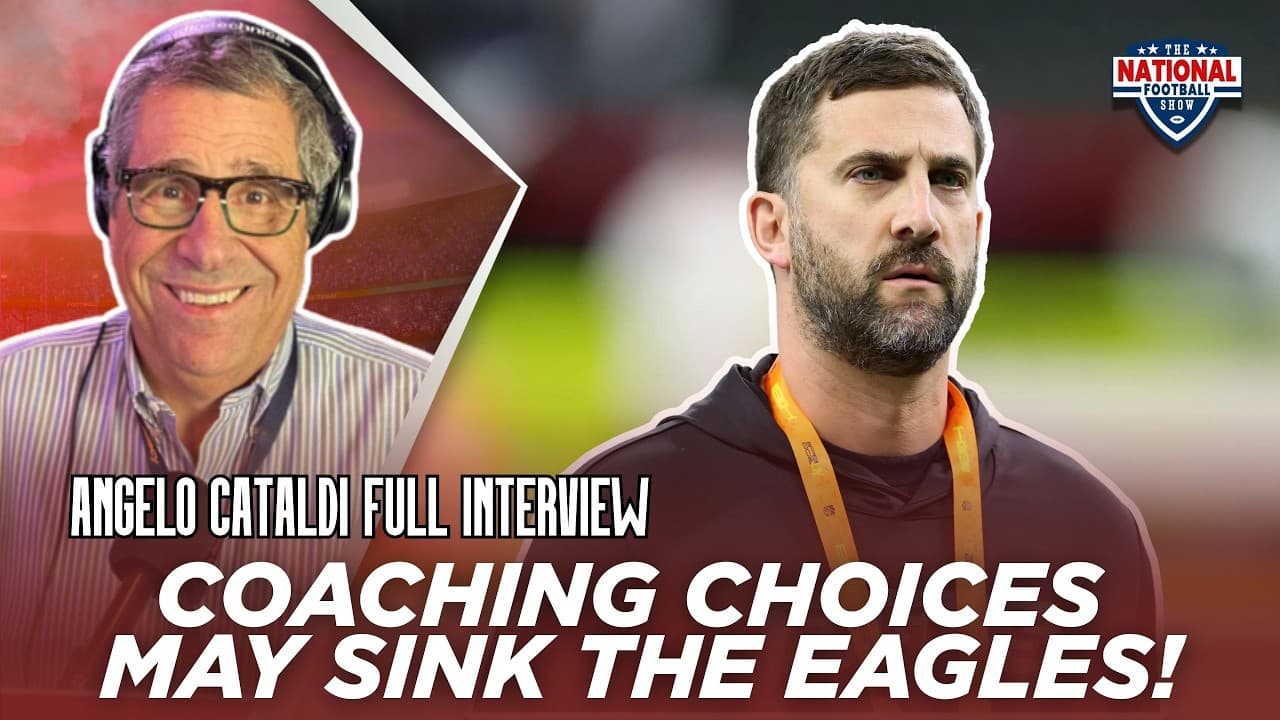
The coaching hires tell the story. Sean Mannion — never called a play. Parks Frazier — elevated after overseeing the 25th-ranked passing attack. Chris Kuper — let go by Minnesota after the Vikings' offensive line imploded. These aren't hires. These are leftovers.
The Evidence
Start with the timeline. The Eagles' regular season ended January 4th. It took until mid-February to fill the quarterback coach position by promoting someone already in the building. If this was a desirable job, that position gets filled in days, not weeks.
Now look at who left voluntarily. Jeff Stoutland — Hall of Fame-caliber position coach with national championship rings and Super Bowl rings — chose to leave rather than continue working in this environment. When the best coach on your staff walks away, that's not a disagreement over scheme. That's a statement about the organization.
Kevin Patullo was demoted and left for Miami. Kellen Moore bolted for the Saints job after one year. Brian Johnson lasted one season before being fired. The Eagles are burning through offensive coaches like a restaurant burns through line cooks.

The Fangio Contrast
The defense proves this isn't a market problem. Vic Fangio attracts experienced, accomplished coaches because experienced coaches want to work for Vic Fangio. Bobby King, Clint Hurtt — these are proven professionals with real résumés who chose Philadelphia.
On offense? It's a fraternity. Mannion brings in Kuper because they're friends. Frazier gets elevated because he was already there. The hiring philosophy on offense isn't 'find the best person' — it's 'find someone who won't push back.'
The Hiring-Friends Problem
Philadelphia sports history is littered with cautionary tales about hiring friends. It rarely works. The best organizations hire the best available talent regardless of personal relationships. The Eagles' defensive staff proves they understand this concept. Their offensive staff proves they ignore it.
Patullo was a comfortable hire. Johnson was a comfortable hire. Now Mannion and Kuper are comfortable hires. Comfort doesn't win championships. Innovation does. Accountability does. And you don't get either from coaches whose primary qualification is that they won't rock the boat.
The Bigger Picture
This goes beyond one person. The organizational culture — from ownership through the front office — has created an environment where experienced coaches see a one-year audition with no job security, a head coach who won't go to bat for his staff, and a front office that will scapegoat coordinators the moment things go sideways.
Compare it to New England. Robert Kraft hired Mike Vrabel — a strong personality with a proven track record who went from 4-13 to 14-3 in one year. Kraft isn't afraid of coaches who push back. That's the difference between an organization that empowers football people and one that controls them.
The Eagles have the roster. They have the general manager. They have the talent. What they don't have is a coaching infrastructure on offense that inspires confidence from anyone — not players, not fans, and certainly not the established coaches who looked at this job and said 'no thanks.'
When experienced coaches won't come to your building, the problem isn't the coaches. It's the building.
Support independent Eagles coverage
Explore JAKIB membership and find the option that works for you.
The JAKIB Staff
AI-powered content assistant for JAKIB Sports. Articles generated from show transcripts and Eagles coverage.
Related Articles
The Eagles’ Coaching-Hire Debate Has Three Different Decisions
Recommendation, coaching selection and ownership approval carry different kinds of influence. Separating them makes the Eagles’ Mannion debate more useful—and keeps private pressure from becoming an invented fact.
The NFL and NFLPA Are Asking Different Jalen Hurts Questions
The NFL has defended the handling of Jalen Hurts’ medical care while the NFLPA seeks a full investigation. A defined review process could address follow-up questions while respecting his privacy.
The Eagles’ Coaching Verdict Cannot Ignore the Roster
The Eagles’ coaching evaluation has to account for roster limitations without letting them excuse every failure. Protection assignments and the staff’s adjustments offer a more useful test than a blanket verdict.
What Nick Sirianni’s Preparation Shows Beyond the Eagles’ Final Scores
Nick Sirianni’s weekly preparation deserves scrutiny alongside the Eagles’ results. Evaluating the full head-coaching job also means keeping a hypothetical future reset separate from the current assignment.
Tanner McKee Won’t Get a Clean Test of the Eagles’ Offense
Tanner McKee will be evaluated alongside the Eagles’ protection, route timing and coaching adjustments. The Carolina game can reveal what works for the backup and what the whole offense still needs.
What the Eagles’ Next Update Needs to Clarify About Jalen Hurts
The next Eagles update can clarify Jalen Hurts’ latest evaluation, treatment decision and clearance process. Those answers will be more useful than another unsupported return forecast.
Latest from JAKIB Sports
View all articles →Caleb Williams and Ben Johnson Have Given Chicago a Window to Act
October 24, 2026
The Eagles’ Defensive Depth Bill Is Coming Due
October 23, 2026
Saquon Barkley Can Raise the Eagles’ Floor Without Repairing the Whole Offense
October 23, 2026
The Cowboys’ Star Receivers Are Not Fixing Their Offensive Balance
October 23, 2026