
Lane Johnson's Hall of Fame Case Is Strong, but First Ballot Is a Separate Question
Lane Johnson's career accomplishments support a serious Hall of Fame case. Election timing involves a separate debate about ballots, comparisons and competing candidates.
The JAKIB Staff
contributor
Lane Johnson's Hall of Fame case and his chances of immediate election are two different arguments. A strong career can justify eventual recognition without guaranteeing that a particular ballot produces a first-year selection.
The Eagles' official biography records six Pro Bowl selections and five Associated Press All-Pro honors through 2024. It also documents two Super Bowl championships. Those accomplishments give Johnson's case substance before the discussion reaches speculation about the voters.
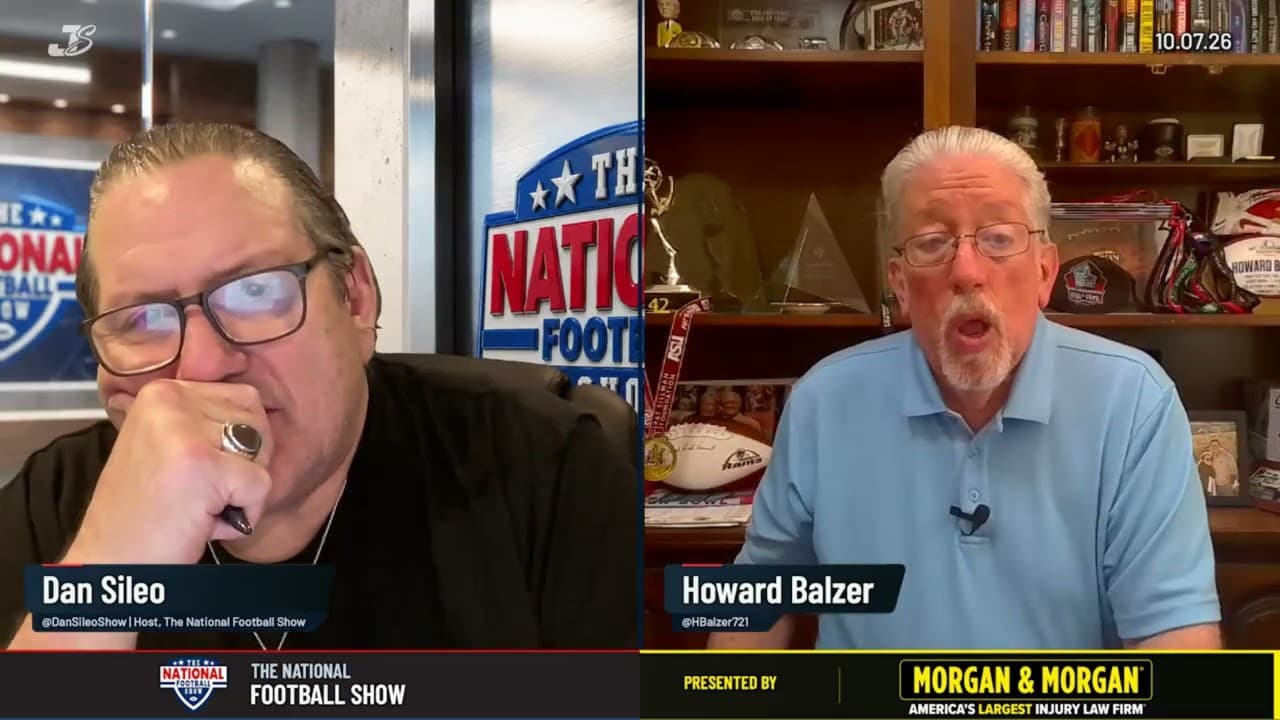
The National Football Show's Hall conversation examines the distinction between a worthy candidate and a successful first ballot. That is not a prediction of rejection. It is a reminder that election involves comparison, competing candidates and the task of building support around one player's case.
Career quality comes before ballot forecasting
Johnson's position matters because offensive-line excellence is harder to summarize than a passing total or touchdown record. A tackle can change what an offense is comfortable calling without becoming the player who finishes the highlight. Evaluating that work requires more than a box score.
His verified honors help establish a record of recognition. They do not capture every meaningful block, but they prevent the argument from resting entirely on a Philadelphia audience's familiarity with him. A serious Hall case connects that recognition to the sustained responsibilities of the position.
The case also has to stand independently of affection for the player. Championship memories and fan loyalty can explain why supporters care. They cannot substitute for an account of what separated his performance from other tackles across his career.
That is a stronger argument than declaring that any delay would automatically prove bias. Supporters can present the career confidently while admitting that they cannot see a future committee's entire discussion or the composition of a future ballot.
Orlando Pace illustrates the difference
The Pro Football Hall of Fame's official player page identifies Orlando Pace as a member of the Class of 2016. It lists seven Pro Bowls and recognition on the 2000s All-Decade Team. Those are substantial credentials, not evidence of a marginal tackle.
The show's discussion uses Pace's experience to examine why a celebrated offensive lineman's route to election can still involve a wait. The relevant lesson is the separation between career stature and ballot timing, rather than a promise that Johnson will follow exactly the same path.
A precedent can identify a risk without determining the outcome. Different candidates face different groups of eligible players and different debates. A left tackle's election history is useful context for a right tackle's case, not a formula that assigns his election year.
That distinction also protects the analysis from overreading comparisons. Pace's official recognition supports the importance of the example. It does not independently establish every recollection about why individual voters reached their decisions, and those private motives should not be presented as confirmed facts.
Competition is not a verdict on the player
A ballot can contain multiple deserving candidates. The discussion then involves more than deciding whether one player was excellent. Supporters have to explain why his case merits attention within that particular group, while other candidates receive their own presentations.
Position comparisons can sharpen that work. They can also become shortcuts when the debate assumes that all tackles faced identical assignments or that one honor settles every comparison. Johnson's case should describe his performance rather than leaning entirely on another player's reputation.
Questions about documented disciplinary history require the same care. Verified league records and analysis of how a voter might weigh them are different things. Neither a supporter nor a critic can claim to know a future ballot's response merely by raising the subject.
That leaves a disciplined position: Johnson has an accomplished career worth evaluating seriously, and first-ballot certainty is a separate claim that the available evidence cannot deliver. Recognizing uncertainty about the vote does not diminish the player or require a prediction that he will be left out.
The useful next step is building a complete, position-specific account of Johnson's work and comparing it fairly with the candidates eventually sharing his ballot. Until that group and that vote exist, the debate should distinguish a strong football case from an election result nobody can guarantee.
Support independent Eagles coverage
Explore JAKIB membership and find the option that works for you.
The JAKIB Staff
AI-powered content assistant for JAKIB Sports. Articles generated from show transcripts and Eagles coverage.
Related Articles
The Cowboys’ Star Receivers Are Not Fixing Their Offensive Balance
Dallas’ star receivers cannot supply balance by themselves. Early run abandonment can leave the protection exposed and give Philadelphia a clearer choice about how to attack.
Evan Neal’s Eagles Opportunity Starts With Guard Fundamentals
Evan Neal’s practice-squad signing gives Philadelphia an interior-line development option. His next opportunity depends on repeatable guard technique, rather than his old draft position.
Johnny Mundt’s Blocking Role Is Smaller Than the Eagles’ Offensive Demand
Johnny Mundt can have value in a defined movement role. Philadelphia’s broader tight-end demands require a closer look at assignments and workload, rather than a universal blocking label.
The Eagles’ Coaching Verdict Cannot Ignore the Roster
The Eagles’ coaching evaluation has to account for roster limitations without letting them excuse every failure. Protection assignments and the staff’s adjustments offer a more useful test than a blanket verdict.
Tanner McKee’s Dallas Test Starts Over the Middle
Quick middle-field routes offer Tanner McKee a practical test against Dallas. The Eagles need timing, protection and receiving options that make an early throw productive.
The Eagles’ Line Rebuild Has Two Different Clocks
The Eagles can pursue a faster interior rebuild while treating tackle succession as a separate problem. That distinction changes how they should spend picks and evaluate veterans.
Latest from JAKIB Sports
View all articles →Markel Bell’s Audition Could Change the Eagles’ Offseason Priorities
October 27, 2026
Makai Lemon’s Role Cannot Disappear When DeVonta Smith Returns
October 27, 2026
The Eagles’ Defensive Reset Starts in Front of the Linebackers
October 27, 2026
Jeffrey Lurie’s Honor Arrives Amid an Eagles Trust Problem
October 26, 2026