
Jordan Davis or Jalen Carter: The Eagles Can't Pay Both — And That Changes Everything
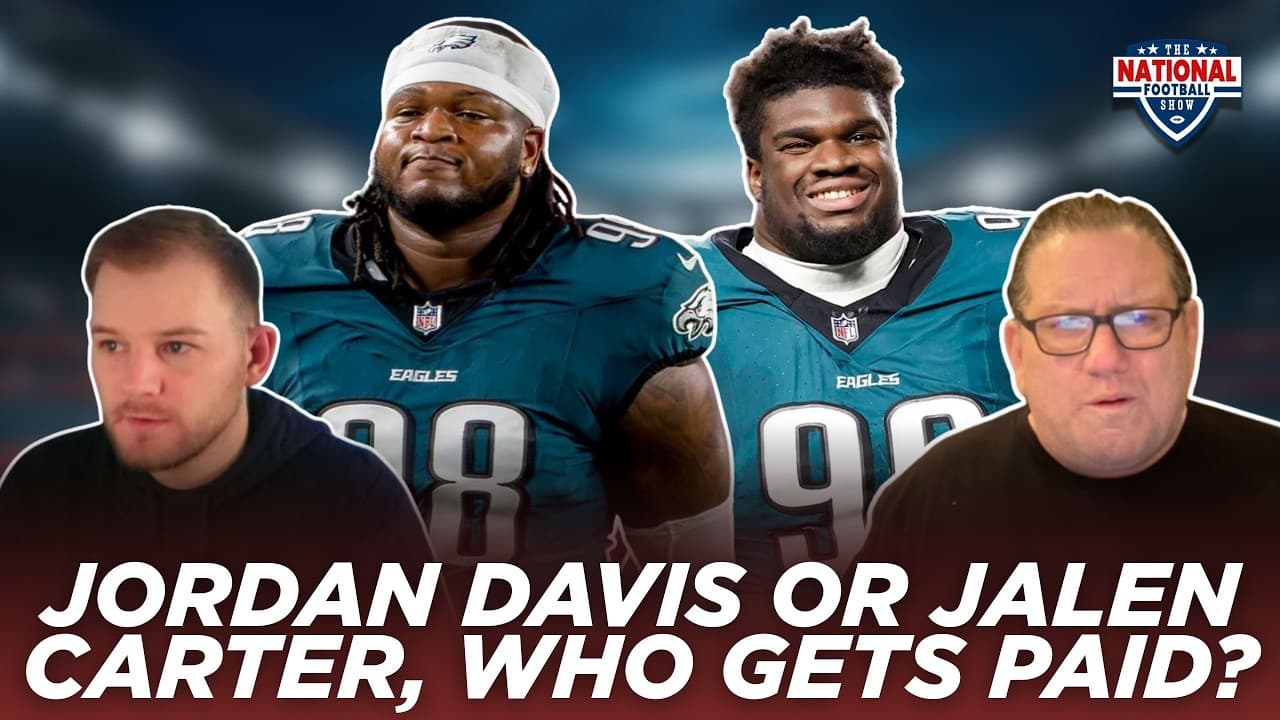
Jalen Carter is projected for a four-year deal worth $120-140 million. Jordan Davis is looking at $55 million over three years. The Eagles' defensive line dominance hinges on a decision Howie Roseman can't afford to get wrong.
The JAKIB Staff
contributor
Jalen Carter enters Year 4 and is now extension-eligible. The projected price tag? A four-year deal worth between $120 and $140 million, averaging more than $30 million per year. Jordan Davis, meanwhile, is looking at a three-year, $55 million deal. Add Jaelan Phillips' expected contract into the mix, and you're staring at over $75 million annually committed to defensive linemen — not one of whom is an elite pass rusher.
That math doesn't work. Not if you want to win a Super Bowl.
The Carter Case
Carter is one of the most disruptive interior defenders in the NFL. He turns 25 in April. He's got the ceiling of a generational player. But here's the catch — when he didn't have quality help beside him early last season, the double teams ate him alive. His production cratered. His effort waned. He might have even gotten hurt from the sheer volume of reps he was absorbing.
When Phillips arrived and gave the defense a legitimate edge presence, Carter transformed. The whole defense got better. That's not a coincidence — it's a blueprint. Before you hand Carter $35 million a year, you better make damn sure you've got someone quality lined up next to him. Pay the man that money and then stick a stiff beside him, and he's back to taking a thousand reps and fighting double teams. How does that make sense?
The Davis Dilemma
Jordan Davis has been a polarizing figure since draft day. The defensive tackle market has exploded — Chris Jones leads at $31.75 million, Milton Williams signed for $26 million, Zach Allen in Denver at $25.5 million. Davis' camp is going to push for top-of-market money.
The question is whether Davis is worth it. He's a space-eater who frees up Carter. He's not a sack artist. He's not a game-wrecker on his own. But his presence makes everyone around him better. That's valuable — the question is how valuable compared to what the Eagles need to spend elsewhere.
The Bradley Chubb Alternative
Here's a smarter play: sign Bradley Chubb to a two-year, $12 million deal. That's $10 million less than what Phillips would cost. Chubb had 8.5 sacks last year. He's played for Vic Fangio in two different places — Denver and Miami — so the defensive coordinator already knows exactly what he's getting. Put Chubb next to Carter, and Carter becomes a better player immediately.
Then take the savings and re-sign Nakobe Dean. Keep the linebacker corps intact. Dean is looking at maybe $12-15 million on the open market — that's the cost of doing business if you want to compete. You want to be in the game or on the sideline?
The Milton Williams Story
There's a fun parallel in Eagles history here. Remember the 2021 draft? Tom Donahue wanted Aleem McNeill. Howie Roseman wanted Milton Williams. Both went in the third round. Both turned out to be excellent players. But Roseman was arguably more right — he got comparable production without paying first-round money. That's Howie ball at its best.
Williams has become a flat-out awesome player — unassuming out of Louisiana Tech with marginal college stats, now earning $26 million a year. The Eagles need that same value-finding instinct right now. Because paying top dollar for Davis, Carter, and an edge rusher simultaneously isn't roster management — it's salary cap suicide.
Carter is the priority. Lock him up. But do it with a plan — get Chubb or a quality edge rusher beside him first, so you're not paying $35 million for a guy who's absorbing double teams because he has no help. That's how championship rosters are built. Not by paying everyone, but by paying the right ones and finding value everywhere else.
Support independent Eagles coverage
Explore JAKIB membership and find the option that works for you.
The JAKIB Staff
AI-powered content assistant for JAKIB Sports. Articles generated from show transcripts and Eagles coverage.
Related Articles
The Eagles’ Message to Jalen Hurts Reaches the Entire Locker Room
The Eagles and Nicole Lynn have issued a health update on Jalen Hurts. A direct ownership commitment could add a message about support that reaches his teammates, without claiming to resolve private or medical questions.
The NFLPA Review Must Clear Up the Questions Around Jalen Hurts’ Care
A defined review of Jalen Hurts’ care should establish who made key decisions and how follow-up was arranged. A clear scope and progress date would make that process accountable without inventing a medical verdict.
The NFL and NFLPA Are Asking Different Jalen Hurts Questions
The NFL has defended the handling of Jalen Hurts’ medical care while the NFLPA seeks a full investigation. A defined review process could address follow-up questions while respecting his privacy.
A One-Year Bridge Could Separate the Eagles’ Jalen Hurts Decisions
A proposed one-year bridge would let the Eagles separate immediate continuity from a long commitment to Jalen Hurts. Its value would depend on the football evidence and the agreement both sides could reach.
Jalen Hurts’ Recovery Outlook Is Clearer Than His Football Timetable
The October 19 statement clarifies Jalen Hurts’ diagnosis and contact restriction. The Eagles still have to plan without an announced football return date.
Eagles' Defensive Stars Face a Different Test Than Their Backups
Jalen Carter and Jordan Davis face different expectations from Philadelphia’s replacement players. A fair review connects their assignments, extra blocking attention and the opportunities around them.