
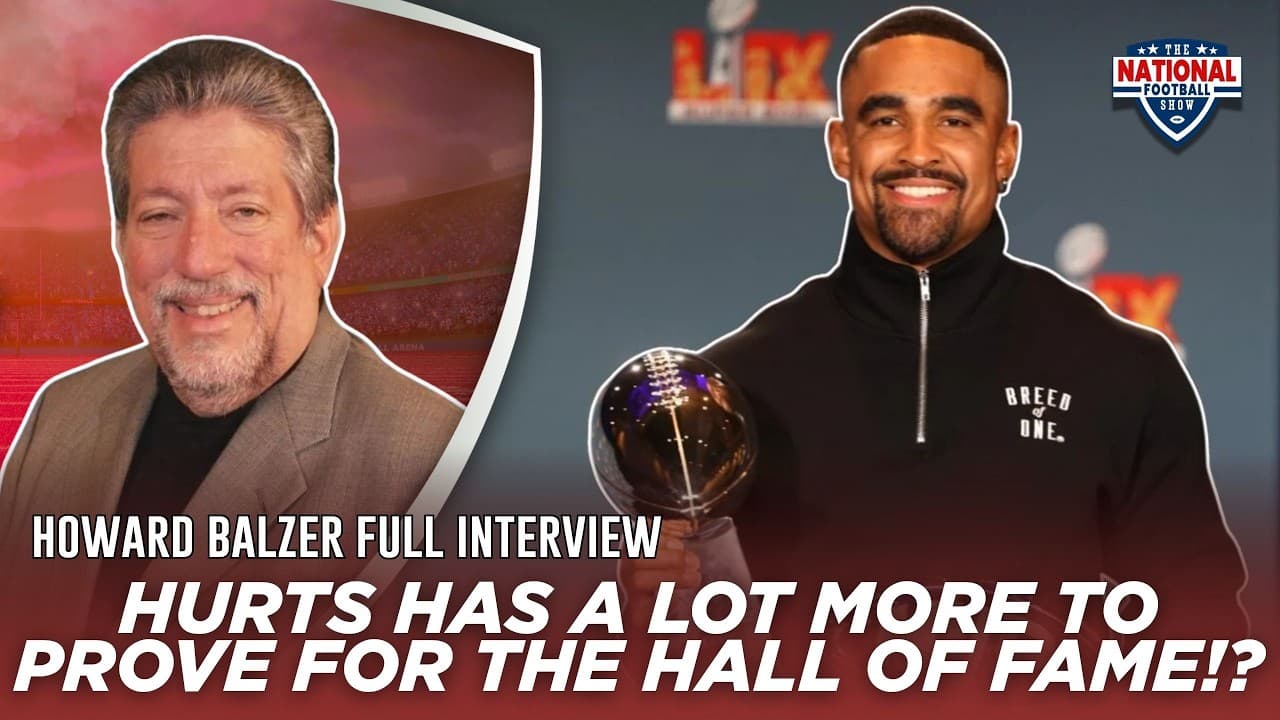
What Jalen Hurts Still Must Add to Build a Hall of Fame Case
Jalen Hurts' team success gives him an important foundation, but the Hall of Fame demands more than rings. His eventual case must show sustained, era-defining quarterback value.
The JAKIB Staff
contributor
Jalen Hurts has already built the kind of team resume that guarantees serious attention. He has led the Philadelphia Eagles on the sport's biggest stage and established himself as the central figure of a perennial contender. But a Pro Football Hall of Fame case cannot rest on team success alone.
The eventual question is not whether Hurts was the quarterback when Philadelphia won. It is how much sustained, individual quarterback value he created across his era. Rings strengthen the argument. They do not finish it.
Team success opens the conversation
Quarterbacks receive more credit and blame than any other position because their decisions touch almost every offensive play. That makes postseason success relevant. A quarterback who repeatedly guides his team through high-pressure games has demonstrated something meaningful about preparation, leadership and execution.
Hurts should receive that credit. His poise, running threat and ability to respond after difficult moments are part of the Eagles' identity. Those qualities belong in any long-term evaluation.
The Hall of Fame standard, however, has to distinguish between participating in a great team and defining why that team remained great. Philadelphia has invested heavily in the offensive line, skill positions, defense and front office infrastructure. Hurts' case becomes strongest when the evidence shows that he elevated those advantages rather than simply benefited from them.
Sustained passing value matters
Hurts' running ability changes the geometry of a defense. It creates an extra gap in the run game, stresses contain rules and turns broken plays into first downs. That value is real and should not be discounted because it does not always appear in traditional passing measures.
At the same time, longevity at quarterback requires dependable passing answers. Hurts must continue showing anticipation against changing coverages, accuracy from the pocket and the ability to win when defenses limit designed runs. The strongest Hall cases survive changes in coordinators, receivers, linemen and tactical trends.
That does not mean Hurts must become a different quarterback. It means the passing component of his game must remain effective enough that opponents cannot shrink the offense by removing one preferred path. A complete threat ages better and gives evaluators clearer evidence of individual control.
The case needs seasons that belong to Hurts
Championships become more persuasive when they sit beside stretches of play that are unmistakably quarterback-driven. Hurts needs seasons in which his command, production and late-game performance make him one of the defining players in the league, not merely the leader of one of its best rosters.
That standard is demanding because the Hall is supposed to be demanding. The comparison is not to the average starter. It is to the quarterbacks whose careers shaped how their teams played and how their era is remembered.
Hurts can build that evidence through consistency. He does not need a weekly highlight reel. He needs repeatable excellence: correct decisions before the snap, efficient answers against pressure, accuracy in critical situations and the ability to keep the offense functional when an injury or matchup removes an advantage.
Context should inform the vote, not decide it
Every Hall candidate is evaluated within context. Supporting casts matter. Coaching stability matters. The strength of the conference and the style of the era matter. But context should explain the record rather than replace it.
For Hurts, evaluators will eventually weigh Philadelphia's organizational strength against the unique problems he creates for defenses. They will examine whether the offense remained dangerous as personnel changed and whether his best traits continued to produce postseason answers.
The same balance applies to championships. A second ring would be enormously important, but it would not automatically settle the case. A quarterback can gain prestige from a title without proving a complete Hall resume. Conversely, a season that ends short of a championship can still strengthen the case if the quarterback demonstrates elite and sustainable play.
The next phase can define the legacy
Hurts has time to make the argument much stronger. The next phase of his career should show greater command of the entire offense and a clearer ability to elevate new players as the roster evolves. That is why the current season matters beyond the standings.
If Hurts combines continued team success with several years of top-level individual quarterback play, the Hall conversation will become serious on its own. If the Eagles remain successful but the offense consistently depends on ideal surroundings, the debate will remain complicated.
The foundation is already meaningful. What Hurts must add is separation: enough sustained, adaptable excellence that his career cannot be explained without treating him as one of the defining quarterbacks of his time.
Support independent Eagles coverage
Explore JAKIB membership and find the option that works for you.
The JAKIB Staff
AI-powered content assistant for JAKIB Sports. Articles generated from show transcripts and Eagles coverage.
Related Articles
Clint Hurtt’s Challenge Is Turning Eagles Talent Into Reliable Run Fits
Clint Hurtt’s teaching can make the Eagles’ defensive assignments clearer and more repeatable. The test reaches beyond the tackles to the linebackers relying on the front to do its job.
The Eagles’ Backup Plan Has to Fit the Offense
The Eagles should evaluate their backup quarterbacks by what each allows the offense to keep doing. Dallas provided productive Tanner McKee possessions, while leaving a larger question about continuity behind Jalen Hurts.
Jalen Carter’s Biggest Test Is Consistency After Dallas
Jalen Carter’s response to Dallas will be measured in dependable defensive snaps. The Eagles need a standard that separates football accountability from guesses about his motivation.
The Eagles’ Defensive Contracts Have Put Accountability Under the Microscope
Long-term commitments to Jalen Carter and Jordan Davis raise the stakes for Philadelphia’s weekly defensive decisions. The Eagles can demand clearer execution and adjust roles without turning a poor performance into an unsupported verdict on effort.
Jalen Carter’s Dallas Matchup Shows the Cost of Losing With Strength
Jalen Carter’s Dallas matchup raises a specific technique question: what happens when the first surge fails? A timely counter offers a more useful correction than unsupported claims about effort or emotion.
A First-Round Quarterback Wouldn’t Fill the Eagles’ Other Roster Holes
A first-round quarterback would leave Philadelphia with important work at other positions. Separating starting upgrades from competition and depth gives the Eagles a more useful plan than treating one selection as a complete reset.
Latest from JAKIB Sports
View all articles →Quenton Nelson and Jeffery Simmons Add a New Layer to Bears–Seahawks
October 31, 2026
Jared Goff Gives Minnesota a Reason to Rethink the Blitz
October 30, 2026
Ben Johnson Is More Than His Trick Plays
October 30, 2026
Washington’s Blitz Puts the Eagles’ Backfield on the Spot
October 30, 2026