
Why the Eagles Receiver Race Is Moving Away From Hollywood Brown
Hollywood Brown entered Eagles camp with the recognizable résumé, but Dontayvion Wicks and Darius Cooper are creating the cleaner evidence. The receiver rotation has to follow current execution, not name value.
The JAKIB Staff
contributor
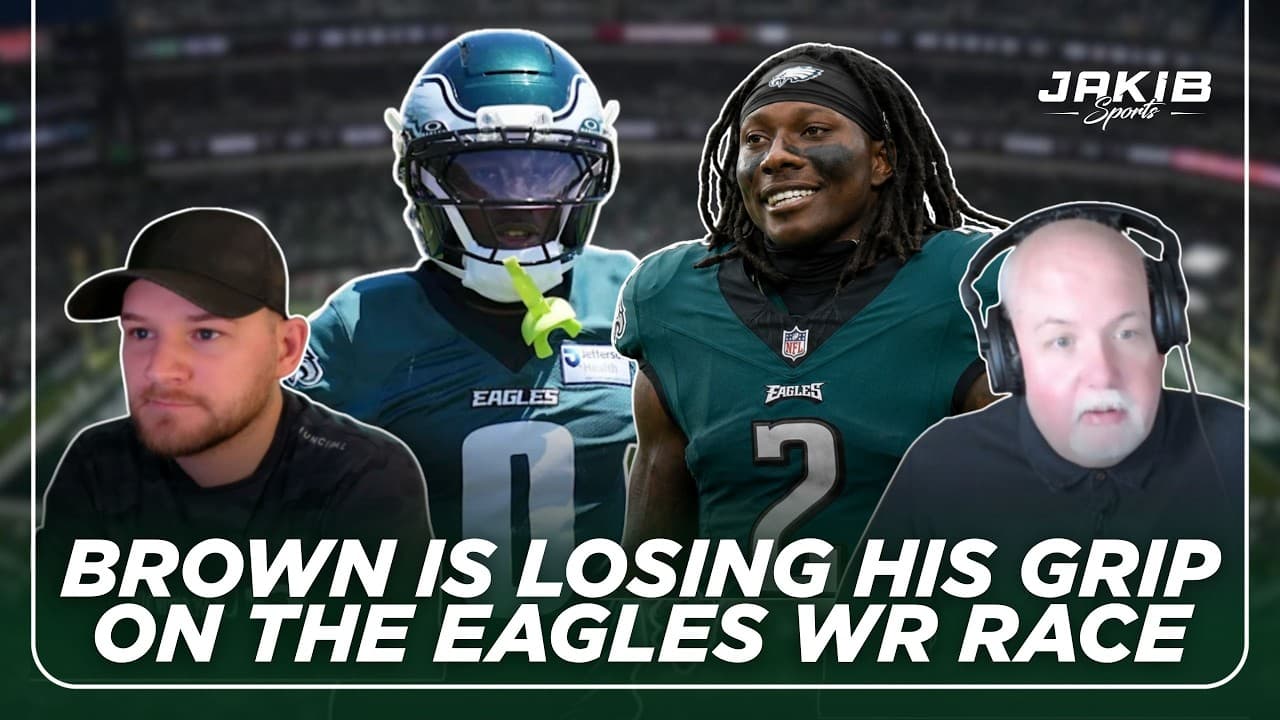
The Philadelphia Eagles receiver race is moving away from Hollywood Brown because the competition is beginning to produce a clearer standard. Dontayvion Wicks is running sharper routes, Darius Cooper keeps earning attention, and Brown has not created enough separation between his name and the work happening on the field.
This does not mean the Eagles must make an immediate final decision. It means the rotation can no longer be organized by reputation. Jalen Hurts needs receivers who arrive at the correct landmark, create a dependable throwing window, and repeat the assignment cleanly when the offense changes the look.
Wicks is making the comparison unavoidable
Wicks has given the Eagles the kind of camp evidence that translates directly to quarterback trust. Clean routes do more than create highlights. They tell Hurts where a receiver will be and when he will be there. That timing becomes even more important in the red zone and against pressure, where a small mistake in depth or leverage can turn an open concept into a contested throw.
Brown's speed and experience still matter, but those traits cannot cover for inconsistent route execution. A veteran receiver is supposed to reduce uncertainty for the quarterback. If Hurts has to wait, redirect, or protect a receiver from the wrong leverage, the play becomes harder than the design intended.
The Eagles should reward the receiver who makes the offense easier to operate. Right now, Wicks is producing the stronger argument.
Darius Cooper changes the roster math
Cooper's rise makes this more than a two-player comparison. Every productive rep from a younger, less established receiver increases the pressure on Brown because the roster cannot be built from biography alone.
Cooper still has work to finish. Camp praise does not guarantee a place on the 53-man roster, and preseason games will test whether his practice reliability survives contact, different coverage, and special-teams responsibility. But the important point is that he has created a genuine football case. He is no longer competing only for developmental attention. He is challenging players expected to contribute immediately.
That gives Philadelphia a healthy problem. If Cooper and Wicks continue to execute, the Eagles gain affordable, ascending options around Hurts. The wrong response would be to protect a veteran's place because changing course feels uncomfortable.
Brown's contract cannot become the argument
Money is part of roster construction, but it should not become the strongest reason a player survives a competition. A contract can explain why the Eagles gave Brown an opportunity. It cannot prove that he should receive important snaps.
Philadelphia must compare the real costs. Keeping a player who is not earning the role can block development and weaken the offense. Moving on can create a financial consequence, but it can also preserve the merit standard the organization wants every young player to believe.
The best front offices accept new information. They do not turn every offseason addition into a promise that must be defended. If Brown rebounds, runs with precision, and gives Hurts a trustworthy vertical option, his role can grow. If Wicks and Cooper remain better, the roster should say so.
Baltimore is the next useful test
The preseason game against the Ravens should clarify the receiver picture because practice production now has to survive game conditions. Wicks must show the same route detail when the coverage is unfamiliar. Cooper must prove he can handle the full assignment and finish plays. Brown needs to show that his experience creates an advantage rather than simply a familiar name.
The Eagles do not need one dramatic play to settle the order. They need repeated evidence: correct alignment, strong releases, dependable spacing, useful blocking, and catches that keep the offense on schedule.
That is why the race is moving away from Brown. Wicks and Cooper are giving Philadelphia more current reasons to trust them. Brown can still reverse that direction, but he must do it with cleaner football. The depth chart should belong to the receivers who help Hurts execute the offense now.
Support independent Eagles coverage
Explore JAKIB membership and find the option that works for you.
The JAKIB Staff
AI-powered content assistant for JAKIB Sports. Articles generated from show transcripts and Eagles coverage.
Related Articles
The Clock Decision That Preserved Jacksonville’s Winning Chance
The Eagles preserved Jacksonville’s winning chance when their final possession left eight seconds for a kickoff. The clock stopped on Makai Lemon’s late catch, allowing the Jaguars to save their last timeout for the next play.
Jalen Hurts’ C-Minus Game—and the Offensive Line Behind It
A C-minus is a defensible editorial grade for Jalen Hurts’ uneven afternoon against Jacksonville. But fixing the Eagles’ passing game requires examining the protection and rushing support behind him, not simply circling the quarterback’s name.
Why the Eagles Couldn’t Finish Off Jacksonville
The Eagles couldn’t finish off Jacksonville because their offense stopped giving the defense breathing room. A 19-17 loss turned another winnable afternoon into a reminder that late heroics cannot replace sustained scoring.
Nick Sirianni's Jacksonville Test Starts With Eagles Discipline
Nick Sirianni cannot control every injury entering the Jacksonville game. He can control preparation, penalties and whether the Eagles have useful answers for a changed offensive line.
DeVonta Smith's Next Contract Adds Another Eagles Rebuild Decision
DeVonta Smith’s next contract is a roster-building decision, not a referendum on his talent. Philadelphia must price its passing-game future alongside a costly offensive-line transition.
The Eagles' Offensive Line Faces a Jacksonville Pressure Test
Philadelphia faces Jacksonville with a rebuilt offensive line. The pressure plan must protect Jalen Hurts through communication, spacing and realistic help for new starters.