
The Eagles’ Offensive-Line Reset Is About More Than Replacing Lane Johnson
Replacing Lane Johnson requires an immediate protection plan and a longer-term investment decision. The Eagles also have to account for the rest of the line, not isolate every problem at right tackle.
The JAKIB Staff
contributor
The Eagles’ offensive-line reset cannot begin and end with finding another right tackle. Lane Johnson’s retirement creates an immediate opening, but Philadelphia also has to decide how the whole unit will protect Jalen Hurts and develop its next reliable starter.
The Eagles listed Johnson’s retirement announcement on October 6. That makes succession a present football problem rather than an offseason discussion. The first replacement decision matters, but the protection plan around that player may matter just as much.
There are two different tests here. The Eagles need someone capable of handling the next assignment. They also need enough information to determine whether that player can grow into the long-term answer. Confusing those tests leads to rushed conclusions in either direction.
Separate the starter decision from the investment
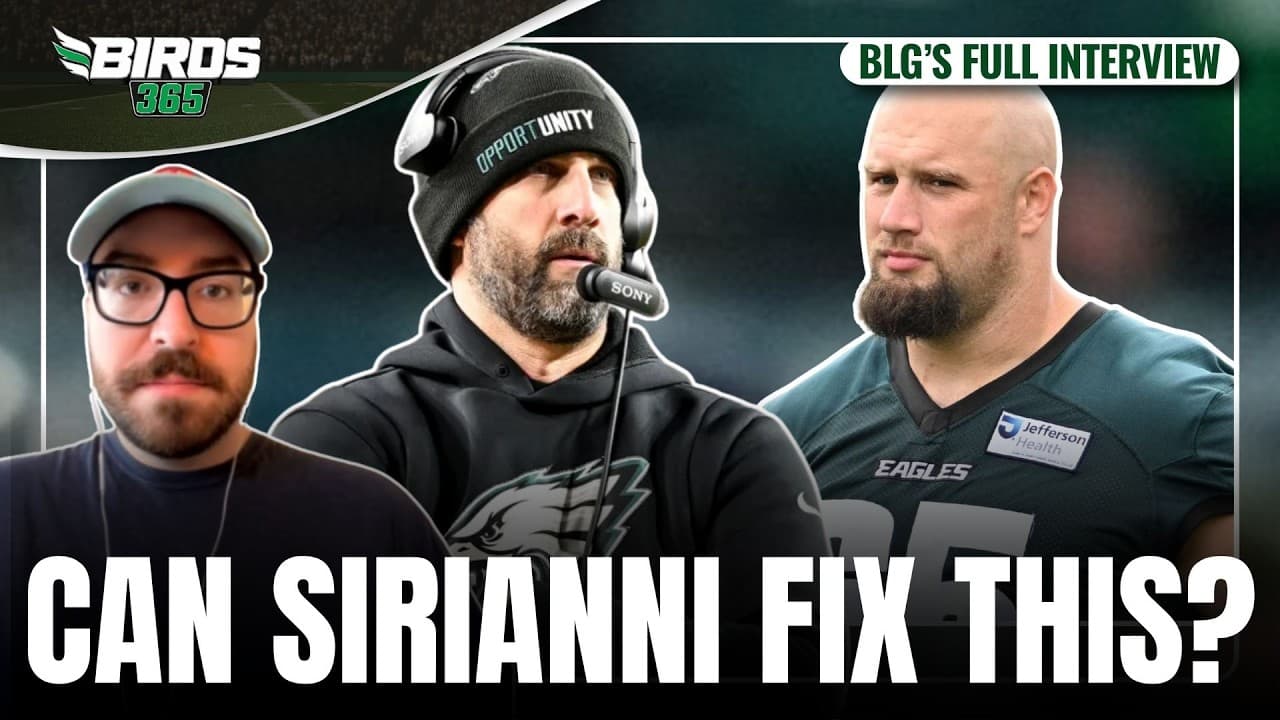
The Birds 365 discussion framed Markel Bell and Fred Johnson as options to consider. That analysis is not an official declaration of who will start. Bell’s development case should be evaluated as a football argument, not presented as a confirmed lineup change.
Giving a developing tackle meaningful work can reveal whether he can become a dependable starter. Practice alone cannot reproduce every defensive disguise, late movement or speed-to-power rush. Game assignments supply information the organization eventually needs.
But development does not excuse exposing the quarterback to an assignment the player cannot handle. The staff has to distinguish a correctable mistake from a protection structure that repeatedly leaves Hurts without a realistic chance to execute.
The immediate standard should be functional protection, not a demand that the replacement resemble Johnson. Set the assignment, identify where help is necessary and judge whether the tackle performs that job consistently. A player can make progress without instantly becoming an isolated pass-protection advantage.
The other four blockers still matter
A new right tackle does not operate in a separate offense. His work connects to the guard beside him, the center’s communication and the quarterback’s understanding of where pressure can arrive. A replacement can look overwhelmed when the underlying problem is a missed assignment elsewhere.
That is why line-depth evaluation should include more than the next name on the depth chart. Philadelphia needs workable combinations. A backup who can survive at one position may allow another blocker to remain where he is most effective.
Moving several players to solve one opening can introduce additional communication problems. Sometimes the best short-term answer is the least disruptive combination, even if another arrangement appears more talented on paper. The staff has to judge the unit rather than assemble five separate resumes.
The same principle applies when reviewing a sack. Was the tackle beaten directly? Did protection slide away from the actual threat? Did another blocker miss an exchange? Did the quarterback hold the ball beyond the concept’s intended timing? Each explanation demands a different correction.
Help the replacement without hiding the problem
Tight-end chips and running-back protection can make a difficult assignment manageable. They can also reduce the number of immediate receiving options. The Eagles should attach those choices to specific defensive threats rather than treat maximum protection as a universal repair.
An opponent can still create trouble if Philadelphia keeps additional players in but leaves the quarterback without a timely outlet. Blocking more bodies does not automatically solve recognition. The offense needs a coordinated answer when defenders change the expected rush picture.
That answer can involve the line, Hurts and the receivers. The protection identifies who is accounted for. The quarterback recognizes the extra threat. The receiving concept supplies somewhere to go with the ball. Removing any one part can leave the remaining players solving an impossible problem.
Long-term investment should follow that fuller evaluation. A difficult afternoon does not automatically prove Bell cannot develop. A manageable afternoon with substantial help does not automatically prove the Eagles have found their next Johnson. The assignment and support have to be part of the conclusion.
Philadelphia’s next step is to establish a workable combination, define the replacement’s responsibilities and track the same recurring problems across possessions. Then the organization can decide which weaknesses require coaching, which require patience and which require another personnel answer. Johnson’s retirement changes the right-tackle position immediately. Building a reliable line after him requires a wider view.
Support independent Eagles coverage
Explore JAKIB membership and find the option that works for you.
The JAKIB Staff
AI-powered content assistant for JAKIB Sports. Articles generated from show transcripts and Eagles coverage.
Related Articles
The Eagles’ Defensive Reset Starts in Front of the Linebackers
Dallas rushed for 204 yards in a 38–21 win, putting the Eagles’ defensive front at the center of the correction. Better interior execution and coordinated pressure alternatives address different parts of the same failure.
Saquon Barkley Can Raise the Eagles’ Floor Without Repairing the Whole Offense
Saquon Barkley could make the Eagles more dependable against Dallas if he returns. His availability, the supporting cast and the offensive plan will determine how much changes.
The Cowboys’ Star Receivers Are Not Fixing Their Offensive Balance
Dallas’ star receivers cannot supply balance by themselves. Early run abandonment can leave the protection exposed and give Philadelphia a clearer choice about how to attack.
Dallas’ Third-and-Long Failures Give the Eagles a Specific Opening
Dallas’ cushion and communication problems give Philadelphia a defined matchup to test. McKee still needs protection, clear routes and timely throws to make that opening count.
Johnny Mundt’s Blocking Role Is Smaller Than the Eagles’ Offensive Demand
Johnny Mundt can have value in a defined movement role. Philadelphia’s broader tight-end demands require a closer look at assignments and workload, rather than a universal blocking label.
The Eagles’ Scripted First Play Raised a Communication Problem
Philadelphia’s opening sack against Carolina raised questions before pressure arrived. The correction starts with a shared call and a clear answer to pressure.