
Why the Eagles' Offensive Identity Is Their Biggest Camp Question
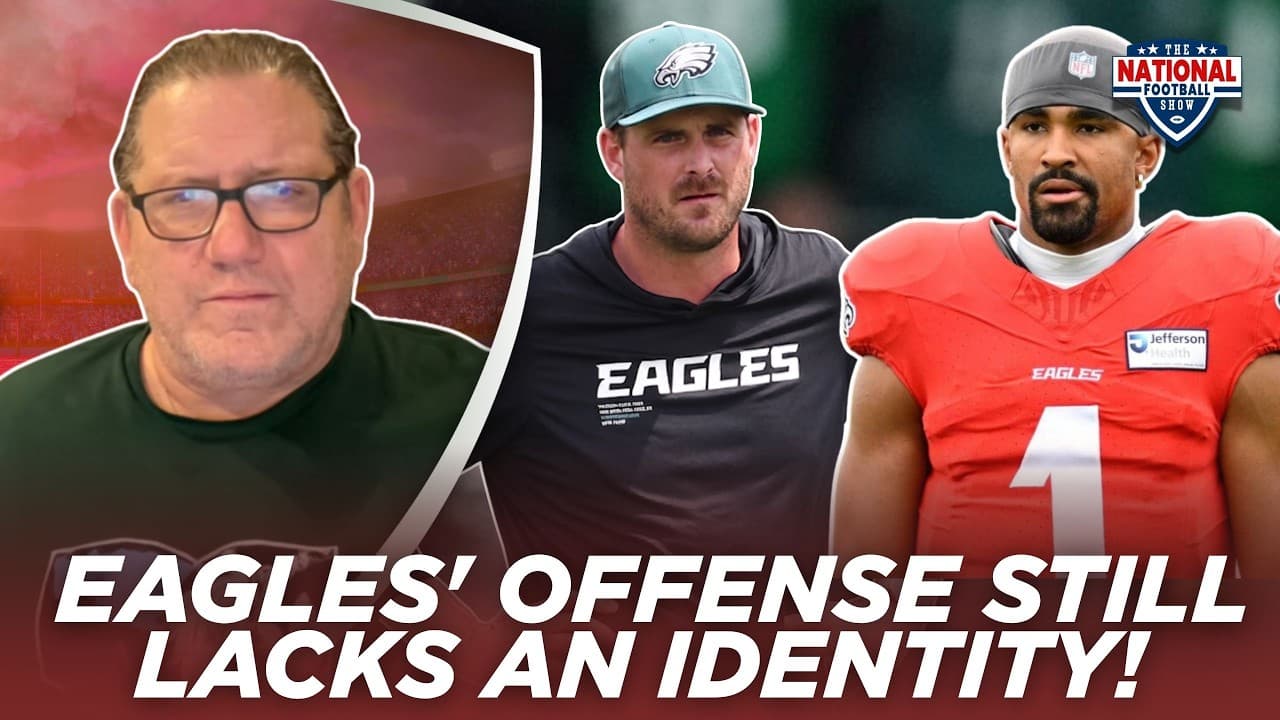
Philadelphia has enough talent to win in several ways, but its new offense needs a coherent identity. The run game, Jalen Hurts' middle-of-field work and Sean Mannion's progression structure must function as one system.
The JAKIB Staff
contributor
The Philadelphia Eagles can survive a difficult August practice. What they cannot carry into the season is uncertainty about what their offense is supposed to be. Jalen Hurts, Saquon Barkley and a rebuilt passing structure give Philadelphia enough talent to win in several ways, but talent without a clear operating identity becomes a collection of disconnected ideas.
That is the biggest question of Eagles training camp. The answer cannot simply be “give the ball to the best player.” It must explain how the run game creates favorable throws, how Hurts attacks the middle of the field and how new coordinator Sean Mannion builds a progression-based system around the quarterback’s strengths.
The Run Game Should Set the Terms
Barkley gives the Eagles an obvious foundation. A defense has to respect Philadelphia’s ability to run from multiple looks, and that attention should make the rest of the offense easier. The run game can force linebackers forward, create cleaner play-action windows and discourage opponents from living in light personnel.
But “run-first” cannot mean predictable. The Eagles need complementary calls that look alike before the snap and stress different areas after it. A strong identity is not one formation or one play. It is a connected family of answers that allows the offense to punish whatever adjustment a defense makes.
That is where Mannion’s installation matters. Philadelphia’s official training camp preview described the new offense as an evolving blend built to maximize the roster’s strengths. The result should preserve the physical run game while giving Hurts defined, repeatable answers when opponents crowd the box.
Hurts Must Own the Middle
The middle of the field is central to the next step. Defenses become much harder to solve when they can squeeze the sideline and anticipate where the quarterback wants to throw. Hurts does not need to force reckless passes into traffic, but he does need a structure that lets him identify leverage and attack between the numbers on time.
That requires help from the entire design. Motion can reveal coverage. Route combinations can put a linebacker or safety in conflict. Play action can create space behind the second level. The quarterback’s responsibility is to trust the picture, work through the progression and deliver the ball before the window closes.
Hurts’ mobility remains part of the equation, not an escape from it. The threat of his legs can hold backside defenders and turn broken coverage into first downs. The most dangerous version of this offense uses that threat to sharpen the passing game rather than reducing the quarterback to a runner whenever the first read disappears.
A New System Still Needs a Clear Personality
Training camp is the place to experiment, and uneven practices are part of installing a different offense. The Eagles should not panic over every incompletion. They should care whether the same problems repeat without an obvious correction.
Progression-based football only works when the progression fits the personnel. Routes must develop at a useful pace behind the protection. Receivers must understand spacing. Hurts must know where the answer is against pressure. The coaching staff must be willing to remove concepts that look good on paper but do not help this group play fast.
The best identity would be physical without becoming stubborn, aggressive without becoming careless and flexible without becoming vague. Philadelphia can lead with Barkley, challenge the middle with Hurts and use movement to create clean matchups. Those pieces belong together.
By the end of camp, the Eagles do not need to reveal every wrinkle. They do need to know what they trust on third-and-medium, what they call after a negative play and how they create an easy completion when the offense loses rhythm. That is what identity looks like in real football: not a slogan, but a dependable answer when the game becomes uncomfortable.
Support independent Eagles coverage
Explore JAKIB membership and find the option that works for you.
The JAKIB Staff
AI-powered content assistant for JAKIB Sports. Articles generated from show transcripts and Eagles coverage.
Related Articles
The Cowboys’ Star Receivers Are Not Fixing Their Offensive Balance
Dallas’ star receivers cannot supply balance by themselves. Early run abandonment can leave the protection exposed and give Philadelphia a clearer choice about how to attack.
Johnny Mundt’s Blocking Role Is Smaller Than the Eagles’ Offensive Demand
Johnny Mundt can have value in a defined movement role. Philadelphia’s broader tight-end demands require a closer look at assignments and workload, rather than a universal blocking label.
The Eagles’ Next Offensive Plan Needs a Builder, Not a Copy
Sean Mannion’s next offensive plan should connect the quarterback’s reads, receiving roles and protection timing. A useful role for Makai Lemon and a dependable core of calls would give Philadelphia a foundation to develop.
Eagles' Offensive Line Problems Make the Sean Mannion Verdict Harder
Philadelphia's blocking problems complicate the evaluation of Sean Mannion and Jalen Hurts. Personnel limitations matter, but they do not erase questions about the offense's responses.
The Eagles' Offensive-Line Succession Problem Has Reached Jalen Hurts
The Eagles' offensive-line succession problem has reached Jalen Hurts. Replacing veteran talent now affects the quarterback's protection, the running game's reliability and what Philadelphia can reasonably ask its offense to execute.
How the Eagles’ Run-Game Collapse Exposes Their Offensive Line
Philadelphia’s rushing collapse exposed more than a missing run call. The Panthers game will show whether its line can restore manageable downs and a credible run threat.
Latest from JAKIB Sports
View all articles →Jeffrey Lurie’s Honor Arrives Amid an Eagles Trust Problem
October 26, 2026
The Eagles’ Film Meeting Changes the Room, Not the Personnel
October 26, 2026
DeVonta Smith’s Rest Question Is About Weeks, Not the Season
October 26, 2026
Caleb Williams and Ben Johnson Have Given Chicago a Window to Act
October 24, 2026