
The Eagles’ Message to Jalen Hurts Reaches the Entire Locker Room
The Eagles and Nicole Lynn have issued a health update on Jalen Hurts. A direct ownership commitment could add a message about support that reaches his teammates, without claiming to resolve private or medical questions.
The JAKIB Staff
contributor
The Eagles’ public handling of Jalen Hurts can shape what his teammates expect when their own health becomes uncertain. An ownership message placing his care first would reach beyond the quarterback, even while many private facts remain unknown.
The remaining argument is about what a direct message from ownership could add. It concerns responsibility and player trust, without requiring an owner to offer a medical explanation or disclose private conversations.
Start with the statement already on record
For teammates, a health update and a leadership commitment serve different purposes. The update communicates information the parties have chosen to release. A direct ownership message could explain the organization’s priority and the support it intends to provide, within Hurts’ privacy boundaries.
That distinction preserves the value of the existing statement. It also leaves room to ask whether a more personal expression of responsibility would help players understand how the organization approaches a teammate’s care.
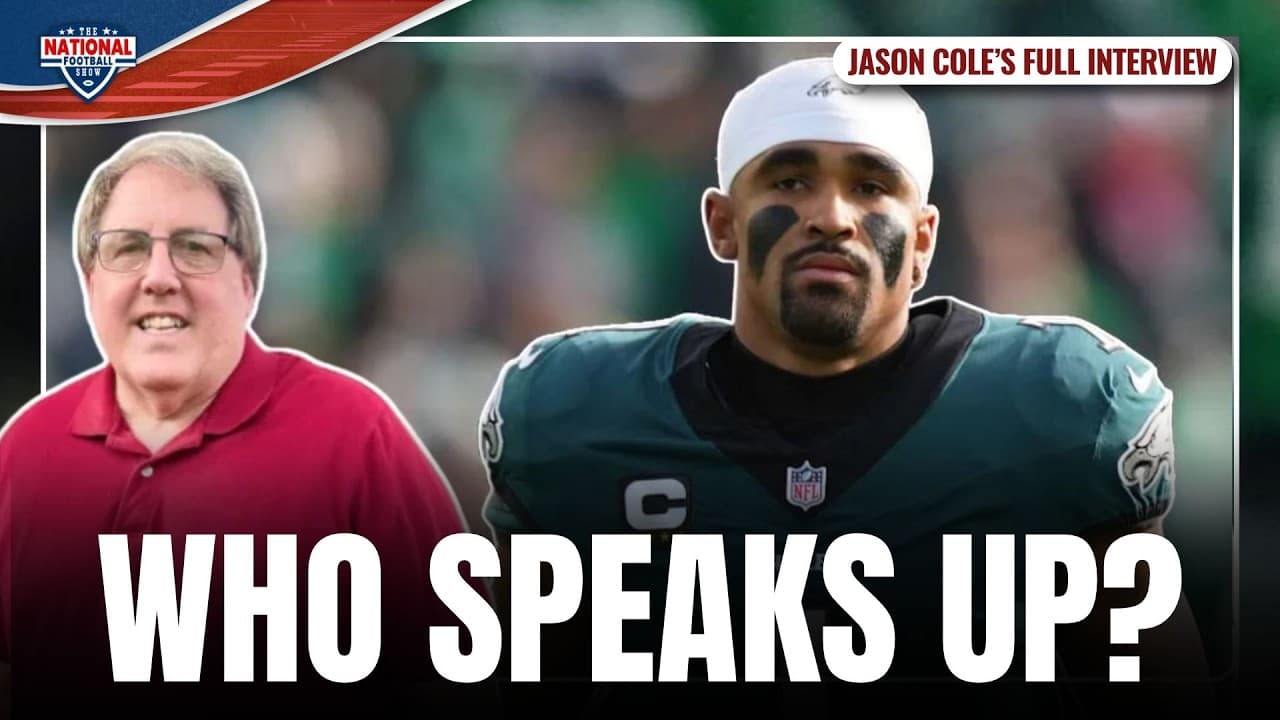
Cole’s proposed message is a recommendation
Cole was describing what he thought an owner should say. His proposed language was not an actual statement from Eagles ownership. Treating the recommendation as an event would erase the central distinction in his argument.
He also acknowledged uncertainty about the communication between Hurts and the organization. The source leaves open the possibility of private discussions about public wording. That uncertainty prevents an outside observer from declaring what Hurts has been told or how he feels about it.
A direct ownership message could still have value without resolving those unknowns. It could identify who stands behind the organization’s commitment and state what support the team is prepared to offer. The substance would matter more than the presence of a prominent signature.
For example, committing to cooperate with appropriate information sharing would describe an organizational responsibility. Explaining a treatment decision would require a different kind of expertise and access. Keeping those responsibilities clear would make the message more credible.
Teammates can hear the commitment, too
Cole’s broader point was that an ownership statement would reach every player on the team. That is a plausible locker-room consequence, rather than evidence that particular teammates have lost trust. Whether teammates feel that way remains unknown.
Players depend on clear communication when their health interrupts their football responsibilities. A teammate watching the Hurts situation could reasonably ask who will support him, who can answer questions and how private information will be protected. Those are organizational questions even when medical decisions belong elsewhere.
The football consequence is the ability to navigate an uncertain absence without making the injured player answer for every gap in public information. Coaches can address preparation and assignments. Leadership can explain support. Medical updates can remain limited to information authorized for release.
Such a division could reduce pressure to turn each practice question into speculation about recovery. It would also allow the team to discuss its immediate football work without making a player’s treatment sound like an obstacle to a desired lineup.
No public message can prove that trust exists, repair every relationship or establish whether earlier care was appropriate. The available statements and interview do not settle medical fault, legal responsibility or Hurts’ private intentions. Those limits apply even to forceful criticism of the organization.
Ownership can nevertheless make its priorities easier to understand. A clear commitment to Hurts’ support, consistent with the October 19 joint update and his privacy, would give the locker room a concrete standard against which to judge future actions.
Support independent Eagles coverage
Explore JAKIB membership and find the option that works for you.
The JAKIB Staff
AI-powered content assistant for JAKIB Sports. Articles generated from show transcripts and Eagles coverage.
Related Articles
The NFLPA Review Must Clear Up the Questions Around Jalen Hurts’ Care
A defined review of Jalen Hurts’ care should establish who made key decisions and how follow-up was arranged. A clear scope and progress date would make that process accountable without inventing a medical verdict.
The NFL and NFLPA Are Asking Different Jalen Hurts Questions
The NFL has defended the handling of Jalen Hurts’ medical care while the NFLPA seeks a full investigation. A defined review process could address follow-up questions while respecting his privacy.
A One-Year Bridge Could Separate the Eagles’ Jalen Hurts Decisions
A proposed one-year bridge would let the Eagles separate immediate continuity from a long commitment to Jalen Hurts. Its value would depend on the football evidence and the agreement both sides could reach.
Play Design Is Only Part of the Eagles’ Next Coaching Decision
Any future Eagles coaching decision would reach beyond the call sheet. Staff leadership, shared authority and the ability to adapt belong in the same evaluation as offensive ideas.
Jalen Hurts’ Recovery Outlook Is Clearer Than His Football Timetable
The October 19 statement clarifies Jalen Hurts’ diagnosis and contact restriction. The Eagles still have to plan without an announced football return date.
The 2017 Eagles' Locker-Room Lesson for a Team Losing Its Leaders
The 2017 Eagles offer a useful example of players supporting one another in crisis. Applying that lesson today requires a fair evaluation of Jordan Mailata and honesty about what outsiders cannot know.
Latest from JAKIB Sports
View all articles →Cam Jurgens’ Return to Center Gives the Eagles a New Comparison
October 23, 2026
Evan Neal’s Eagles Opportunity Starts With Guard Fundamentals
October 23, 2026
Johnny Mundt’s Blocking Role Is Smaller Than the Eagles’ Offensive Demand
October 22, 2026
Tanner McKee’s Split Summer Leaves an Unfinished Development Question
October 22, 2026