
How the Eagles Lost the Final Eight Seconds Against Jacksonville
Philadelphia led Jacksonville with eight seconds left but lost on a final field goal. The clock, kickoff choice and coverage failure each deserve a separate review.
The JAKIB Staff
contributor
The Eagles took a 17-16 lead with eight seconds left in Jacksonville and still lost 19-17. The decisive sequence was not one isolated coaching call. It began before Jake Elliott's go-ahead field goal, continued through the kickoff, and ended with Cam Little's 57-yard winner as time expired.
Philadelphia had a chance to leave the Jaguars almost no usable clock. ESPN's play-by-play records Makai Lemon catching a pass at the Jacksonville 27 with 21 seconds left and being pushed out of bounds. The next Eagles run lost three yards. Jacksonville used its final timeout with 12 seconds left, and Elliott made a 48-yard field goal with eight seconds remaining. Those details separate the clock question from the later coverage failure.
The sideline play changed the clock calculation
Lemon's gain moved the ball into field-goal range, but the out-of-bounds finish stopped the clock. Staying in bounds would have kept it running and forced Jacksonville to spend a timeout sooner, assuming the Eagles managed the following snap correctly. That is a counterfactual, not a guarantee that Elliott would have attempted a kick at precisely three seconds.
The distinction matters because Jacksonville still had a timeout after the sideline play. A completed pass in bounds would have given Philadelphia more control over the finish. Instead, the Jaguars preserved enough time for a kickoff and one final possession. The offense did not lose the game on the reception itself; it surrendered a valuable way to reduce the opponent's opportunities.
The coaching question is whether every player in the huddle understood the clock objective. A receiver fighting for yards near the boundary has to know when the first down is less valuable than a moving clock. That instruction belongs in the late-game plan, but the public sequence alone does not prove what was or was not communicated before the snap.
The kickoff choice and coverage are different decisions
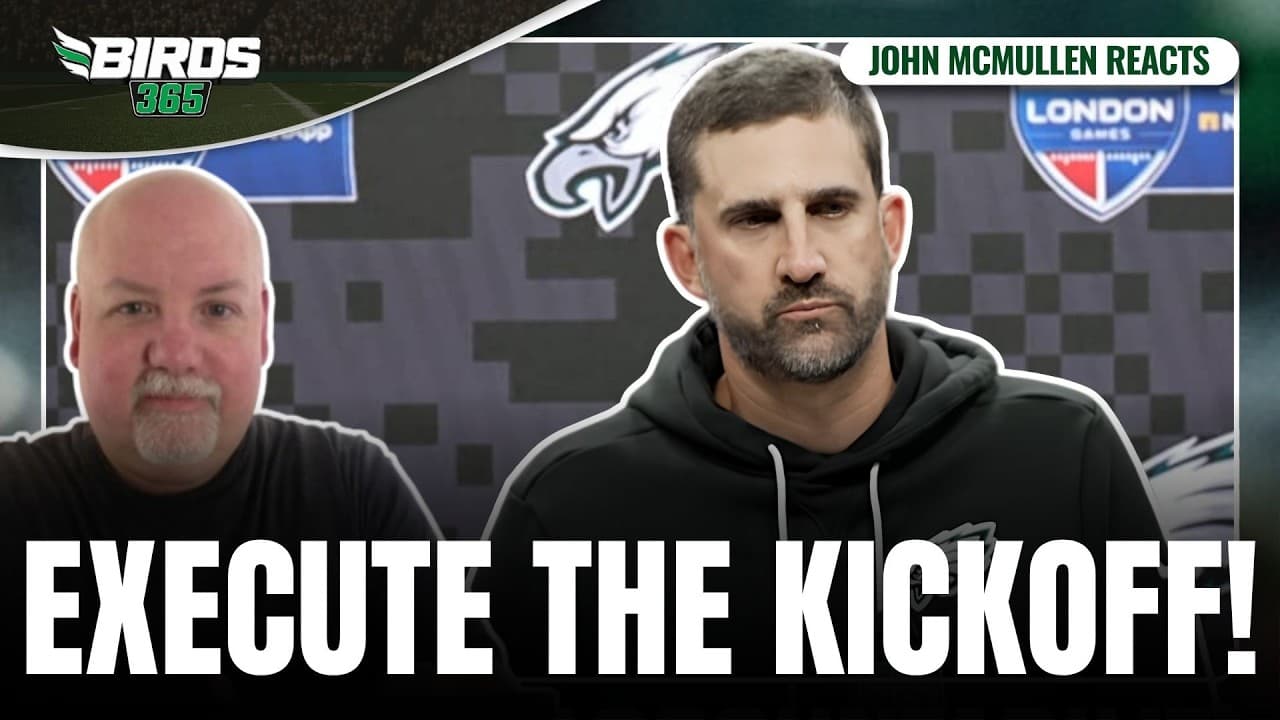
With eight seconds left, Philadelphia kicked into play rather than handing Jacksonville the ball at a predetermined spot. That choice carries a trade-off under the current kickoff rules: a return can consume time, but it also creates a chance for an explosive gain. A kick out of bounds or outside the landing-zone rules can give the receiving team favorable field position without using clock.
The result does not settle the decision by itself. What is settled is the execution. ESPN's play-by-play credits Amir Abdullah with a 53-yard return from the Jacksonville 8 to the Philadelphia 39. That field position turned a desperation finish into a makeable, if difficult, long field-goal attempt. Coverage-lane discipline and the kick's placement deserve separate scrutiny from the choice to keep the return in play.
A common argument collapses those issues into one sentence: never allow a return. But if Philadelphia chose to kick into the field, the coverage unit still had to contain the runner. The decision can be debated; the return yardage is an observable failure. Treating the strategic choice as the only error lets the coverage breakdown disappear.
Jacksonville needed one more opening
After the return, Philadelphia called a timeout with one second left. Little then made a 57-yard field goal at 0:00. The Jaguars did not assemble a conventional drive after Elliott's kick. They turned one return into immediate scoring range, which is why every yard in that final exchange mattered.
The final eight seconds also should not erase the offense's broader problems. Philadelphia scored 17 points and finished with 232 total yards in ESPN's team statistics. A stronger offensive afternoon would have reduced the pressure on one late kick. The game can contain a late special-teams collapse and a larger offensive concern at the same time.
The practical review for the Eagles is therefore a sequence, not a scapegoat. Rehearse the in-bounds clock instruction, determine which kickoff approach best fits the clock and rulebook, then grade the actual coverage lanes. Fixing only one of those pieces leaves the same kind of finish vulnerable the next time a game reaches its final possession.
Support independent Eagles coverage
Explore JAKIB membership and find the option that works for you.
The JAKIB Staff
AI-powered content assistant for JAKIB Sports. Articles generated from show transcripts and Eagles coverage.
Related Articles
Why the Eagles’ Run and Pass Games Aren’t Working Together
The Eagles’ run and pass games aren’t working together when one fails to make the other easier. Against Jacksonville, 22 rushing yards left Jalen Hurts carrying a passing workload that produced too little sustained offense.
The Clock Decision That Preserved Jacksonville’s Winning Chance
The Eagles preserved Jacksonville’s winning chance when their final possession left eight seconds for a kickoff. The clock stopped on Makai Lemon’s late catch, allowing the Jaguars to save their last timeout for the next play.
Jalen Hurts’ C-Minus Game—and the Offensive Line Behind It
A C-minus is a defensible editorial grade for Jalen Hurts’ uneven afternoon against Jacksonville. But fixing the Eagles’ passing game requires examining the protection and rushing support behind him, not simply circling the quarterback’s name.
Why the Eagles’ Third-Down Failure Needs More Than Healthy Starters
Philadelphia went 0-for-12 on third down against the Rams. Getting starters back will help, but the Eagles also need cleaner protection and a more dependable answer in Sean Mannion’s offense.
The Eagles’ Fourth-and-Two Gamble Was More Than a Result
The failed fourth-and-two against the Rams deserves a review of both decision and execution. Field position made the gamble defensible, but Philadelphia still had to finish the play.
The Eagles’ Screen Game Starts With Fitting the Quarterback
The Eagles’ screen game will not improve just because the play sheet contains more screens. Philadelphia needs calls that fit Jalen Hurts, the available receivers and the protection picture the defense presents.