
Why Changing Coaches Is Easier Than Replacing Jalen Hurts
If the Eagles’ offense remains near the bottom, changing its coaching or scheme is more direct than replacing Jalen Hurts. His contract and the uncertainty of finding a better quarterback make the choices unequal.
The JAKIB Staff
contributor
Changing the Eagles’ offensive approach would be a more direct move than replacing Jalen Hurts if the unit stays near the bottom of the league. That is a conditional roster and coaching judgment, not a prediction that Philadelphia will fire anyone or trade its quarterback. The Rams loss sharpened the question because the offense struggled to sustain drives, but one October result cannot settle an entire season’s personnel decision.
A coaching or scheme change alters instructions, sequencing and the way the available players are used. A quarterback replacement asks for a new starter, a credible acquisition path and a plan for the contract already on the books. Those are different levels of disruption. The Eagles should judge the offense over a meaningful stretch before choosing either one.
Start with the offense the roster can run
Sean Mannion’s structure can be evaluated without assuming every stalled play is his fault. Injuries have removed options. Protection can fail. Hurts can miss a read. The relevant question is whether the offense repeatedly places its players in difficult situations even when there is a simpler answer available. If that pattern persists, the staff can change concepts and responsibilities before revisiting the quarterback position.
That change may be less dramatic than a new hire. Philadelphia could reduce an ill-fitting menu, improve its early-down sequence or pair protection with quicker throws. Each adjustment creates evidence about what Hurts can do in a system shaped around the roster. If the results improve, the organization learns something more valuable than a reaction to one bad Sunday.
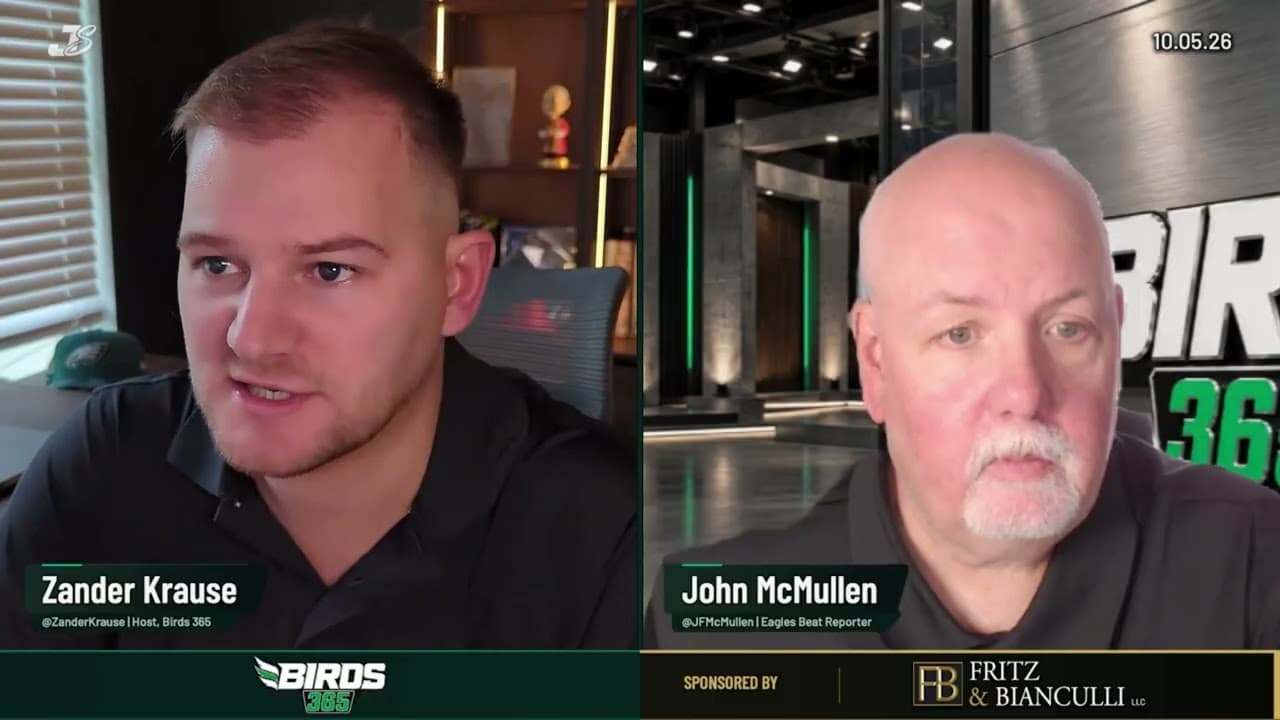
A scheme correction is not an excuse for the quarterback. Hurts still has to manage the pocket, identify the answer and protect the ball. But moving him out of the equation before testing a better fit would make it harder to isolate which part of the offense was broken. The clip below examines why the coaching and quarterback decisions carry different levels of uncertainty.
Replacing a quarterback creates a second problem
Even a team frustrated by its current offense must answer who would play better than Hurts and how that player would arrive. A draft choice brings development risk. A veteran acquisition brings salary, trade or free-agent cost. Neither route guarantees an upgrade, and each could delay the rest of a roster that is trying to win now.
Hurts’ contract timing adds another layer. A large existing commitment cannot be treated like a simple depth-chart swap. Philadelphia would have to examine the cap and cash effects of any move at the time it becomes realistic. This article makes no claim that a transaction is planned or that its future accounting is already known. The point is that the organization cannot evaluate the quarterback decision without the contract decision attached.
Coaching is not free of cost either. A new approach can fail, and a staff change can slow player development. Yet the operational path is clearer: identify the failing concepts, decide who can correct them and measure the next version. That is a smaller leap than assuming an available quarterback would immediately outperform Hurts.
Set conditions before the verdict
The Eagles need a defined test rather than an emotional deadline. If the offense remains near the bottom after healthier personnel return and targeted scheme changes, the evidence for a larger reset grows. If third-down efficiency and protection fit improve, the Rams failure may look more like a warning about configuration than proof that the quarterback cannot lead the team.
Philadelphia should also separate a change in offensive design from a decision about Nick Sirianni’s overall job. The head coach owns results, but the path from one inefficient game to a specific staffing outcome is not automatic. Any conclusion should account for the defense, health, week-to-week adjustments and the remaining schedule.
The next several games can clarify which problem is persistent. The Eagles can test a simpler, better-fitting offense now. Replacing Hurts would require a credible successor and a contract plan later. Until that evidence exists, the easier lever to pull is the design around the quarterback, not a speculative exit from him.
Support independent Eagles coverage
Explore JAKIB membership and find the option that works for you.
The JAKIB Staff
AI-powered content assistant for JAKIB Sports. Articles generated from show transcripts and Eagles coverage.
Related Articles
Tanner McKee’s Split Summer Leaves an Unfinished Development Question
Tanner McKee’s summer competition and uneven preparation leave a development question. A steadier practice role can help the Eagles evaluate him without pretending to explain his confidence.
The Eagles’ Next Offensive Plan Needs a Builder, Not a Copy
Sean Mannion’s next offensive plan should connect the quarterback’s reads, receiving roles and protection timing. A useful role for Makai Lemon and a dependable core of calls would give Philadelphia a foundation to develop.
The Eagles’ Coaching Verdict Cannot Ignore the Roster
The Eagles’ coaching evaluation has to account for roster limitations without letting them excuse every failure. Protection assignments and the staff’s adjustments offer a more useful test than a blanket verdict.
Tanner McKee’s Dallas Test Starts Over the Middle
Quick middle-field routes offer Tanner McKee a practical test against Dallas. The Eagles need timing, protection and receiving options that make an early throw productive.
What Nick Sirianni’s Preparation Shows Beyond the Eagles’ Final Scores
Nick Sirianni’s weekly preparation deserves scrutiny alongside the Eagles’ results. Evaluating the full head-coaching job also means keeping a hypothetical future reset separate from the current assignment.
Jake Majors’ Natural Position Matters in the Eagles’ Center Decision
Jake Majors’ natural position gives the Eagles a reason to limit disruption at center. Availability and exchange reliability should drive the decision without turning an unofficial depth chart into a starting lineup.
Latest from JAKIB Sports
View all articles →Caleb Williams and Ben Johnson Have Given Chicago a Window to Act
October 24, 2026
The Eagles’ Defensive Depth Bill Is Coming Due
October 23, 2026
Saquon Barkley Can Raise the Eagles’ Floor Without Repairing the Whole Offense
October 23, 2026
The Cowboys’ Star Receivers Are Not Fixing Their Offensive Balance
October 23, 2026