
The Eagles Are Testing a Different Version of Jalen Hurts
The Eagles are testing Jalen Hurts with more under-center play action and pure progressions while preserving a quick route back to the shotgun concepts that fit his strengths.
The JAKIB Staff
contributor
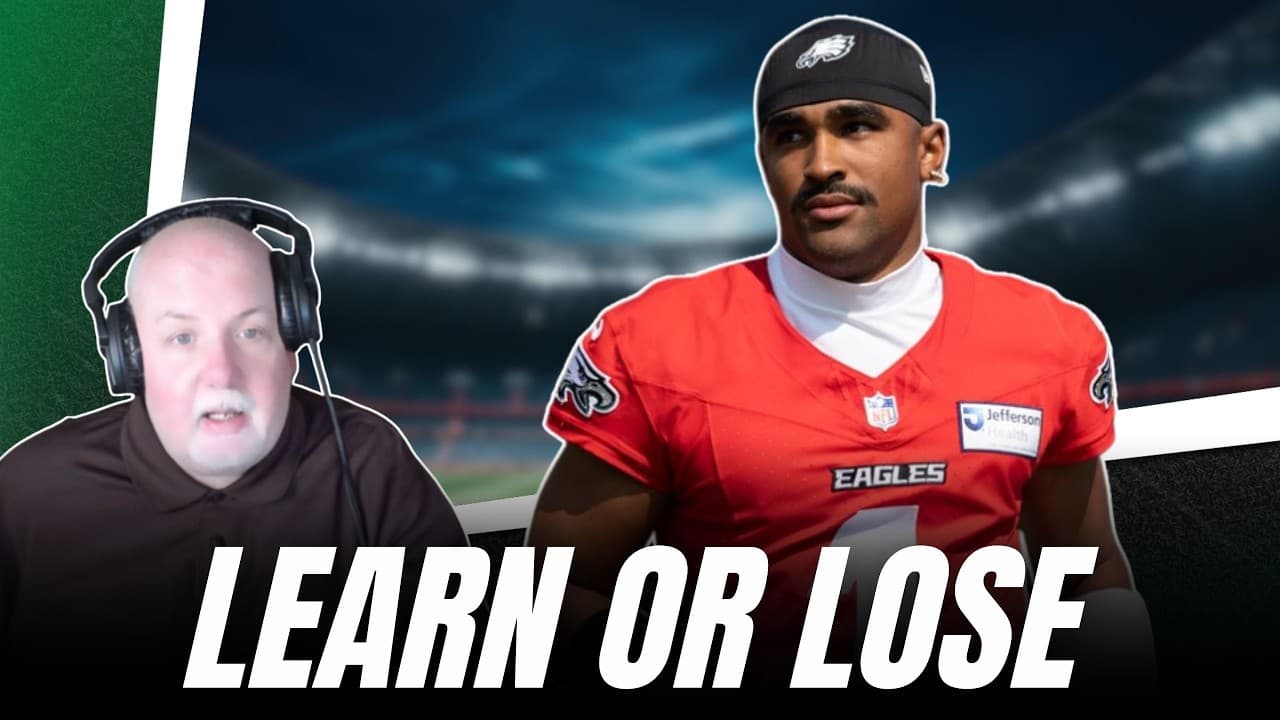
The Philadelphia Eagles are using training camp to test a version of Jalen Hurts that has not defined most of his NFL career. More snaps from under center, traditional play action and pure progression reads are asking the quarterback to operate with different footwork, timing and sight lines.
This is more than a cosmetic formation change. Hurts has spent much of his career threatening defenses from the shotgun, where zone-read and run-pass-option concepts force an extra defender to account for his legs. The new installation is testing whether the offense can add a conventional dropback and play-action layer without sacrificing the traits that make Hurts difficult to defend.
Under center changes the quarterback's picture
Traditional play action asks Hurts to turn his back to the defense, sell the run fake, reset his eyes and find the coverage after it has already begun to rotate. From the shotgun, he can often keep the front and secondary in view while making the mesh-point decision. Those are different assignments even when the route concept eventually attacks the same area.
The potential reward is significant. Under-center action can make the handoff and fake look alike, create cleaner movement for the offensive line and pull linebackers toward Saquon Barkley. It can also give receivers time to cross behind the second level and create defined throws if the protection holds.
The cost is repetition. Hurts must connect his drop, the fake and the route timing while learning Sean Mannion's terminology. A late reset can erase the space the design created. An early decision can turn a structured progression into a forced throw.
This is a genuine experiment, not a permanent verdict
Training camp is the correct place to push this work. The Eagles already know Hurts can operate a shotgun-based offense built around his mobility. They learn little by spending every August practice repeating only the concepts he executes most naturally.
The new reps answer a more valuable question: can Philadelphia become less predictable without making its quarterback less dangerous? If the answer is yes, defenses will have to prepare for a wider menu. An under-center run look can lead to Barkley, a bootleg, a layered crossing concept or a shot downfield. The shotgun package can then return as a complementary weapon rather than the offense's only comfortable home.
If the answer is no, the Eagles retain an important escape hatch. Moving back toward shotgun does not require rebuilding the entire roster. Hurts, Barkley and the offensive line already understand how to stress the edge defender and manipulate the box from that alignment. The offense can keep the under-center concepts that work and reduce the ones that create hesitation.
The evaluation must focus on process
August completion percentage will not decide whether the experiment succeeds. The better indicators are whether Hurts' feet stay connected to the route timing, whether he reaches the correct progression, and whether the offense produces easier answers after the fake.
The same standard applies to the coaching staff. Mannion should not use traditional play action simply because it looks like a broader NFL offense. Each addition must solve a problem. It should punish aggressive run defenders, create space over the middle or help Hurts identify a clean throw. If a concept adds complexity without creating an advantage, it does not deserve regular-season volume.
Philadelphia is not trying to replace Hurts' identity. It is testing how much more can be built around it. The smartest outcome is not a total conversion to an under-center quarterback or a retreat to the old offense. It is a flexible system that can use conventional play action when it creates leverage and return quickly to shotgun when Hurts' mobility offers the better answer.
That flexibility would make the experiment worthwhile even if the final offense looks different from the one being installed today.
Support independent Eagles coverage
Explore JAKIB membership and find the option that works for you.
The JAKIB Staff
AI-powered content assistant for JAKIB Sports. Articles generated from show transcripts and Eagles coverage.
Related Articles
The Eagles’ Coaching-Hire Debate Has Three Different Decisions
Recommendation, coaching selection and ownership approval carry different kinds of influence. Separating them makes the Eagles’ Mannion debate more useful—and keeps private pressure from becoming an invented fact.
Johnny Mundt’s Blocking Role Is Smaller Than the Eagles’ Offensive Demand
Johnny Mundt can have value in a defined movement role. Philadelphia’s broader tight-end demands require a closer look at assignments and workload, rather than a universal blocking label.
Tanner McKee’s Split Summer Leaves an Unfinished Development Question
Tanner McKee’s summer competition and uneven preparation leave a development question. A steadier practice role can help the Eagles evaluate him without pretending to explain his confidence.
Eagles-Cowboys Could Turn a Division Race Into a Trade-Deadline Decision
Monday’s Eagles-Cowboys game opens a three-game division stretch before the November 10 trade deadline. Philadelphia should use the performances to decide which roster moves support a credible competitive plan.
The NFL and NFLPA Are Asking Different Jalen Hurts Questions
The NFL has defended the handling of Jalen Hurts’ medical care while the NFLPA seeks a full investigation. A defined review process could address follow-up questions while respecting his privacy.
The Eagles’ Line Rebuild Has Two Different Clocks
The Eagles can pursue a faster interior rebuild while treating tackle succession as a separate problem. That distinction changes how they should spend picks and evaluate veterans.
Latest from JAKIB Sports
View all articles →Caleb Williams and Ben Johnson Have Given Chicago a Window to Act
October 24, 2026
The Eagles’ Defensive Depth Bill Is Coming Due
October 23, 2026
Saquon Barkley Can Raise the Eagles’ Floor Without Repairing the Whole Offense
October 23, 2026
The Cowboys’ Star Receivers Are Not Fixing Their Offensive Balance
October 23, 2026