
Why the Eagles Cannot Minimize the Fred Johnson-Moro Ojomo Practice Fight
The Fred Johnson-Moro Ojomo practice fight was more than routine camp friction. The Eagles deliberately put the two players back together, watched the conflict escalate, and ended practice early.
The JAKIB Staff
contributor
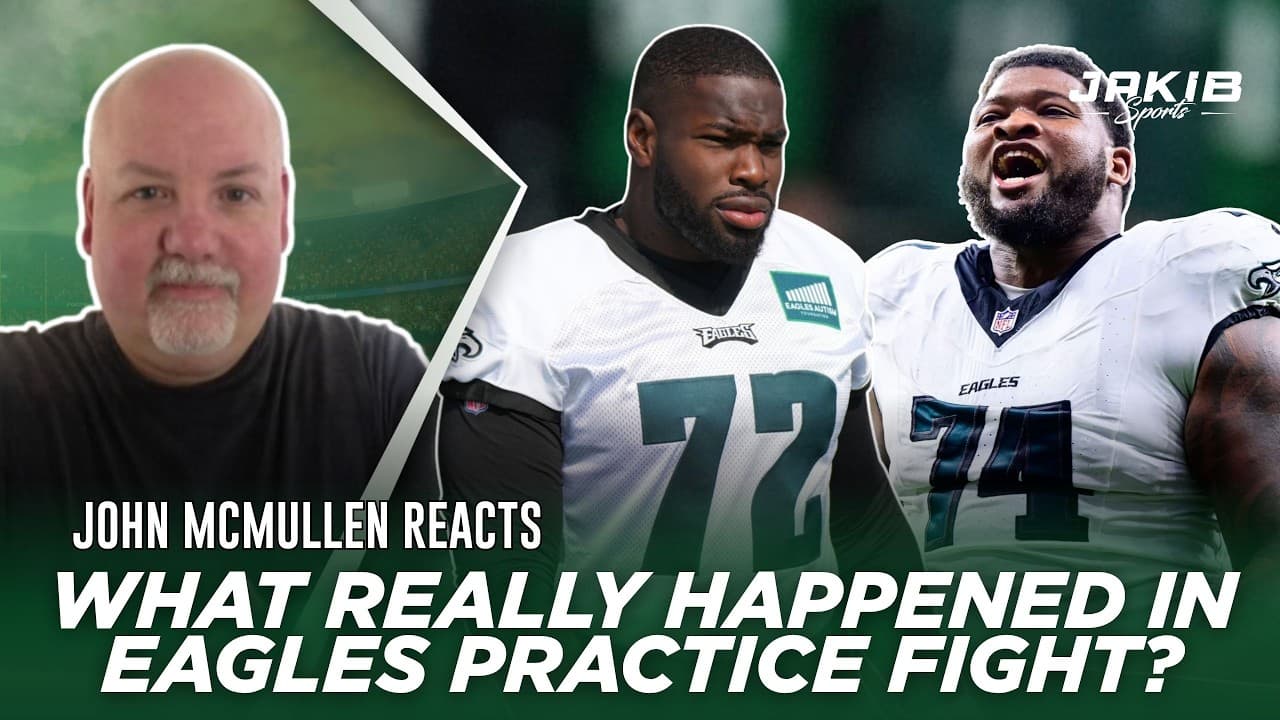
The Philadelphia Eagles cannot dismiss the Fred Johnson-Moro Ojomo practice fight as ordinary August tension. Training camp is physical, tempers rise, and teammates occasionally cross the line. What makes this incident different is the sequence: the first confrontation was followed by a deliberate decision to put the same two players across from each other again, the conflict escalated, and practice ended early.
That is not a harmless footnote. A contender needs intensity, but it also needs control. The Eagles lost useful practice time because two players and the structure around the rep failed to keep competition from becoming disruption.
The second matchup changed the meaning
One brief confrontation can happen before coaches have a chance to intervene. The response afterward is where responsibility becomes clearer. Once Fred Johnson and Moro Ojomo had already clashed, sending them back into another direct matchup raised the temperature instead of lowering it.
There is a football argument for that choice. Coaches may want players to settle a difficult rep, respond under pressure, or prove they can compete without backing down. Those tests can reveal toughness. But the standard cannot stop at toughness. The players also have to show judgment, because every rep belongs to the team rather than to a private dispute.
When the next exchange ends practice, the test has failed. The Eagles did not gain a sharper evaluation of Johnson or Ojomo. They lost work for the rest of the roster, including young players fighting for limited preseason opportunities.
Competitive edge needs a boundary
Philadelphia has built its identity around line play, physical practices, and players who refuse to be pushed around. That edge is valuable. It becomes counterproductive when teammates spend energy proving something to each other instead of preparing for an opponent.
Johnson and Ojomo play positions where controlled aggression matters on every snap. An offensive tackle must finish without drawing a damaging penalty. A defensive tackle must attack blocks without abandoning assignment discipline. Practice is supposed to sharpen those habits. A fight that stops the session trains the opposite response.
The coaching message should therefore be simple: nobody needs to become less physical, but everybody must remain available for the next rep. The player who wins the confrontation but costs the team its work has not actually won anything.
Ending practice carries a team-wide cost
The most important consequence was not embarrassment or a viral clip. It was the lost opportunity for everyone else. Training camp offers a finite number of full-speed periods. Veterans need timing. New offensive pieces need repetition. Backup quarterbacks need live reads. Roster candidates need special-teams and situational snaps that may decide whether they survive the final cut.
Ending early takes those reps away. That is why the incident cannot be handled only as a disagreement between two linemen. The entire team paid for it.
The Eagles should also examine the decision-making that led to the rematch. Accountability does not require a public spectacle, but it should include the coaching process. If the goal was to test composure, the staff needs to define what the players were expected to demonstrate and why the situation moved in the wrong direction.
The Ravens game provides the right response
The useful response now is not another speech. It is disciplined football against Baltimore. Johnson can show that his physical style helps the offense without creating avoidable damage. Ojomo can show that his energy strengthens the defensive front while remaining inside the assignment.
That matters because preseason evaluation is not only about who flashes. Coaches are deciding which players can be trusted when a game becomes emotional, when an opponent provokes them, and when one penalty can erase a possession. Composure is part of roster value.
The Eagles should not exaggerate one practice fight into a season-long crisis. They also should not minimize the exact consequence. Competition ended team work instead of improving it. For a roster with championship expectations, that is the line Johnson, Ojomo, and the coaching staff must make sure is not crossed again.
Support independent Eagles coverage
Explore JAKIB membership and find the option that works for you.
The JAKIB Staff
AI-powered content assistant for JAKIB Sports. Articles generated from show transcripts and Eagles coverage.
Related Articles
Why the Eagles’ Run and Pass Games Aren’t Working Together
The Eagles’ run and pass games aren’t working together when one fails to make the other easier. Against Jacksonville, 22 rushing yards left Jalen Hurts carrying a passing workload that produced too little sustained offense.
Jalen Hurts’ C-Minus Game—and the Offensive Line Behind It
A C-minus is a defensible editorial grade for Jalen Hurts’ uneven afternoon against Jacksonville. But fixing the Eagles’ passing game requires examining the protection and rushing support behind him, not simply circling the quarterback’s name.
Why the Eagles Couldn’t Finish Off Jacksonville
The Eagles couldn’t finish off Jacksonville because their offense stopped giving the defense breathing room. A 19-17 loss turned another winnable afternoon into a reminder that late heroics cannot replace sustained scoring.
Nick Sirianni's Jacksonville Test Starts With Eagles Discipline
Nick Sirianni cannot control every injury entering the Jacksonville game. He can control preparation, penalties and whether the Eagles have useful answers for a changed offensive line.
Cam Jurgens Trade Tests Whether the Eagles Are Building for Now or Later
The Cam Jurgens deal brings valuable future picks but removes a proven center during a difficult offensive-line transition. Philadelphia’s immediate depth will determine what the trade means for this season.
The Eagles' Offensive Line Faces a Jacksonville Pressure Test
Philadelphia faces Jacksonville with a rebuilt offensive line. The pressure plan must protect Jalen Hurts through communication, spacing and realistic help for new starters.