
The Eagles’ Defensive Reset Starts in Front of the Linebackers
Dallas rushed for 204 yards in a 38–21 win, putting the Eagles’ defensive front at the center of the correction. Better interior execution and coordinated pressure alternatives address different parts of the same failure.
The JAKIB Staff
contributor
The Eagles cannot repair their run defense by asking the linebackers to clean up every problem created in front of them. Dallas’ 38–21 win puts Jalen Carter, Jordan Davis and the defensive line at the center of the response, alongside Vic Fangio’s choices about creating pressure.
The Cowboys’ official recap records 204 rushing yards on 38 attempts and 416 total yards. Javonte Williams accounted for 155 rushing yards on 25 carries. That is enough production to make a familiar argument about Philadelphia’s defensive identity painfully concrete: the front cannot merely occupy the field while everyone else tries to survive behind it.
The first correction belongs up front
Dallas entered averaging 76 rushing yards per game, according to its recap. Philadelphia allowed a running game with that recent output to become the foundation of a productive offense. The result deserves more attention than a debate over which defensive position looked worst afterward.
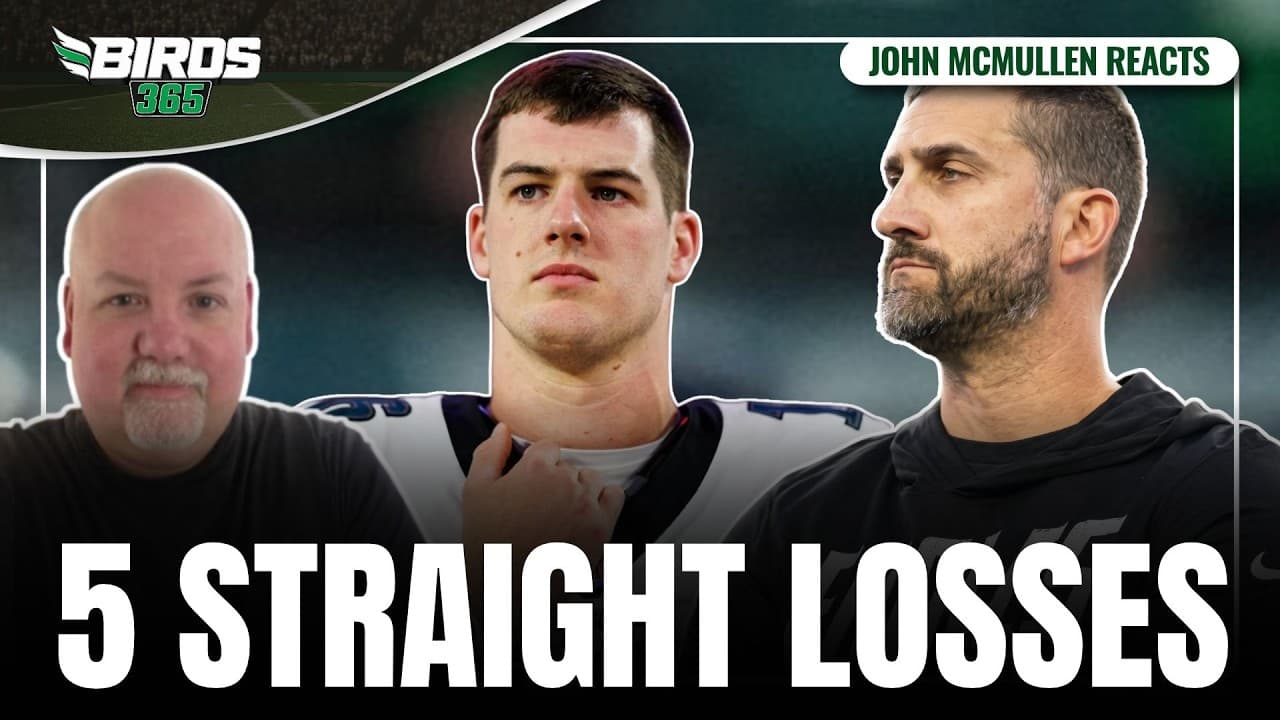
The Birds 365 defensive discussion centers on the interior, including the Carter–Tyler Booker matchup and Davis’ performance. The starting point for that review is straightforward: what happened at the line before the tackle opportunity reached the second level?
A linebacker reading a run from a clean position faces a different assignment from one meeting a blocker while the runner already has room to choose. Interior defenders can improve that equation by holding their ground, controlling their assigned space and making the runner declare his path. When those jobs break down, the next defender inherits several problems at once.
That does not excuse a missed fit or a failed tackle. It puts the correction in order. Philadelphia should evaluate the initial block, the linebacker’s response and the finish as connected events. Blaming only the player nearest the runner at the end can leave the cause untouched.
Carter and Davis belong near the beginning of that review because of the responsibilities of their positions. A better defensive call still requires someone to execute the first collision.
Pressure changes come with a second assignment
The passing-game response creates another decision for Fangio. The Birds 365 discussion raises the tension between trusting the front to generate pressure and sending additional rushers when that approach is failing. More pressure is a reasonable option to examine. It also changes the work behind the rush.
An extra defender attacking the pocket leaves one fewer player available for coverage elsewhere. The remaining defenders need a clear answer for the ball coming out quickly. A pressure call that creates an unblocked rusher but also gives the quarterback an immediate completion can trade one kind of frustration for another.
That is why the useful question is which pressure Philadelphia can execute together. The rush path, coverage rotation and response to a quick throw belong in the same call. Changing the number of rushers without coordinating those pieces would leave too much of the adjustment unfinished.
Fangio can be held accountable for finding workable alternatives while the front is held accountable for winning its assignments. Those evaluations can happen on the same snap. A coach’s preference for a certain structure does not settle whether it is producing an answer in a particular game.
Nor would a more aggressive call erase the need for Carter or Davis to beat a block. Pressure can create a favorable matchup; the defender still has to do something with it.
Make the next response visible on film
The next defensive review should begin with ordinary downs. Can the interior hold its position without a second defender immediately abandoning his own responsibility? Can the linebackers reach the runner with a chance to make a controlled tackle? Those are useful signs of a defense working together before a sack or turnover changes the conversation.
Passing downs require a separate test. Philadelphia should look for a rush that affects the quarterback’s timing while coverage accounts for the obvious escape throw. A sack is a valuable result, but it cannot be the only evidence used to judge whether the call worked.
Dallas’ totals establish how badly the overall defense failed. They do not prove that every snap failed for the same reason, or that one schematic change will fix the unit. The next step is to separate the repeated blocking losses from assignment errors and identify which pressure alternatives the available players can carry out.
On the next set of early downs, watch the space in front of the linebackers. That is where Philadelphia can begin showing an actual correction.
Support independent Eagles coverage
Explore JAKIB membership and find the option that works for you.
The JAKIB Staff
AI-powered content assistant for JAKIB Sports. Articles generated from show transcripts and Eagles coverage.
Related Articles
The Eagles' Special-Teams Grade Is About More Than the Kicking Game
Our Eagles report card gives Braden Mann and Jake Elliott stronger marks than special teams overall. Coverage, roster pressure and shared assignments explain the gap.
Quinyon Mitchell Gives the Eagles a Standard for Rebuild Cornerstones
Quinyon Mitchell offers a useful standard for Philadelphia's next core: dependable assignments and room to adapt. That standard also leaves space for younger players to prove themselves.
The Eagles Still Need an Evaluation Window for Keyshawn James-Newby
Keyshawn James-Newby has already played NFL snaps. With Arnold Ebiketie staying after a called-off trade, the Eagles still have a developmental rotation choice.
Jalen Carter’s Next Test Is the Work Jordan Davis Leaves Behind
The Jordan Davis trade leaves the Eagles with an interior assignment to replace. How they divide that work could shape Jalen Carter’s chances to disrupt games.
Moro Ojomo Is the Eagles’ Next Defensive-Line Price Test
With Carter already extended through 2031, an Ojomo deal should buy added capability beside him. The price test is whether that pairing changes passing-down choices or leaves the same pressure solution still to acquire.
Dallas’ Coaching Problem Runs Deeper Than Replacing Brian Schottenheimer
Dallas won despite 14 accepted penalties for 153 yards against Indianapolis. Schottenheimer’s next test is whether reviewing those mistakes helps the Cowboys preserve the next advantage they create.
Latest from JAKIB Sports
View all articles →Three Tackle Options Give the Eagles Different Questions After Fred Johnson's Exit
November 16, 2026
Howie Roseman's Mensah Meeting Is a Scouting Clue, Not a Draft Commitment
November 16, 2026
LeBron’s Passing Milestone Gives Philadelphia More Than a Place in History
November 15, 2026
The Eagles' Offensive-Line Need Shouldn't Decide Their Draft Slot
November 14, 2026