
Why Nick Sirianni's Darius Cooper Answer Revealed Eagles Draft Politics
Darius Cooper's rise has created a real test for the Eagles. Nick Sirianni's cautious answer showed how difficult it can be to separate current merit from the investment attached to a first-round pick.
The JAKIB Staff
contributor
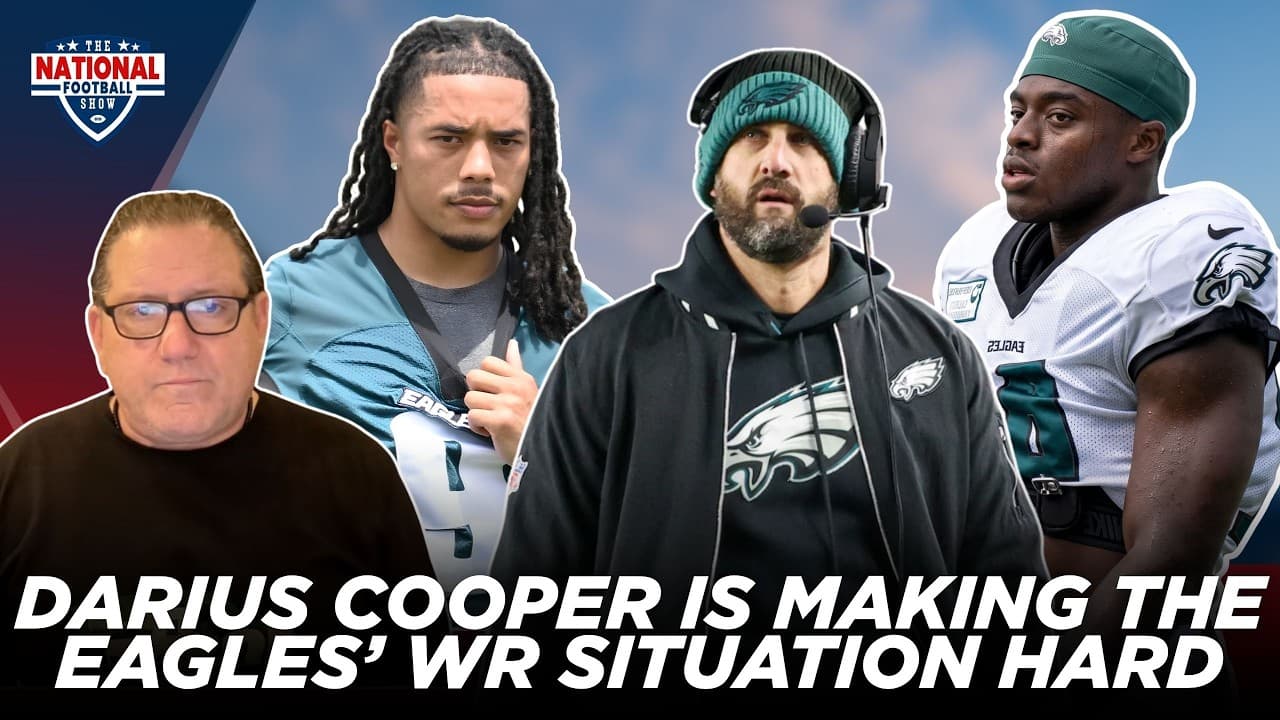
Darius Cooper has made the Philadelphia Eagles' receiver competition impossible to dismiss. The question is no longer whether the undrafted receiver belongs in the conversation. It is whether the organization will let current performance outweigh the investment and expectations attached to first-round pick Makai Lemon.
Nick Sirianni's cautious public answer about Cooper exposed the tension. Coaches rarely declare a summer competition over, and they should not. But when praise for a productive player is immediately surrounded by reminders about how much football remains, the response can sound less like evaluation and more like protection against a conclusion the field may be producing.
That does not mean Sirianni has privately decided against Cooper. It means the Eagles have reached the point where their process must prove it is genuinely open.
Draft status should buy development, not snaps
The Eagles invested heavily in Lemon because they believe his talent can become an important part of the offense. That investment should shape the resources devoted to his development. It should earn patience, focused coaching and repeated opportunities to grow. It should not guarantee that he begins ahead of a teammate who is more prepared to help right now.
That distinction matters. Organizations create trouble when they confuse a long-term projection with a weekly depth-chart decision. Lemon can remain a valuable first-round selection even if Cooper earns a larger early role. Cooper can win the current competition without turning Lemon into a failure.
The clean football answer is to separate the two timelines. Develop Lemon aggressively for the future. Reward Cooper honestly in the present. If their order changes as the season develops, change the rotation with it.
Cooper is testing the Eagles' merit standard
Undrafted players live with less margin for error. Their strong practices are often treated as encouraging stories, while a drafted player's flashes are treated as proof of an inevitable breakthrough. Cooper's camp challenges that habit because the evidence has become too consistent to file under novelty.
The Eagles do not need to promise him a starring role. They need to give him the same practical test as every other receiver: Does he separate? Does he understand the assignment? Does he block with purpose? Does the quarterback trust him? Can he execute when the coverage and pressure change?
If Cooper answers those questions better than the alternatives, playing him is not an attack on the scouting department. It is a victory for the entire personnel operation. Finding a useful player outside the draft is exactly what a strong organization is supposed to do.
Sirianni must keep the competition credible
Public comments matter because players hear the standard inside them. A coach does not need to publish the depth chart after every practice, but every player needs to believe performance can alter his place on it. Once a competition feels predetermined, the message spreads well beyond the two players involved.
Sirianni can preserve credibility by remaining specific about the work. Cooper should know which details are earning him opportunities and which details still limit him. Lemon should receive the same direct feedback. The eventual decision should then match the standards the staff has communicated.
That is especially important for a contender. Philadelphia cannot spend September using important snaps to validate an offseason decision. The Eagles need the receiver who best helps Jalen Hurts and the offense function now, while continuing to build Lemon into the player they drafted him to become.
The best outcome includes both receivers
The debate is often framed as if Cooper and Lemon cannot both matter. That is unnecessarily narrow. A modern offense needs multiple receivers who can handle different alignments, route responsibilities and game situations. Cooper's reliability and Lemon's upside can fit together if the coaching staff builds roles from actual strengths.
The danger is not choosing one player over the other in a particular week. The danger is allowing organizational pride to make the choice before the evidence is complete. Draft capital explains why Lemon will receive every developmental opportunity. It should not erase what Cooper has earned.
Sirianni's answer revealed the pressure around the decision. Now the Eagles must show that their most repeated principle is real: competition decides. If Cooper continues to win reps, the depth chart should reflect it. If Lemon passes him, that should be earned too. A Super Bowl-caliber roster has no room for ceremonial playing time.
Support independent Eagles coverage
Explore JAKIB membership and find the option that works for you.
The JAKIB Staff
AI-powered content assistant for JAKIB Sports. Articles generated from show transcripts and Eagles coverage.
Related Articles
Nick Sirianni's Jacksonville Test Starts With Eagles Discipline
Nick Sirianni cannot control every injury entering the Jacksonville game. He can control preparation, penalties and whether the Eagles have useful answers for a changed offensive line.
Replacing Nick Sirianni Would Not Remove the Eagles' Coaching Dilemma
A coaching change would not automatically settle the Eagles' offensive direction. Authority, play-calling and personnel fit remain central to evaluating Nick Sirianni and any alternative.
Lane Johnson's Exit Turns Markel Bell Into an Eagles Development Test
Markel Bell inherits an immediate right-tackle audition after Lane Johnson’s retirement. Protection support and communication will determine how useful that development opportunity becomes.
Why Changing Coaches Is Easier Than Replacing Jalen Hurts
If the Eagles’ offense remains near the bottom, changing its coaching or scheme is more direct than replacing Jalen Hurts. His contract and the uncertainty of finding a better quarterback make the choices unequal.
Jalen Hurts’ Development Tests the Eagles’ Offensive Structure
Jalen Hurts' development tests the Eagles' offensive structure because quarterback improvement depends on more than the player's individual work. Philadelphia also has to provide clear rules, connected concepts and a coaching operation that turns corrections into usable answers.
The Eagles’ Second-Half Offense Needs More Than a Fast Start
The Eagles' second-half offense needs more than a fast start because an opening plan cannot carry an entire game. Philadelphia's next offensive improvement should be measured by what happens after the defense has seen its preferred calls and adjusted.
Latest from JAKIB Sports
View all articles →The Eagles’ Play-Calling Decision After Another Loss
October 12, 2026
Why the Eagles’ Second-Half Offense Remains Their Biggest Problem
October 12, 2026
How the Eagles Lost the Final Eight Seconds Against Jacksonville
October 12, 2026
Why the Eagles’ Run and Pass Games Aren’t Working Together
October 12, 2026