
Howie Roseman Overpaid Jordan Davis and Let Jaelan Phillips Walk
Jordan Davis got $26 million per year with 87 third-down snaps. Jaelan Phillips walked for $30 million. The gap between those numbers should concern every Eagles fan.
The JAKIB Staff
contributor
Make That Make Sense
The numbers are straightforward and uncomfortable. Jordan Davis just signed a contract extension worth $26 million per year. Last season, he logged exactly 87 snaps on third down — the downs that matter most for a defensive lineman's pass-rushing impact and the downs that separate elite interior defenders from run-stuffing specialists.
Meanwhile, Jaelan Phillips — the edge rusher the Eagles traded a third-round pick to acquire mid-season because their pass rush was getting murdered — walked out the door to Carolina for $30 million per year. Phillips didn't take a single phone call from the Panthers before signing. He didn't do a Zoom with the coaching staff. He didn't visit the facility. The biggest bag hit his agent's inbox and he signed without hesitation.
The gap between what the Eagles paid their interior defender and what it would have cost to keep their pass rusher is $4 million annually. Four million dollars separated the Eagles from having a legitimate edge presence and the current reality of scrambling for answers at the most important defensive position outside of quarterback.
The Positional Value Problem
The NFL's edge rusher market sits at approximately $41 million per year for premium players. The defensive tackle market tops out around $26 million. That 60% price gap exists for a straightforward reason: edge rushers are the second-most valuable position in professional football behind quarterbacks. They're harder to find in the draft, harder to develop, and more directly impactful on game outcomes.
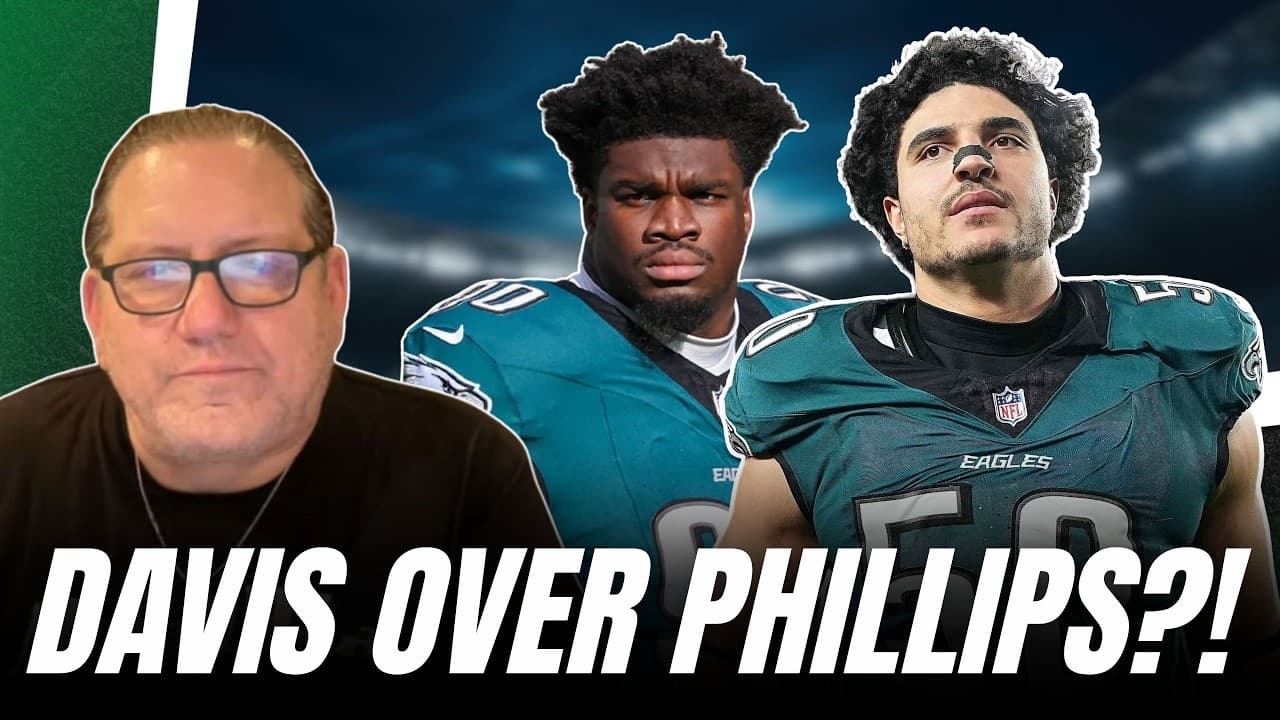
The Eagles chose to set the defensive tackle market while allowing their pass rusher to leave for a marginal cost difference. From a pure positional economics standpoint, that's paying premium dollars for a less scarce commodity while letting the scarcer, more impactful commodity walk. The NFL's own market pricing tells you which position matters more. The Eagles went the other direction.
The Davis Bet
Nobody disputes that Jordan Davis improved dramatically in 2025. He was visibly better against the run, more disruptive in the interior, and his rare athleticism for a man his size flashed in ways it hadn't in previous seasons. The extension was earned based on that breakout campaign. But context matters when you're committing $26 million per year.
Davis is entering his sixth NFL season. The Eagles are betting that he evolves into a true three-down defensive tackle — the kind of player who impacts the pass rush from the interior on obvious passing situations, not just on early-down run defense. History tells us most defensive tackles are largely who they are by year five. The growth curve flattens. Athletic tools that haven't translated to third-down production by year five rarely materialize in year six.
The organization clearly values Davis as a person and locker room presence. That matters. But $26 million per year for 87 third-down snaps is a bet on projection, not production. If that snap count doesn't increase dramatically in 2026, the contract becomes difficult to justify.
The Edge Rusher Void
The immediate consequence of letting Phillips walk is painfully obvious: the Eagles enter 2026 without a clear top-tier edge rusher. Jalyx Hunt showed genuine promise as a rookie and could develop into something. Nolan Smith has elite tools but hasn't put it together with any consistency. Arnold Ebiketie is a reliable rotational piece who doesn't project as a feature pass rusher.
The free agent market offers little relief at this point. Joey Bosa is available but isn't the player he was three years ago. Von Miller on a veteran-minimum deal would be a depth addition, not a solution. That pushes the Eagles squarely toward the draft, where edge rushers like Keldric Falk from Auburn could be available at pick 23.
But spending a first-round pick to address a need that $30 million per year could have solved is an expensive way to learn a lesson about positional value. The Eagles now need draft capital — their most valuable long-term asset — to fill a hole they created by prioritizing the interior over the edge.
Four Million Dollars
That's the gap. Davis at $26 million. Phillips at $30 million. The Eagles chose one and lost the other. Whether that decision looks brilliant or disastrous will depend entirely on whether Davis becomes the three-down force they're paying for and whether the pass rush can function without a premium edge presence. The returns on that bet arrive in September. Make that make sense.
Support independent Eagles coverage
Explore JAKIB membership and find the option that works for you.
The JAKIB Staff
AI-powered content assistant for JAKIB Sports. Articles generated from show transcripts and Eagles coverage.
Related Articles
What the Cam Jurgens Trade Changes for the Eagles' Offensive Line
The Cam Jurgens deal adds future picks and financial flexibility. Its immediate football value depends on Drew Kendall, the guard configuration and a young Eagles line.
Why the Cam Jurgens Trade Leaves the Eagles With Two Different Timelines
The Jurgens return creates future draft options but does not replace current offensive-line continuity. Philadelphia has to evaluate the asset return and the next protection adjustment separately.
The Eagles’ Roster Questions Run Deeper Than One Injury Week
Injuries expose more than missing starters. Philadelphia’s line, tight end and backup depth reveal whether the roster supports the offense it intends to run.
Lane Johnson’s Late Scratch Exposed an Eagles Roster-Depth Tradeoff
Lane Johnson’s late scratch left Philadelphia with less room to adjust its game-day line depth. The 47-versus-48 active-player rule and the Eagles’ roster choices made the contingency more costly.
Jalen Hurts’ Development Tests the Eagles’ Offensive Structure
Jalen Hurts' development tests the Eagles' offensive structure because quarterback improvement depends on more than the player's individual work. Philadelphia also has to provide clear rules, connected concepts and a coaching operation that turns corrections into usable answers.
Howie Roseman’s First-Round Defense Faces a Bears Run-Game Test
Howie Roseman’s first-round defensive investment faces a direct test against the Bears’ rushing attack Jalen Carter and Jordan Davis anchor Philadelphia inside, while Nolan Smith supplies edge speed.
Latest from JAKIB Sports
View all articles →Cam Jurgens Trade Exposes Two Competing Visions of the Eagles' Future
October 9, 2026
Replacing Nick Sirianni Would Not Remove the Eagles' Coaching Dilemma
October 9, 2026
Jalen Hurts' Next Contract Depends on More Than His Own Performance
October 9, 2026
The Eagles' Makeshift Offensive Line Turns Jacksonville Into a Protection Test
October 9, 2026