
Why the Eagles Cannot Copy Sean McVay Without Protecting Their Winning Formula
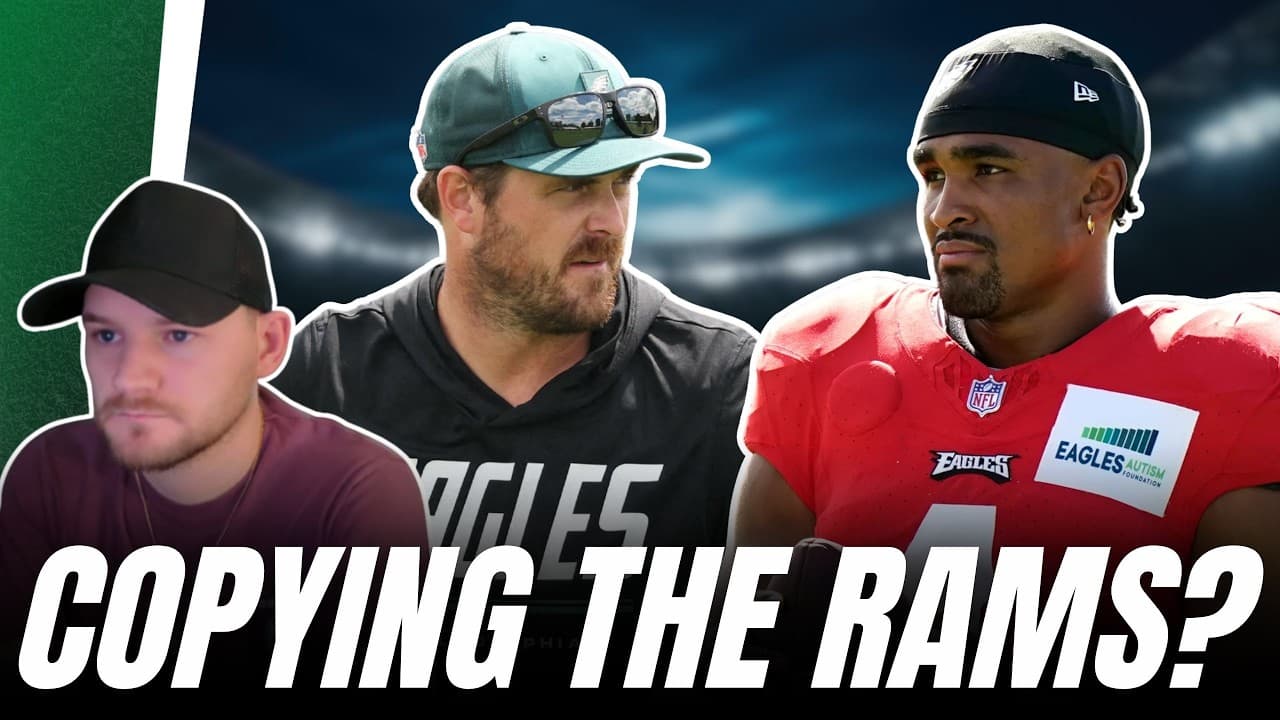
Philadelphia can borrow modern passing concepts without becoming a copy of the Los Angeles Rams. The Eagles' best version keeps its run game and defense central while giving Jalen Hurts clearer answers through the air.
The JAKIB Staff
contributor
The Philadelphia Eagles can modernize their passing game without surrendering the formula that already wins. Borrowing Sean McVay concepts should give Jalen Hurts cleaner answers, not turn Philadelphia into a weaker imitation of the Los Angeles Rams.
That distinction matters before Sean Mannion's offense plays a meaningful snap. The Eagles have beaten Los Angeles with a physical run game, strong defense and explosive plays created from those strengths. Any new structure should add options while preserving that identity.
Concepts travel better than entire identities
NFL offenses constantly borrow from one another. Motion, condensed formations, play-action and layered route combinations are tools, not permanent labels. Philadelphia can install those ideas without adopting every tendency that appears on McVay's call sheet.
The useful question is whether a concept solves an Eagles problem. Motion can reveal coverage. Play-action can slow linebackers. Better route spacing can create defined throws for Hurts. Each addition earns its place by improving execution, not by carrying a famous coaching-tree name.
Mannion also has personnel that Los Angeles does not. Saquon Barkley changes run fits, Hurts adds a quarterback-run threat, and Philadelphia's offensive line can move defenders at the point of attack. The scheme should bend toward those advantages instead of forcing players into a borrowed picture.
The run game protects more than Barkley
A credible run game helps every part of Philadelphia's offense. It creates manageable downs, keeps the pass rush honest and gives play-action a believable first movement. It also reduces the number of obvious passing situations that invite defenses to attack the protection.
The balance does not require conservative football. The Eagles can throw early, use tempo and create explosives while remaining committed to physical control. Aggression is about choosing the right moment, not proving that the offense can survive without its best foundation.
Philadelphia's defense belongs in the calculation too. Short fields, takeaways and stops change the offensive risk profile. A complete team can win without demanding that one side produce a stylistic masterpiece every week. The offense still needs growth, but growth should support the collective result.
Personnel groupings offer another way to blend the approaches. Multiple tight ends can support the run while disguising routes. Condensed formations can create traffic for defenders without removing the threat of Barkley downhill. The same formation can carry several answers, which keeps the offense flexible without making it predictable.
That flexibility protects the offensive line as well. A defense that respects motion, run action and Hurts' movement cannot attack one protection point on every snap. The design creates a fraction of hesitation, and that fraction can be the difference between a clean throwing lane and a disrupted play.
Hurts needs answers that fit his strengths
Hurts is most dangerous when the defense has to account for his full skill set. Designed movement, selective quarterback runs and run-pass options can force an extra defender into conflict. A static imitation of another quarterback's system would remove that pressure from the defense.
The passing additions should simplify decisions without shrinking ambition. Defined reads can speed the ball out, while intermediate combinations give Hurts opportunities beyond screens and isolated deep shots. The goal is a broader menu that still feels natural to the quarterback operating it.
September will provide only an early sketch. New terminology, new sequencing and limited preseason exposure can make the first games uneven. By the middle of the schedule, the Eagles should know whether the system is creating repeatable solutions against pressure and tight coverage.
The best outcome will not look exactly like McVay, Green Bay or the Eagles of 2022. It will look like Philadelphia using modern ideas to strengthen its own advantages. Mannion's real test is whether the offense becomes more efficient without making the rest of the team carry a heavier burden.
Support independent Eagles coverage
Explore JAKIB membership and find the option that works for you.
The JAKIB Staff
AI-powered content assistant for JAKIB Sports. Articles generated from show transcripts and Eagles coverage.
Related Articles
Quenton Nelson and Jeffery Simmons Add a New Layer to Bears–Seahawks
Quenton Nelson and Jeffery Simmons add an interior blocking question to Bears–Seahawks. If available, their assignments could affect protection help, combination blocks and opportunities elsewhere along the front.
Jared Goff Gives Minnesota a Reason to Rethink the Blitz
Minnesota's pressure plan against Jared Goff depends on more than sending an extra rusher. Detroit's protection calls and quick answers can exploit the space an aggressive defense leaves behind.
The Eagles Can’t Price Their Trade Chips on Reputation Alone
Landon Dickerson, Dallas Goedert and Saquon Barkley present different trade questions. Philadelphia should judge a hypothetical return against buyer fit and the football it would surrender.
Jeffery Simmons Gives the Bears More Than Another Run Defender
The Bears’ agreement for Jeffery Simmons remains pending a physical. His potential value extends from interior pressure to protection choices and the coverage options Chicago could gain behind a four-man rush.
Clint Hurtt’s Challenge Is Turning Eagles Talent Into Reliable Run Fits
Clint Hurtt’s teaching can make the Eagles’ defensive assignments clearer and more repeatable. The test reaches beyond the tackles to the linebackers relying on the front to do its job.
Cheap Replacements Keep the Eagles’ Cap Strategy Working
The Eagles’ financial flexibility depends on affordable players delivering real snaps. Moving cap charges can create room today, but player evaluation determines whether that room builds a useful roster.