
The Eagles’ Play-Calling Decision After Another Loss
The Eagles must evaluate Sean Mannion’s game-day calls after another uneven offensive performance. Josh Grizzard is an analytical alternative, not a reported staffing move.
The JAKIB Staff
contributor
The Eagles' 19-17 loss to Jacksonville sharpened a question that had been building before the final kickoff: who should call the offense? Philadelphia finished with 17 points and 232 total yards, according to ESPN's game statistics. That output invites a review of Sean Mannion's calls, but a review is not the same thing as news of a staffing change.
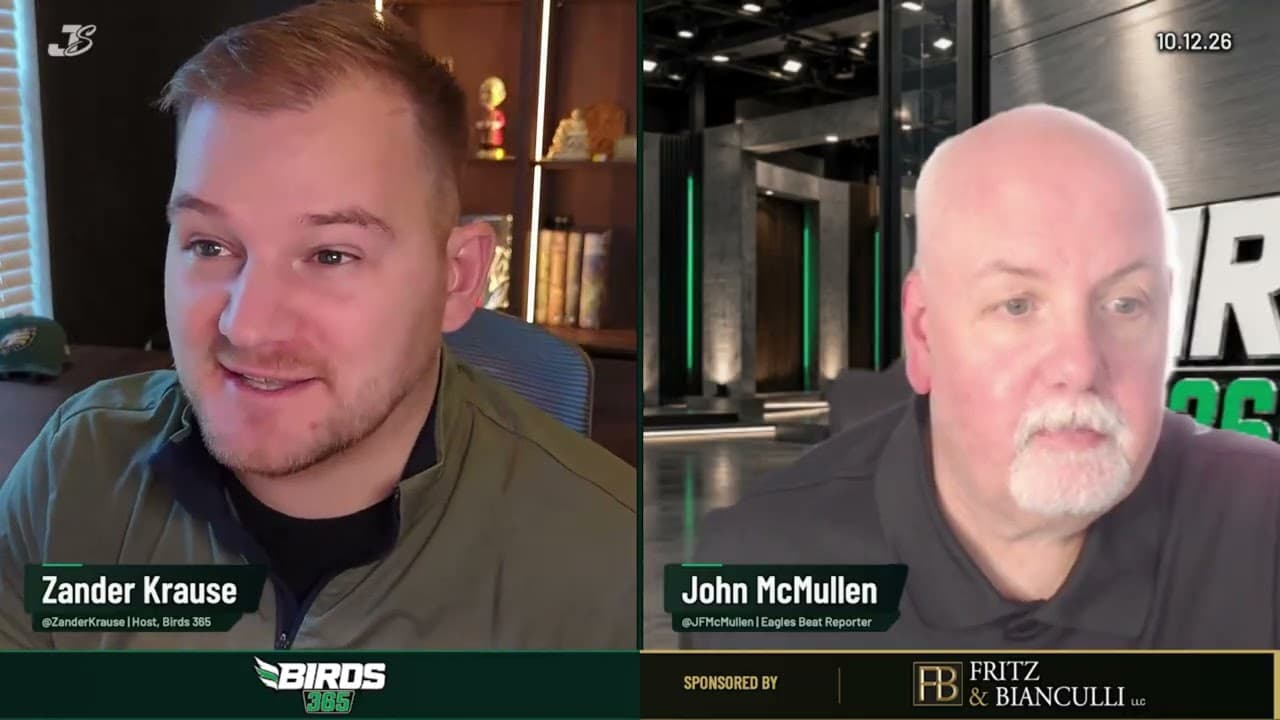
Josh Grizzard is the in-house alternative raised in the approved Birds 365 discussion. The proposal is to shift play-calling responsibility, not to claim the Eagles have decided to do it. It is worth examining because the next decision is practical: can a different caller give Jalen Hurts clearer answers with the same imperfect personnel?
What a play-caller can change immediately
A caller controls sequencing, pace, formations and the order in which concepts are tested. If an early-down look repeatedly puts Hurts behind the sticks, the staff can change how it sets up the next series. A new voice could simplify the menu, choose quicker answers against pressure or connect the running game to play-action more coherently.
Those changes matter most when they remove a recurring burden from the quarterback. Hurts should know where the ball can go against a likely blitz before the rush arrives. Receivers should have spacing that creates a first read and a workable outlet. The offensive line should receive protection calls that fit the bodies available that week. None of that requires a brand-new playbook; it requires a consistent plan and effective game-day choices.
The Jacksonville game supplied a small illustration. ESPN's play-by-play shows the final Eagles scoring drive needed a 17-yard Dallas Goedert catch after incompletions and a false start. The offense reached field-goal range and briefly took the lead, but the path was uneven. One drive cannot evaluate a whole coordinator. It can show why the team should study whether its routine answers are too difficult to execute.
What a play-caller cannot fix alone
Changing the headset does not create a healthy line, restore a missing receiver or make every protection correct. The Eagles have to separate play design from execution and availability before assigning responsibility. A good call can fail because of a missed block; a weak call can appear successful because an elite player escapes trouble.
That is why the Grizzard discussion should not be sold as a guaranteed cure. If the offense's ceiling is limited by personnel, a new caller might improve its floor without making it one of the league's best units. Better early downs and fewer wasted possessions would still matter. They would give a defense less work and reduce the need for a late field goal to rescue the afternoon.
The alternative is to keep Mannion in place and demand specific changes. That decision also needs evidence. The staff can identify concepts Hurts handles cleanly, chart protection breakdowns and compare how often first-down calls create manageable second downs. If those measures improve, continuity may have value. If the same problems repeat, patience becomes harder to defend.
The next game should test the decision
A useful evaluation should go beyond the final point total. Watch how often Hurts has a defined first answer, whether the line can execute the protection attached to the call, and how frequently a short gain advances the series instead of merely avoiding a sack. Those observations can distinguish a plan that helps its players from one that asks them to solve every problem after the snap.
The Eagles do not need to announce a change to ask the hard question now. Mannion can adjust; Grizzard could offer another approach if the staff chooses that route. The next opponent will test the same roster either way. The decision should follow repeatable offensive evidence, not the emotional weight of Jacksonville's final eight seconds.
Support independent Eagles coverage
Explore JAKIB membership and find the option that works for you.
The JAKIB Staff
AI-powered content assistant for JAKIB Sports. Articles generated from show transcripts and Eagles coverage.
Related Articles
Why the Eagles’ Second-Half Offense Remains Their Biggest Problem
The final kickoff decided the Jacksonville game, but Philadelphia’s 232-yard offense creates a more persistent test for Jalen Hurts and the play-calling staff.
Why the Eagles’ Run and Pass Games Aren’t Working Together
The Eagles’ run and pass games aren’t working together when one fails to make the other easier. Against Jacksonville, 22 rushing yards left Jalen Hurts carrying a passing workload that produced too little sustained offense.
The Clock Decision That Preserved Jacksonville’s Winning Chance
The Eagles preserved Jacksonville’s winning chance when their final possession left eight seconds for a kickoff. The clock stopped on Makai Lemon’s late catch, allowing the Jaguars to save their last timeout for the next play.
Jalen Hurts’ C-Minus Game—and the Offensive Line Behind It
A C-minus is a defensible editorial grade for Jalen Hurts’ uneven afternoon against Jacksonville. But fixing the Eagles’ passing game requires examining the protection and rushing support behind him, not simply circling the quarterback’s name.
DeVonta Smith's Next Contract Adds Another Eagles Rebuild Decision
DeVonta Smith’s next contract is a roster-building decision, not a referendum on his talent. Philadelphia must price its passing-game future alongside a costly offensive-line transition.
Cam Jurgens Trade Exposes Two Competing Visions of the Eagles' Future
The announced Cam Jurgens trade agreement creates future draft options and immediate protection questions. The better-now argument still needs evidence from the replacement line.