
What Nick Sirianni’s Preparation Shows Beyond the Eagles’ Final Scores
Nick Sirianni’s weekly preparation deserves scrutiny alongside the Eagles’ results. Evaluating the full head-coaching job also means keeping a hypothetical future reset separate from the current assignment.
The JAKIB Staff
contributor
Nick Sirianni’s preparation deserves a place in the Eagles’ coaching evaluation, especially when the available personnel shrink his options. Philadelphia can assess whether he gives an undermanned team a workable chance while still holding him responsible for the outcome.
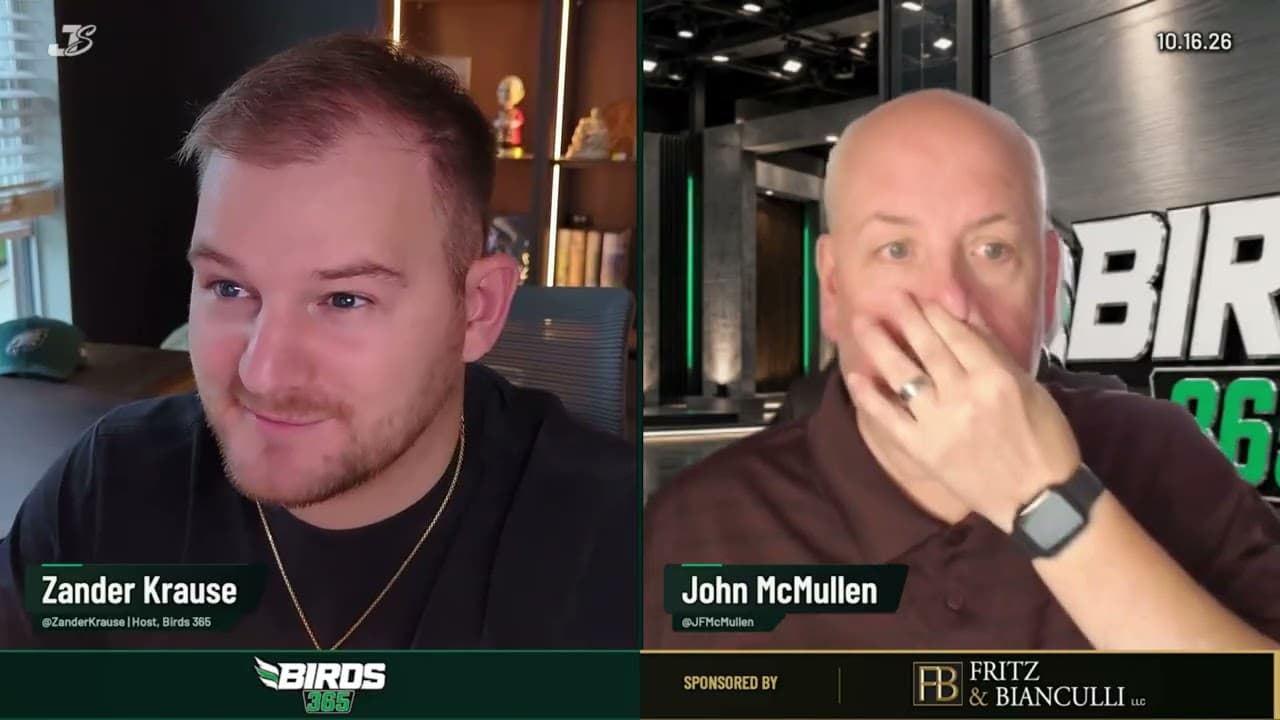
The debate on Birds 365 centered on that distinction in discussing the Rams and Jaguars games. One interpretation credited the weekly work that kept a depleted group competitive. Another asked how much the opponent’s mistakes contributed. Those explanations can coexist, and neither should become a substitute for evaluating the actual coaching decisions.
The immediate assignment now includes preparing Tanner McKee for Carolina. The Eagles’ injury report identifies McKee as the starter with Jalen Hurts out. That creates another test of the staff’s ability to turn changed circumstances into clear responsibilities.
Preparation should leave something observable
Good preparation is easy to praise in the abstract. The useful version produces questions that can be answered on Sunday. Do players understand their assignments? Can the offense get organized when the first option disappears? Does the staff have a response when the opponent attacks a vulnerable spot?
Those questions do not assume access to the Eagles’ meetings or practice plans. They establish a way to assess the game without pretending the scoreboard explains every step that produced it.
An undermanned team can execute a sensible plan and still lose to a stronger opponent. It can also stay close because the opponent wastes opportunities. The task is to separate those possibilities as carefully as the evidence allows. A competitive margin alone cannot certify the preparation.
The same standard should apply when Philadelphia has the better personnel. Talent can rescue a confused possession, just as a personnel disadvantage can defeat a coherent one. Evaluating Sirianni fairly means asking what the coaching contributed under both conditions.
That standard leaves plenty of room for criticism. A plan deserves credit when it helps available players perform their jobs. Repeated confusion deserves examination even if a favorable bounce keeps the score close. Context should sharpen accountability rather than dissolve it.
The head coach manages the entire operation
Sirianni’s evaluation also extends beyond selecting an offensive play. A head coach coordinates the staff that prepares the players, resolves competing priorities and keeps the weekly work aimed at the same opponent.
That management role was central to the source discussion. It provides a useful answer to the idea that a play caller’s reputation tells everything about a potential head coach. Designing an effective offense is valuable. Running an entire team creates additional responsibilities that require their own judgment.
An offensive adjustment can affect protection, receiving assignments and the workload of assistants teaching it. The head coach has to help those pieces fit together. A promising idea becomes a practical problem if the staff cannot teach it clearly enough for the available players to execute.
Communication matters most when circumstances change. Players need a plan they can understand, and assistants need agreement about what they are asking those players to do. The ability to create that agreement is part of the football job, even when it produces no obvious highlight.
Fans can reasonably want more from the offense while acknowledging that work. The fair question is whether Sirianni’s management improves the team’s ability to carry out its plan. A title or a coordinator’s playbook cannot answer that in advance.
A future reset would require a separate judgment
The discussion also considered a conditional scenario: if Philadelphia eventually chose a broader reset involving its quarterback direction, would it retain Sirianni? That hypothetical should remain separate from any claim that the Eagles have decided to make a coaching change.
A coach can handle a difficult week well and still face questions about a future organizational direction. The reverse is also true. Speculation about a reset does not prove that his current preparation has failed. Each judgment requires its own evidence and a clear understanding of the decision being considered.
Philadelphia would also have to evaluate a replacement’s full responsibilities. Choosing someone for an offensive reputation would still leave staff leadership, communication and game management to assess. Changing the person does not reduce the size of the job.
For now, Carolina supplies the next concrete test. Watch whether the Eagles give McKee clear answers, get the available players organized and respond when the initial plan encounters resistance. Those details can help explain Sirianni’s contribution before the final score ends the argument for the afternoon.
Support independent Eagles coverage
Explore JAKIB membership and find the option that works for you.
The JAKIB Staff
AI-powered content assistant for JAKIB Sports. Articles generated from show transcripts and Eagles coverage.
Related Articles
Keeping Nick Sirianni Would Shape the Eagles’ Next Coordinator Search
Keeping Nick Sirianni would also shape the job the Eagles could offer an offensive coordinator. A future search would require clear answers about authority, expectations and the head coach’s uncertain footing.
The Giants’ Free Rushers Put the Eagles’ Offensive-Line Coaching Under Scrutiny
Two documented Arvell Reese sacks expose different protection questions after the Eagles’ 19–11 loss. Chris Kuper’s evaluation should distinguish an unblocked rush from a lost matchup and show whether the staff can teach the correct response.
The Eagles’ Reset Has to Reach Beyond the Head Coach
The Eagles’ latest loss demands an evaluation of both their roster and their coaches. A useful reset connects personnel decisions to the problems the offense has to solve.
Cooper DeJean's Safety Label Does Not Explain His Slot Problems
DeJean's announced safety role applies to base personnel, with slot duties in nickel. Evaluating his coverage requires separating those jobs before assigning a cause to the problems.
The Eagles Cannot Develop an Offense on a One-Year Coaching Clock
The Eagles should judge Sean Mannion and the quarterbacks by how quickly they solve recurring defensive problems. Continuity earns its value through clearer answers, not another year on the calendar.
Nick Sirianni's 48-Hour Quarterback Reversal Creates a Credibility Problem
Sirianni backed Tanner McKee on Monday before the reported switch to Joe Milton on Wednesday. Explaining the football purpose now carries consequences for his next public commitment.
Latest from JAKIB Sports
View all articles →Three Tackle Options Give the Eagles Different Questions After Fred Johnson's Exit
November 16, 2026
Howie Roseman's Mensah Meeting Is a Scouting Clue, Not a Draft Commitment
November 16, 2026
LeBron’s Passing Milestone Gives Philadelphia More Than a Place in History
November 15, 2026
The Eagles' Offensive-Line Need Shouldn't Decide Their Draft Slot
November 14, 2026