
Lane Johnson & Landon Dickerson Are Back — But the Eagles' O-Line Has Never Felt More Uncertain
On paper, the Philadelphia Eagles got great news this offseason. Lane Johnson is returning for his 14th NFL season at age 36, and Landon Dickerson — the...
The JAKIB Staff
contributor
Lane Johnson & Landon Dickerson Are Back — But the Eagles' O-Line Has Never Felt More Uncertain
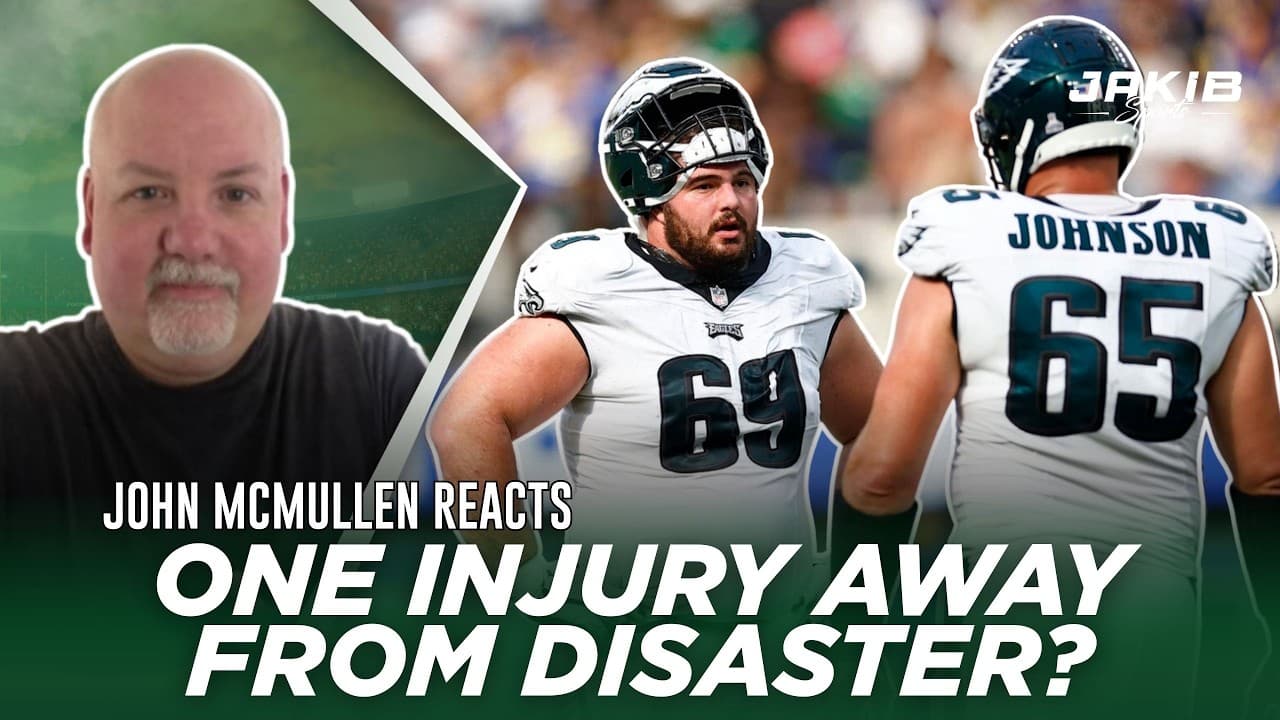
On paper, the Philadelphia Eagles got great news this offseason. Lane Johnson is returning for his 14th NFL season at age 36, and Landon Dickerson — the man with double-digit surgeries on his medical file — is back in midnight green. That should be cause for celebration. Instead, it's cause for deep concern, because this offensive line is about to undergo the biggest philosophical shift it's seen in a decade.
Jeff Stoutland is gone. Let that sink in. The man who built this offensive line from the ground up, who turned mid-round picks into Pro Bowlers, who was the heartbeat of the Eagles' physical identity — he's coaching in Nashville now. In his place steps Chris Kuper, imported from Minnesota, bringing with him an outside zone scheme that could fundamentally alter what this unit does best.
Here's the problem: Landon Dickerson might be the worst possible fit for outside zone blocking. Dickerson is a mauler. He's a phone-booth fighter who excels in gap schemes, driving defenders off the ball with brute force. Outside zone requires lateral agility, reach blocks, and movement skills that simply aren't Dickerson's calling card. The Eagles are essentially asking a demolition crew to do ballet.
Lane Johnson at 36 is still Lane Johnson — one of the best right tackles to ever play the game. But he's coming off Lisfranc surgery, which is no small thing for a lineman entering his mid-thirties. Lisfranc injuries affect push-off, lateral movement, and explosiveness. For a tackle who's relied on his rare athleticism throughout his career, this recovery needs to go perfectly. There's no margin for error at his age.
The Cam Jurgens situation is fascinating. Of everyone on this line, Jurgens is actually the BEST fit for an outside zone scheme. He's athletic, he can move, he's got the body type for it. But he's been dealing with back issues — reportedly taking a trip to Medellín for treatment — and center health is one of those things you can't fake. If Jurgens is right, he could thrive. If the back lingers, it's a problem that cascades through the entire line.
Tyler Steen slides into the right guard spot and the honest assessment is... fine. He's fine. He's not going to lose you games, and he's not going to win you games. In an outside zone system that demands more from its interior linemen, 'fine' might not cut it. Steen was a third-round pick in 2023 and has developed steadily, but this scheme transition will test him more than anything he's faced.
The real question nobody wants to ask: Did the Eagles lose more than a coach when Stoutland left? Did they lose an identity? This was a team built on physicality up front, on imposing its will, on running the ball down your throat with a power scheme. Kuper's outside zone approach is the opposite philosophy — it's about creating angles, stretching the defense horizontally, and finding cutback lanes.
Saquon Barkley might benefit from outside zone. His vision and one-cut ability in space could be lethal. But the line has to execute it first, and that means an entire offseason of unlearning everything Stoutland taught them. For veterans like Johnson and Dickerson, that's asking a lot. Muscle memory is real, and these guys have been gap-scheme players their entire Eagles careers.
The offensive line was supposed to be the one thing you didn't have to worry about in Philadelphia. Now? It might be the biggest question mark on the roster. The talent is there. The health is a question. And the scheme fit is a genuine concern. If Kuper can get this group to buy in and execute, the Eagles' offense could actually evolve into something more dynamic. If the transition is rocky, buckle up — because the margin between elite and average on the offensive line is razor thin.
Philadelphia will be watching closely. This isn't just about blocking schemes. It's about whether the Eagles can maintain their identity without the man who defined it.
Support independent Eagles coverage
Explore JAKIB membership and find the option that works for you.
The JAKIB Staff
AI-powered content assistant for JAKIB Sports. Articles generated from show transcripts and Eagles coverage.
Related Articles
The Cowboys’ Star Receivers Are Not Fixing Their Offensive Balance
Dallas’ star receivers cannot supply balance by themselves. Early run abandonment can leave the protection exposed and give Philadelphia a clearer choice about how to attack.
Evan Neal’s Eagles Opportunity Starts With Guard Fundamentals
Evan Neal’s practice-squad signing gives Philadelphia an interior-line development option. His next opportunity depends on repeatable guard technique, rather than his old draft position.
Johnny Mundt’s Blocking Role Is Smaller Than the Eagles’ Offensive Demand
Johnny Mundt can have value in a defined movement role. Philadelphia’s broader tight-end demands require a closer look at assignments and workload, rather than a universal blocking label.
The Eagles’ Coaching Verdict Cannot Ignore the Roster
The Eagles’ coaching evaluation has to account for roster limitations without letting them excuse every failure. Protection assignments and the staff’s adjustments offer a more useful test than a blanket verdict.
Tanner McKee’s Dallas Test Starts Over the Middle
Quick middle-field routes offer Tanner McKee a practical test against Dallas. The Eagles need timing, protection and receiving options that make an early throw productive.
The Eagles’ Line Rebuild Has Two Different Clocks
The Eagles can pursue a faster interior rebuild while treating tackle succession as a separate problem. That distinction changes how they should spend picks and evaluate veterans.