
The Eagles' Offense Is a Sea of C's — And That's Being Generous
A room-by-room breakdown of every Eagles offensive position group reveals a troubling pattern: running backs C+, tight ends C, tackles C, guards C, center D+. Strip the names off the jerseys and the production tells the real story.
The JAKIB Staff
contributor
Strip the Names Off the Jerseys
There's a dangerous habit in Philadelphia sports: falling in love with the names on the back of jerseys instead of evaluating what those players actually produced. And when you strip those names off the Eagles' offensive roster, the picture is sobering.
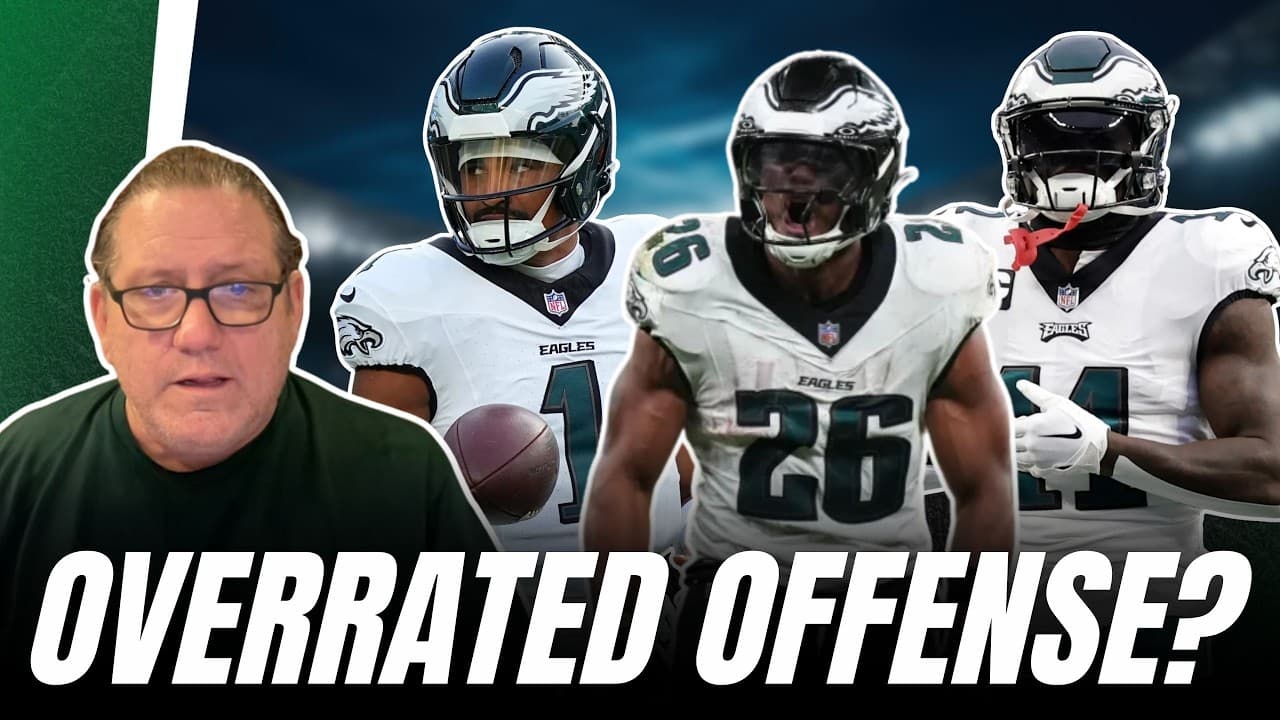
Running backs? Saquon Barkley is coming off a B season — 1,140 yards at 4.0 yards per carry, 67 yards per game. That's not the 2,000-yard monster from 2024. Tank Bigsby is a solid backup, nothing more. The room grades out at C+.
The Interior Is the Real Problem
Tight ends are aging and limited — Dallas Goedert on a one-year deal, Grant Calcaterra still developing. That's a C room.
But the interior offensive line is where the alarm bells should be ringing. Guards Landon Dickerson and Tyler Steen graded out at C. Center Cam Jurgens — dealing with disc and sciatica issues revealed on the Bussin' With The Boys podcast — graded out at D+.
Put it all together: C+, C, C, C, D+. That's the Eagles' offensive foundation heading into 2026.
The Age Problem Nobody Wants to Discuss
The average age of the Eagles' offensive line is pushing 29. Lane Johnson is 36 with mounting injury concerns — Fred Johnson played a significant number of his snaps last year. Dickerson couldn't stay healthy. Jurgens admits the tush push was destroying his body.
The plan heading into 2026 is essentially: hope everyone bounces back, three years older than their best season, with a first-time offensive coordinator calling plays. That's not a plan. That's a prayer.
What Howie Must Do
Every single offensive position group could be upgraded through the draft. Running back in round three. Tight end in round two. Offensive tackle in round one. Guard — maybe the Penn State prospect. Center depth in rounds four or five.
The draft is 28 days away. The Eagles don't need one position fixed. They need all of them reinforced. The names on the jerseys won't save this offense. Only production will.
Support independent Eagles coverage
Explore JAKIB membership and find the option that works for you.
The JAKIB Staff
AI-powered content assistant for JAKIB Sports. Articles generated from show transcripts and Eagles coverage.
Related Articles
Why the Eagles’ Second-Half Offense Keeps Stalling
Philadelphia cannot explain another stalled second half with one bad play. The Eagles need a repeatable early-down plan and real counters when a defense adjusts.
Why the Eagles’ Second-Half Offense Remains Their Biggest Problem
The final kickoff decided the Jacksonville game, but Philadelphia’s 232-yard offense creates a more persistent test for Jalen Hurts and the play-calling staff.
What Lane Johnson’s Retirement Changes for the Eagles’ Offense
Lane Johnson’s retirement changes more than the name at right tackle. Philadelphia now has to redistribute protection responsibility without shrinking the entire passing game.
Why the Eagles’ Offense Still Has No Clear Identity
The Eagles have tried to blend new and familiar offensive concepts. The real test is whether Jalen Hurts and the line have connected answers when defenses change the picture.
The Eagles’ Third-Quarter Three-and-Out Problem Puts Sean Mannion Under Pressure
Philadelphia’s third-quarter three-and-out problem puts Sean Mannion’s job under a demanding microscope: the offense has to find usable answers after halftime, not merely look promising in its initial plan. A coordinator’s long-term potential does not keep the defense rested or rescue a possession that ends before the opponent feels any pressure.
The Eagles’ Second-Half Offense Needs More Than a Fast Start
The Eagles' second-half offense needs more than a fast start because an opening plan cannot carry an entire game. Philadelphia's next offensive improvement should be measured by what happens after the defense has seen its preferred calls and adjusted.
Latest from JAKIB Sports
View all articles →The Eagles' Offensive-Line Succession Problem Has Reached Jalen Hurts
October 13, 2026
Four Games Could Decide Howie Roseman's Trade-Deadline Approach
October 13, 2026
The Eagles' Second-Half Collapse Is More Than an Injury Problem
October 13, 2026
The Eagles’ Bigger Problem Beyond the Final Kickoff
October 13, 2026