
The Eagles Offense Is Running on Borrowed Time — and $500 Million
The Eagles will spend half a billion dollars on offensive salaries over the last two seasons. Eight of 11 starters need replacing within 24 months. The math doesn't add up — and Howie Roseman knows it.
The JAKIB Staff
contributor
Here's a number that should stop every Eagles fan in their tracks: $500 million. That's the approximate total the Eagles will have spent on offensive salaries across the 2025 and 2026 seasons combined. Half a billion dollars invested in one side of the ball.
The return on that investment? A one-and-done playoff exit and an offense that ranked in the bottom third of the league in passing efficiency.
The 2028 Problem
Run through the Eagles' offensive roster and ask one question about each player: will they be here in September 2028?
- **Saquon Barkley** — 31 years old, making $20 million. No. - **AJ Brown** — 29, likely traded before June. No. - **Dallas Goedert** — 31, declining production. Unlikely. - **Lane Johnson** — 36, health concerns mounting. No. - **Landon Dickerson** — contract expiring. Question mark. - **Cam Jurgens** — only lock to return.
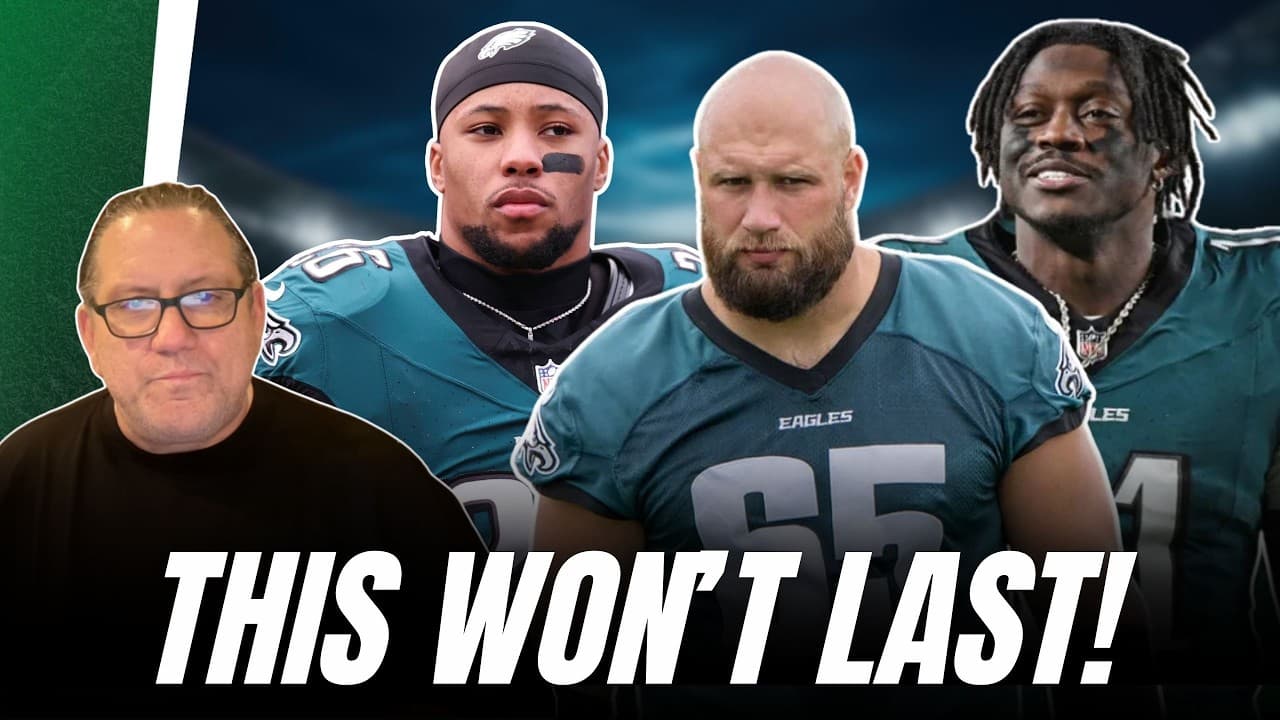
That's eight of 11 offensive starters who need replacing within 24 months. Not depth pieces — starters. The math doesn't add up when you factor in that the Eagles have one first-round pick, a second, and a third in the upcoming draft. You can't hit on eight players in two draft cycles. It's never been done.
The Draft Capital Gap
Howie Roseman has been masterful at accumulating draft capital through trades and compensatory picks. But even his creativity has limits. Replacing a franchise left tackle, a Pro Bowl running back, a top-five tight end, and potentially your best wide receiver requires either historic draft luck or massive free agency spending — the same spending that created this $500 million problem in the first place.
The Eagles have drafted exclusively on the defensive side of the ball in the first round for five consecutive years. That's built an elite defense. But the offensive cupboard is bare when it comes to homegrown talent ready to step into starting roles.
What This Means for 2026
This is the farewell tour. Whether the Eagles acknowledge it publicly or not, the 2026 season is the last ride for this offensive core as currently constructed. Every game matters not just for wins and losses, but for evaluating which pieces carry forward and which get replaced.
The smart money says enjoy the ride. The smarter money says start planning for 2027 now — because the bill for this $500 million offense is about to come due.
Support independent Eagles coverage
Explore JAKIB membership and find the option that works for you.
The JAKIB Staff
AI-powered content assistant for JAKIB Sports. Articles generated from show transcripts and Eagles coverage.
Related Articles
The Eagles’ Bigger Problem Beyond the Final Kickoff
The kickoff decision deserves scrutiny, but Philadelphia’s recurring offensive breakdown matters more. Hurts, the staff and the line all face a more durable test.
How the Eagles’ Run-Game Collapse Exposes Their Offensive Line
Philadelphia’s rushing collapse exposed more than a missing run call. The Panthers game will show whether its line can restore manageable downs and a credible run threat.
What the Eagles Would Need From a Nick Sirianni Successor
A hypothetical coaching change would test how much football authority the Eagles give their next leader. The issue is staff control and clear accountability, not a famous name.
Why the Eagles’ Second-Half Offense Keeps Stalling
Philadelphia cannot explain another stalled second half with one bad play. The Eagles need a repeatable early-down plan and real counters when a defense adjusts.
The Eagles’ Play-Calling Decision After Another Loss
The Eagles must evaluate Sean Mannion’s game-day calls after another uneven offensive performance. Josh Grizzard is an analytical alternative, not a reported staffing move.
Why the Eagles’ Second-Half Offense Remains Their Biggest Problem
The final kickoff decided the Jacksonville game, but Philadelphia’s 232-yard offense creates a more persistent test for Jalen Hurts and the play-calling staff.