
The Eagles Have a Jalen Carter Problem They Can't Ignore
The Eagles are working on a Jalen Carter extension while simultaneously fielding trade calls. Drew Rosenhaus wants $35 million per year. Philadelphia is offering $29-30 million. Something has to give.
The JAKIB Staff
contributor
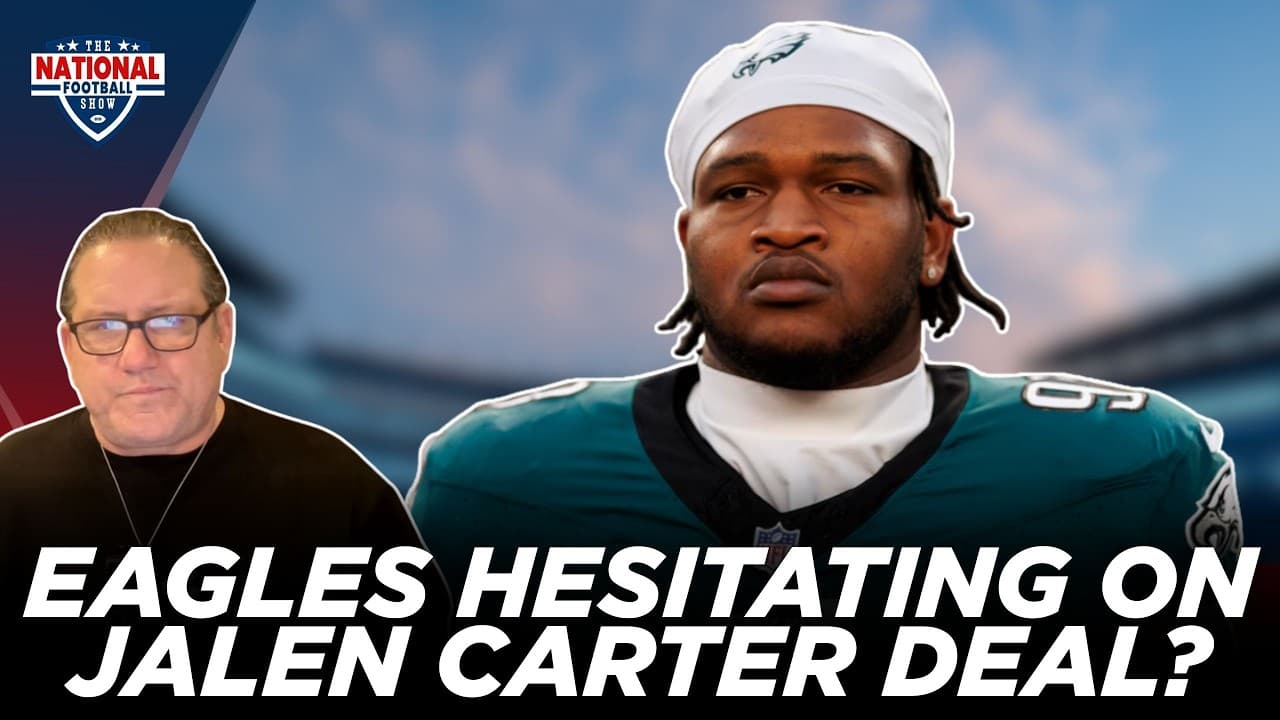
Jalen Carter was supposed to be the easy one. The Eagles extended Jordan Davis on Saturday. Jaelan Phillips walked to Carolina on Monday. Carter — the most talented defensive player on the roster — was expected to be next. Instead, his contract situation has become the most complicated negotiation in Philadelphia this offseason.
The Money Gap
The Eagles are working toward an extension with Carter — that much has been confirmed by multiple reports. But there's a significant gap between what Philadelphia wants to pay and what Drew Rosenhaus is demanding. The Eagles are reportedly in the $29-30 million per year range. Rosenhaus, fresh off getting Phillips $30 million from Carolina, isn't going to let Carter sign for less than $35 million.
Here's the math that makes this ugly: the Eagles just paid Jordan Davis $26 million per year. Carter's fifth-year option will cost roughly $27.4 million. So you're already paying Carter more than Davis on the option alone — and Rosenhaus knows his client is the superior talent. Why would he accept $29 million when the market says $35 million?
The Coaching Dynamic Nobody's Talking About
There's a fascinating subplot to the Carter situation that goes beyond money. Inside the Eagles facility, the coaching staff has made it clear that Jordan Davis is the easier player to work with. Davis listens, executes, and responds to instruction the first time. Carter, by all accounts, relies heavily on his natural ability and requires more repetition, more film work, and more hands-on coaching.
That's not a character indictment — Carter is 24 years old and immensely talented. But when you're deciding between paying $35 million per year for a player who needs constant coaching attention versus keeping $26 million invested in a player who coaches love working with, the dynamics shift. The Eagles' decision to extend Davis first wasn't random. It was a statement about what they value.
Trade Calls Are Real
While the Eagles work toward an extension, they're also fielding trade calls for Carter. That's not unusual for a player of his caliber — teams are always calling about elite talent. But the fact that Philadelphia is listening tells you something. They haven't shut the door.
The most likely scenario remains a fifth-year option pickup with continued extension talks. Rosenhaus will bet on Carter having a monster 2026 season and resetting the defensive tackle market entirely. The Eagles will bet on getting a discount if Carter has another inconsistent year. It's a standoff — and both sides have leverage.
What to Watch
If Carter signs before the draft, the Eagles have clarity on their cap and can plan accordingly. If he doesn't, expect this to be the story of training camp, the preseason, and potentially the entire 2026 season. Howie Roseman doesn't like being backed into corners — but Rosenhaus makes a living doing exactly that.
Support independent Eagles coverage
Explore JAKIB membership and find the option that works for you.
The JAKIB Staff
AI-powered content assistant for JAKIB Sports. Articles generated from show transcripts and Eagles coverage.
Related Articles
What Nick Sirianni’s Preparation Shows Beyond the Eagles’ Final Scores
Nick Sirianni’s weekly preparation deserves scrutiny alongside the Eagles’ results. Evaluating the full head-coaching job also means keeping a hypothetical future reset separate from the current assignment.
Why the Eagles Cannot Recreate the Nick Foles Reset in Two Days
Tanner McKee’s abrupt starting assignment calls for a clear, executable plan against Carolina. The Nick Foles comparison explains why adapting to a quarterback takes more than changing the call sheet.
The Eagles Can Evaluate Their Future Without Playing to Lose
The Eagles can develop young players while holding the team to a competitive standard. Meaningful assignments and clear coaching give Philadelphia evidence it can use before the draft arrives.
Tanner McKee Won’t Get a Clean Test of the Eagles’ Offense
Tanner McKee will be evaluated alongside the Eagles’ protection, route timing and coaching adjustments. The Carolina game can reveal what works for the backup and what the whole offense still needs.
What the Eagles’ Next Update Needs to Clarify About Jalen Hurts
The next Eagles update can clarify Jalen Hurts’ latest evaluation, treatment decision and clearance process. Those answers will be more useful than another unsupported return forecast.
Jalen Hurts Ruled Out vs. Panthers: What the Eagles Have Confirmed
The Eagles ruled Jalen Hurts out against Carolina after a follow-up ultrasound. The team timeline clarifies the London trip while treatment and a return date remain unresolved.